
Best Time for Tree Pruning on Your Property

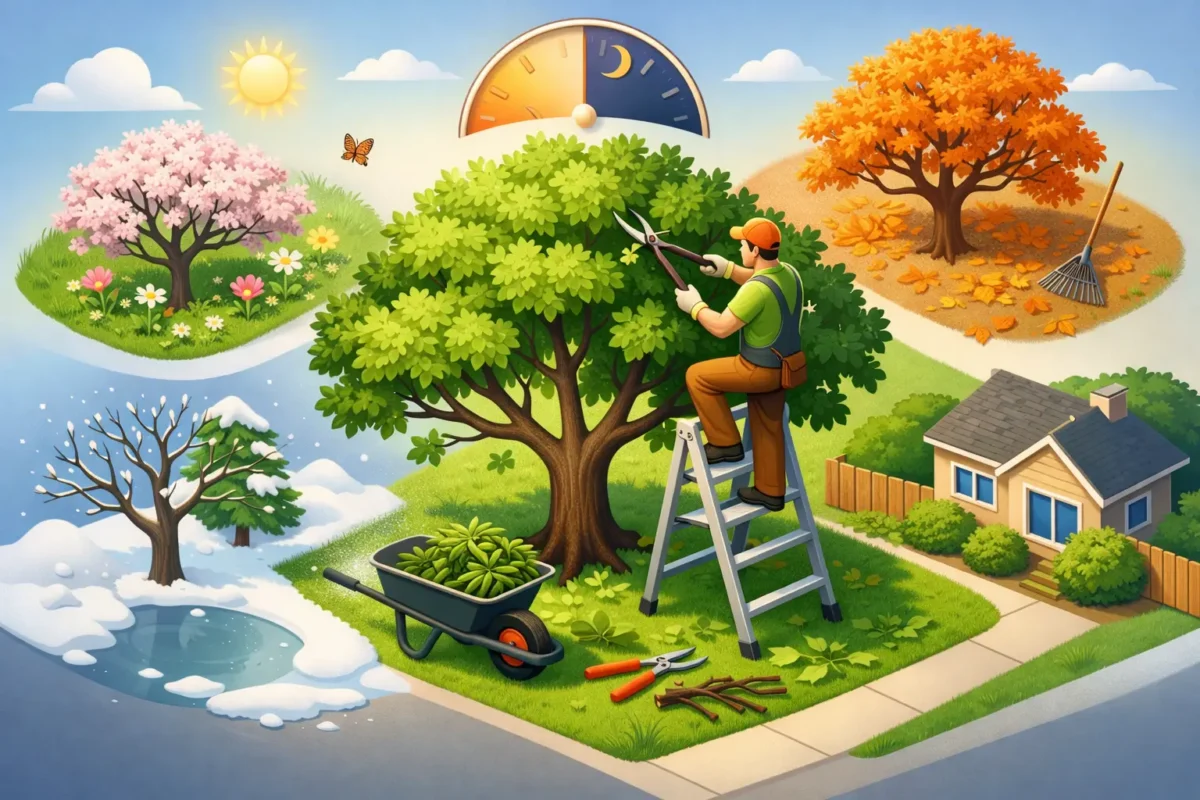
A low branch scraping your roof, a dead limb over the driveway, or a canopy getting heavy before storm season should not be ignored just because the calendar says it is not pruning season. The best time for tree pruning depends on the tree, the work needed, and the risk to your home, people, vehicles, or neighboring property. For most routine pruning in New York, late winter is the strongest choice. But hazardous branches need attention whenever you find them.
Why Late Winter Is Usually the Best Time for Tree Pruning
For many deciduous trees, pruning during late winter – generally from February through early April, before buds open – is ideal. The tree is dormant, so there is less stress from cutting. With leaves off the branches, a professional can clearly see the tree’s structure, weak branch unions, crossing limbs, and dead wood that may be hidden during the growing season.
Dormant-season pruning also gives wounds time to begin sealing as spring growth starts. Removing selected limbs before the canopy fills out can improve airflow and reduce rubbing between branches. That can help lower the chance of broken limbs when heavy rain, wet snow, or strong winds hit later in the year.
This timing matters across Albany County and other parts of New York where winter weather can expose weak trees. Ice, snow load, and wind often reveal problems that were harder to spot in summer. A tree that looks fine from the ground may have a split union, hanging limb, or decay near a major branch connection.
Late winter is not a rule that requires you to wait while a problem gets worse. It is the preferred season for planned maintenance, not a reason to leave a hazard over your roof until spring.
When You Should Prune a Tree Right Away
Dead, broken, cracked, or hanging limbs should be removed as soon as it can be done safely. The same is true for branches resting on your roof, growing into service lines, blocking a driveway, or threatening a walkway where people pass.
You should also arrange a prompt inspection if you notice a limb suddenly drooping, fresh cracks in the trunk, exposed wood after a storm, mushrooms near the base, or a tree that has begun leaning. These signs do not always mean the entire tree must come down. Sometimes targeted pruning, cabling, or removal of one failed section is enough. A qualified tree professional should assess the structure before anyone starts cutting.
Do not try to handle high limbs, storm-damaged trees, or branches near power lines yourself. Tension in a bent or partially broken limb can release without warning. A branch that looks light from the ground can cause serious injury or major roof damage when it falls. If utility lines are involved, keep people away from the area and contact the utility provider or a trained tree service.
The Right Season Depends on the Type of Tree
Not every tree responds the same way to pruning. The condition of the tree and the reason for the work matter more than following a single date on the calendar.
Deciduous shade trees
Maples, oaks, elms, lindens, and many other shade trees are generally best pruned while dormant. Structural pruning when the tree is young helps establish a stable central leader and well-spaced branches. On mature trees, the goal is usually more selective: remove deadwood, reduce overextended limbs, and address branches that are rubbing or growing toward the house.
Oak pruning requires extra care. In areas where oak wilt is a concern, pruning at the wrong time can increase risk of disease spread. A local tree professional can recommend the safest window based on your location and the tree’s condition.
Flowering trees
For spring-flowering trees, timing affects next year’s blooms. Trees that bloom early in spring, such as ornamental cherries and magnolias, are often best pruned shortly after flowering if the work is mainly about appearance. Pruning them in late winter may remove flower buds.
That said, safety takes priority over flowers. A dead branch over a patio or entryway should be removed when discovered, even if it means fewer blooms that season.
Evergreens
Evergreens often need less routine pruning than broadleaf trees. Removing dead, damaged, or crowded branches can be done as needed. Light shaping is commonly done in late winter or early spring, depending on the species. Avoid cutting deeply into old wood on certain evergreens, because bare sections may not fill back in.
Fruit trees
Apple, pear, and other fruit trees usually benefit from dormant-season pruning. Proper thinning allows sunlight into the canopy and can support healthier fruit production. Fruit tree pruning is more technical than simply shortening branches. Removing the wrong growth can reduce fruiting or create a weak, crowded canopy, so it pays to have a clear plan.
Times to Be Careful With Routine Pruning
Late spring and summer are not automatically off-limits, but routine heavy pruning is often less desirable. Trees are using stored energy to produce leaves, new shoots, and roots. Removing too much live canopy during active growth can stress the tree and trigger weak, fast-growing shoots.
Fall pruning also deserves caution. Trees are preparing for dormancy, and cuts may not close as efficiently as they do when spring growth begins. Insects and diseases can also be more active during certain periods. For planned work, it is usually better to wait for the proper dormant window unless there is an immediate hazard.
There is one major exception: storm damage. After a summer thunderstorm or winter nor’easter, waiting for the perfect season is not the safe choice. Broken branches should be professionally evaluated and cleaned up quickly to prevent additional failure and protect your property.
What Good Tree Pruning Actually Looks Like
Good pruning is selective. It removes a problem while preserving the tree’s natural structure and ability to recover. It is not the same as cutting every branch back or making a tree look perfectly rounded.
A responsible pruning plan may include removing dead or diseased limbs, branches that cross and rub, low limbs interfering with a structure, and overextended limbs with poor attachments. It may also reduce the weight at the end of a long branch rather than cutting it back harshly.
Avoid topping, which means cutting large upright branches or the main trunk back to stubs. Topping can create decay, weak regrowth, and a more dangerous tree over time. A heavily topped tree may look smaller for a while, but the replacement shoots are often poorly attached and more likely to fail in wind or snow.
The amount removed matters, too. A healthy mature tree should not lose a large portion of its living canopy in one visit unless there is a specific safety reason. If someone recommends dramatic cutting without explaining the risk, the goal, and the likely result, get another opinion.
Signs Your Property Is Due for a Pruning Inspection
You do not need to guess whether a tree needs work. Look up periodically, especially after storms, and pay attention to changes. A professional inspection is worthwhile when you see several dead limbs in the canopy, branches touching the roof or siding, limbs hanging over parking areas, crowded growth in the center of the tree, or cracks where large limbs meet the trunk.
For commercial properties, regular inspections are especially useful around entrances, sidewalks, loading areas, and parking lots. A falling branch can injure someone or damage a vehicle, creating a problem that costs far more than routine maintenance.
AAA Tree Service NY can help you separate work that needs fast action from pruning that can be scheduled for the right season. With more than 26 years of experience, the focus should be on protecting your property, not selling you work your trees do not need.
If a branch is dead, broken, leaning, or hanging over something you cannot afford to damage, do not wait for the next storm to make the decision for you. Schedule an assessment, ask for a clear explanation of the recommended work, and handle the risk while it is still manageable.