When Bronx County Tree Branch Removal Is Urgent

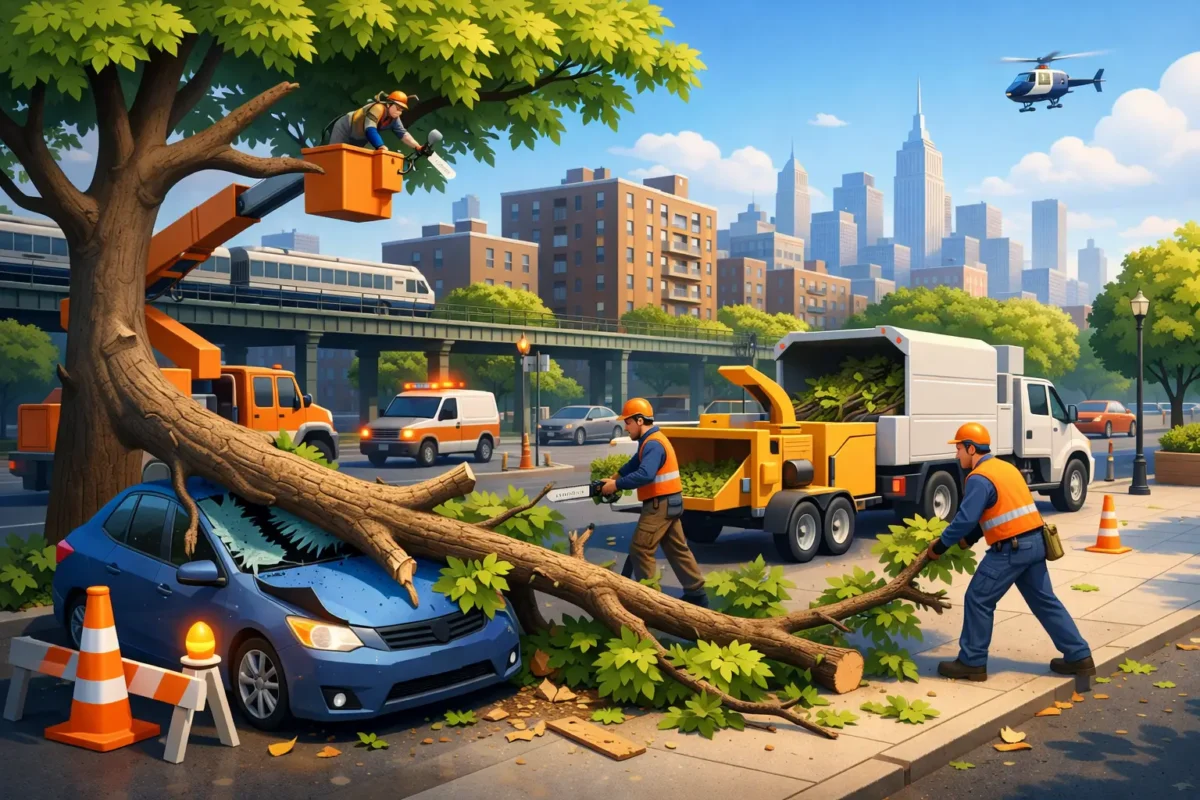
A limb does not have to fall all the way to cause a serious problem. If a branch is hanging over your roof, driveway, sidewalk, parked car, or power line, Bronx County tree branch removal may be the safest next step. Wind, heavy rain, ice, decay, and hidden cracks can turn a damaged limb into an emergency with little warning.
You do not need to panic over every low-hanging branch. But you should not ignore a limb that has changed suddenly, looks dead, or is putting people and property at risk. The right response depends on the branch’s size, condition, and where it could land.
When Bronx County Tree Branch Removal Cannot Wait
A broken twig in an open part of the yard can often wait for routine cleanup. A large limb suspended above an entrance or split from the trunk is different. That is a safety issue, especially when more bad weather is expected.
Call for professional help promptly if you see any of these warning signs:
- A branch is cracked, partially detached, or caught in the canopy after a storm.
- A heavy limb is hanging above a roof, walkway, vehicle, fence, or play area.
- The branch is dead, has peeling bark, or drops large pieces of wood without warning.
- A limb is touching or close to a utility line.
Do not stand beneath a hanging branch to inspect it. Keep children, pets, tenants, and visitors out of the area. If a branch is involved with a power line, stay well away and contact the utility provider first. Tree crews can address the tree work after the electrical hazard has been made safe.
A branch may also need urgent removal when it has opened a visible split in the trunk. That split can widen under wind load, allowing more of the tree to fail. In those situations, a crew should assess the full tree, not just cut the visible broken section and leave the underlying problem behind.
Why Branches Fail in the First Place
Most branch failures are not random. Storms are often the final trigger, but the weakness may have been developing for years. Deadwood becomes brittle. Tight branch unions can split under weight. Limbs that extend too far from the trunk can become overextended, especially when rain, snow, or ice adds extra load.
Decay is another common cause. A branch can look green and healthy from the ground while decay weakens the point where it attaches to the tree. Cavities, mushrooms near the base, missing bark, and dead sections in the canopy can all point to larger concerns. None automatically means the tree must come down, but they are reasons to schedule an inspection.
Poor past pruning can create trouble too. Cutting a limb back to a short stub encourages weak regrowth. Topping a tree – removing large sections of the crown without proper pruning cuts – can lead to fast-growing, poorly attached shoots that are more likely to break later. Good pruning is targeted. It removes risk while preserving the tree’s structure whenever possible.
What You Can Do Before the Crew Arrives
Your job is to keep the situation from getting worse, not to solve a dangerous tree problem yourself. Take photos from a safe distance if you need them for an insurance claim or estimate. Then clear the area below the branch and move vehicles if you can do so without entering the drop zone.
Avoid ladders, chainsaws, ropes, and attempts to pull the branch down. A limb under tension can snap, roll, or swing unexpectedly. Even smaller branches can cause serious injuries when they fall from height. If the branch is on your roof, do not climb up to cut it or push it off. Extra weight and movement can damage shingles, gutters, or the roof deck.
If the limb has already fallen, the work may still require more than basic cleanup. A fallen branch can be tangled in another tree, resting against a structure, or holding tension where it cracked. Professional crews use the right cutting sequence and equipment to lower and remove material safely.
Routine Pruning Prevents Many Emergency Calls
Emergency removal is sometimes unavoidable, but routine pruning gives you more control. The best time for pruning depends on the tree species, its health, the type of work needed, and the season. Dead, broken, or hazardous limbs can be removed whenever they are found. Other structural pruning is often planned for a season that supports the tree’s health and keeps disruption low.
For homeowners, the practical goal is simple: keep limbs away from the home, remove deadwood before it falls, and correct weak growth before it becomes a major hazard. A tree near a roof may need more frequent attention than one in the back of a large lot. Trees beside a driveway, common walkway, or commercial parking area deserve careful monitoring because the liability risk is higher.
You should also look up after every major storm. Check for fresh cracks, branches caught in the canopy, new leaning, torn bark, and limbs resting on gutters or service lines. Storm damage is not always obvious from the ground. A quick professional assessment can determine whether a branch can be safely pruned, needs cabling or other support, or signals that more extensive tree removal is necessary.
The Difference Between Pruning and Removing a Branch
People often use “trimming” to describe any cut made to a tree. In practice, there is a difference between light trimming and hazardous branch removal. Light trimming may improve clearance around a house or remove small overgrowth. Hazardous branch removal involves controlled cuts, rigging, and careful lowering when the limb is large, damaged, or positioned over a target.
The safest approach is not always the cheapest-looking option. A crew may need to climb, use ropes, protect landscaping, or remove a limb in smaller pieces because there is no safe place to drop it. That extra care takes time, but it helps prevent damage to your roof, windows, fence, pavement, and neighboring property.
An honest tree service should explain what needs immediate attention and what can wait. Not every tree with a few dead twigs needs major work. At the same time, postponing a large cracked limb over your home to save money can lead to far higher costs after a failure.
What a Professional Assessment Should Cover
Before work begins, the crew should consider the branch, the whole tree, and the area around it. This includes the limb’s size and attachment point, visible decay, its distance from structures and utilities, access for equipment, and where debris can be safely lowered.
For a commercial property, the assessment should also account for pedestrian traffic, parked vehicles, deliveries, tenant access, and work-zone control. A branch over a sidewalk or lot is not just a maintenance concern. It can become a liability issue if someone is injured.
At AAA Tree Service NY, crews bring more than 26 years of practical tree-care experience to routine pruning and urgent storm work. The focus is on a clear recommendation, safe removal, and protecting the parts of your property that matter most. Licensed and insured service matters when large limbs are being cut near buildings, vehicles, and people.
Do Not Wait for the Next Storm
A questionable limb does not always fail during the first storm. It may hold through several windy days, then come down when rain, snow, or another gust adds just enough weight and pressure. That uncertainty is exactly why damaged branches deserve attention before weather conditions get worse.
If you see a hanging limb, a fresh split, or dead branches over areas people use, arrange an assessment and get a free estimate. For an active hazard after a storm, seek 24/7 emergency tree help right away. Acting while the branch is still manageable can protect your home, your neighbors, and everyone who passes beneath it.