Climate Resilient Tree Care for Safer Yards

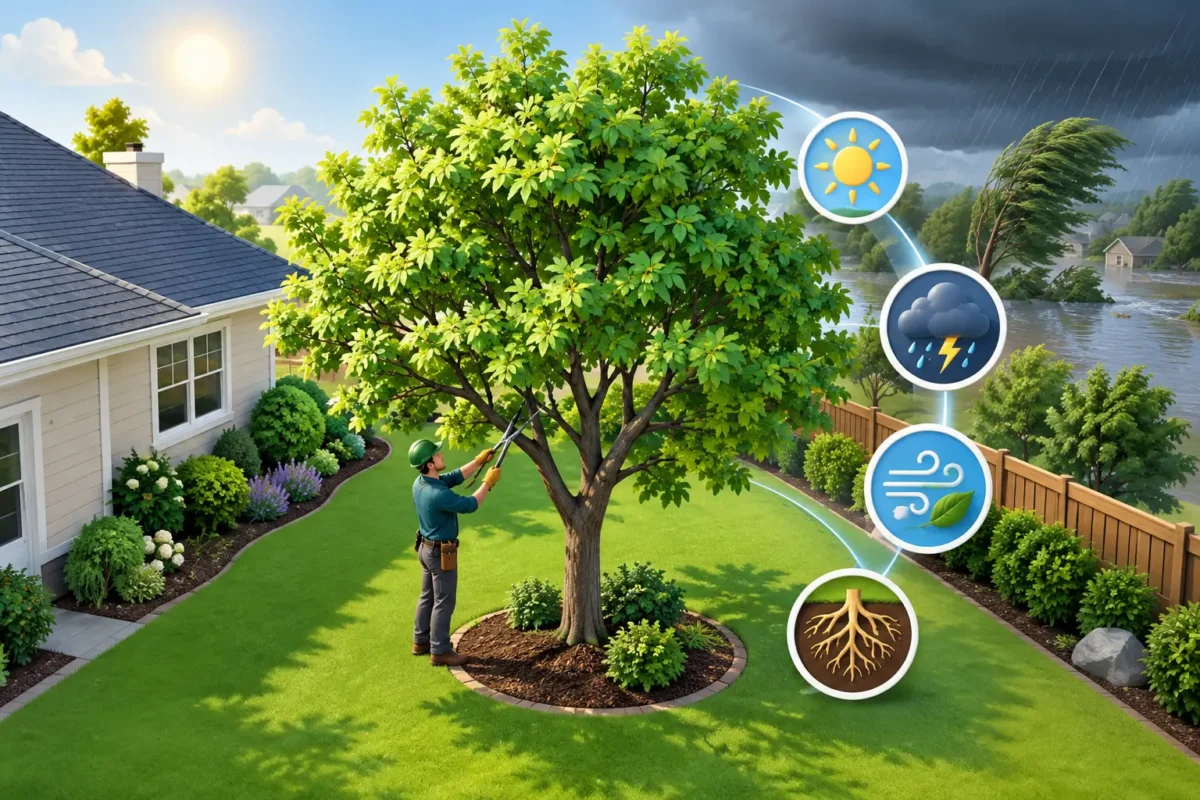
A mature maple can look perfectly healthy from the driveway and still have a cracked limb over your roof, shallow roots in saturated soil, or decay hidden inside the trunk. Climate resilient tree care is about finding those risks early, then giving your trees the maintenance they need to handle stronger storms, hotter summers, sudden freezes, and heavy snow.
For homeowners and property managers, this is not about cutting down every large tree. Healthy, well-maintained trees add shade, value, and privacy. The goal is to keep good trees growing while removing the hazards that could damage your home, vehicles, walkways, or neighboring property.
What Climate Resilient Tree Care Means
Climate-resilient tree care prepares trees and the area around them for weather stress before the next emergency arrives. In New York, that can mean high winds, wet snow, ice buildup, summer drought, flash flooding, and soil that stays saturated after repeated rain.
A tree does not usually fail because of one storm alone. Problems build over time. A poorly attached branch grows heavier each season. Root damage from construction reduces stability. A cavity in the trunk spreads. Then a hard wind or snow load exposes the weakness.
The right plan depends on the species, age, condition, location, and what the tree could hit if it falls. A healthy tree at the back of a large property may need monitoring. The same tree leaning over a house, parking area, or power line needs a much faster assessment.
Start With the Trees That Can Cause Damage
Walk your property after a storm and again before severe weather season. You do not need to diagnose every issue yourself. You do need to notice changes and know when to call for help.
Look up for dead branches, hanging limbs, broken tops, and limbs that extend over your roof, driveway, or service lines. A branch without leaves during the growing season, loose bark, or visible fungus can point to decay. Also watch for branches rubbing against each other. That friction creates wounds that invite insects and disease.
Then look at the trunk. Cracks, deep seams, hollow areas, peeling bark, and new leaning are warning signs. A lean is especially concerning when it appeared recently or when the soil at the base looks lifted on one side. Do not try to pull a leaning tree back with a rope or make a few cuts to “lighten” it. That can cause the tree to fail without warning.
Finally, check the root zone. Mushrooms near the base, exposed roots, compacted soil, standing water, and soil heaving all deserve attention. Roots provide the anchoring system. If the roots are weakened, a tree can come down even if the canopy still looks green.
Pruning Makes Trees Stronger When It Is Done Correctly
Proper pruning is one of the most useful ways to improve storm resistance. It removes dead or damaged limbs, reduces the weight of overextended branches, and improves spacing between major limbs. This helps wind move through the canopy instead of catching it like a sail.
The key is moderation. Removing too much live growth at once can stress a tree, trigger weak regrowth, and leave it more exposed to sun damage. Topping – cutting large branches back to blunt stubs – is not a resilience strategy. It often creates fast-growing, weakly attached shoots that become the next storm hazard.
A professional pruning plan focuses on specific defects, not on making every tree look smaller. For example, a low limb over a driveway may need removal, while a crowded branch higher in the canopy may only need selective reduction. Large limbs over a roof or near utility wires should never be a do-it-yourself project.
Timing also matters. Many routine pruning jobs are best completed while a tree is dormant, but hazardous deadwood can be removed whenever conditions allow. If a limb is cracked, hanging, or has shifted after a storm, waiting for the ideal season is not worth the risk.
Water, Mulch, and Soil Matter More Than Most Owners Realize
Storm damage gets attention because it is sudden. Drought stress and poor soil conditions are slower problems, but they can weaken trees just as seriously.
During long dry periods, young trees and recently planted trees need deep, slow watering. Frequent shallow watering encourages roots to stay near the surface, where heat and drought affect them first. Soak the soil around the root zone instead. The goal is moisture below the surface, not a daily splash against the trunk.
Mulch helps the soil hold moisture and protects roots from temperature swings. Spread it in a wide, shallow ring and keep it away from the bark. Mulch piled against the trunk holds moisture where it does not belong and can contribute to rot, pests, and root problems.
Be careful with lawn equipment as well. Repeated mower and string-trimmer damage around the base can create wounds that do not heal well. A small mulch ring is a simple way to protect that area and reduce competition from turf grass.
Plan for Heavy Rain, Wind, Snow, and Ice
Different weather events create different tree risks. Heavy rain softens the soil and can loosen trees with compromised roots. High winds test weak branch attachments and long, unbalanced limbs. Wet snow and ice add enormous weight to evergreen boughs and broad-crowned deciduous trees.
Before storm season, clear deadwood and inspect trees near structures. Make sure gutters, roof access areas, driveways, and emergency exits are not blocked by low or overhanging limbs. If you manage a commercial property, pay special attention to sidewalks, entryways, parking spaces, and areas where customers or employees gather.
After a storm, stay clear of downed limbs and damaged trees. A branch caught in another tree may be under tension. A partially uprooted tree can shift unexpectedly. Keep children and pets away, and never approach a tree touching a power line. Contact the utility provider for electrical hazards, then arrange professional tree service once the area is safe.
When Removal Is the Safer Choice
Not every damaged tree needs to come down. Many trees recover well after professional pruning and cleanup. But removal may be the responsible option when a tree has major trunk decay, severe root failure, a significant lean toward a target, repeated large-limb failure, or extensive storm damage.
This is where an honest inspection matters. Removing a mature tree changes shade, drainage, and privacy, so it should not be recommended casually. At the same time, leaving a dangerous tree standing because it still has leaves can be an expensive decision. The cost of planned removal is usually far less than emergency roof repairs, vehicle damage, or a blocked access road after a storm.
Stump grinding is also worth considering after removal, especially near lawns, walkways, or future planting areas. It eliminates a trip hazard and helps you reclaim usable space. If you plan to replant, ask about placement so the new tree has room for mature roots and branches without creating the same conflict years from now.
Do Not Wait for a Tree Emergency
The best time to address a dead limb over your roof or a tree leaning near your fence is before wind and rain turn it into an emergency. A professional assessment can separate normal tree characteristics from real hazards, so you are not paying for unnecessary work or ignoring a problem that needs immediate attention.
AAA Tree Service NY provides safety-first tree inspections, pruning, removal, storm cleanup, and 24/7 emergency response for property owners who need clear answers and careful work. With more than 26 years of experience, the focus is on protecting your property, not pressuring you into work your trees do not need.
If a tree has changed after a storm, or a limb is hanging over a place where people park, walk, or live, trust that concern. Getting it checked now can keep a manageable tree job from becoming the next call for emergency help.