Emergency Tree Removal in Nassau County Now

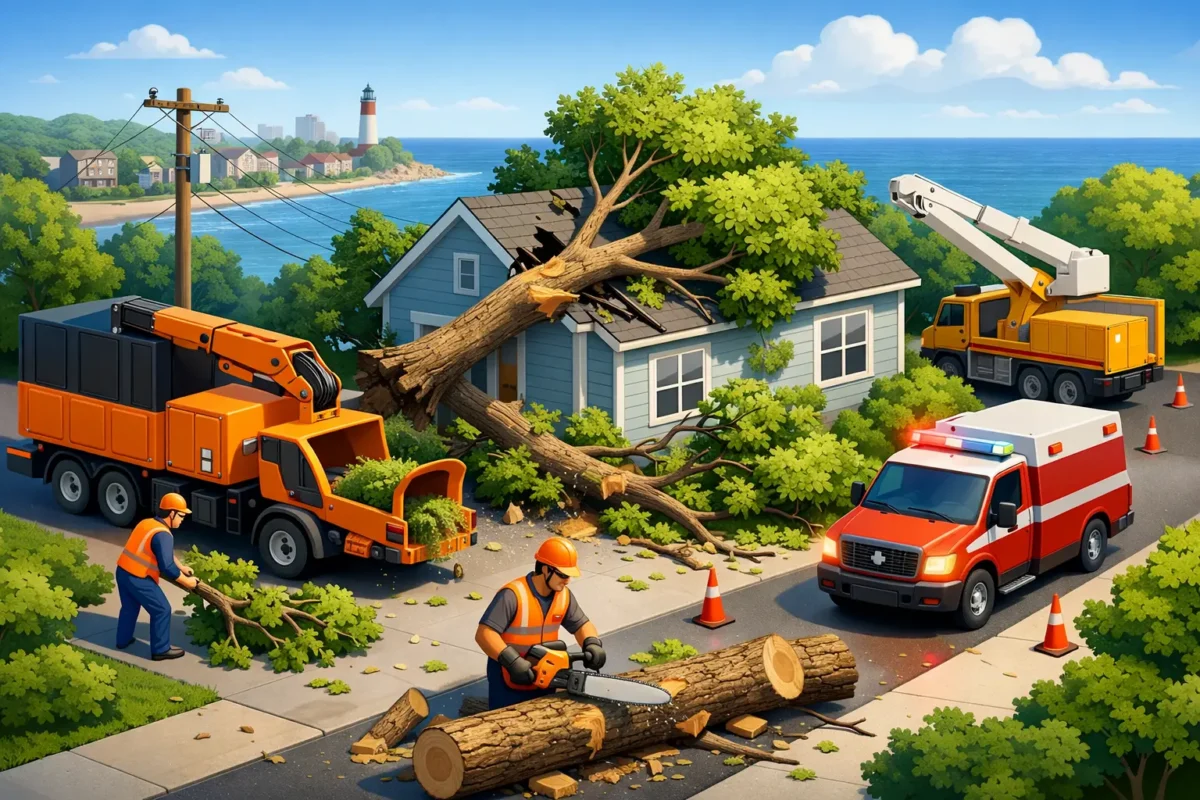
A large limb does not have to be completely on your roof to be an emergency. If it is hanging over your driveway, touching utility lines, split at the trunk, or leaning toward your home, the next wind gust can change the situation fast. For emergency tree removal Nassau County property owners need, the first priority is simple: keep people away from the danger and get a qualified crew involved before the damage gets worse.
Nassau County storms can bring heavy rain, wet soil, strong wind, and snow or ice that adds serious weight to branches. Mature trees give a property shade and character, but weakened roots, decay, and storm damage can turn a healthy-looking tree into a real hazard. Quick action protects your family, your building, your vehicles, and the people who use your property.
When a Tree Problem Is a True Emergency
Not every fallen branch requires immediate removal. A small limb in an open part of the yard can often wait for regular cleanup. But you should treat the situation as urgent when a tree or major limb could injure someone, damage a structure, block access, or affect power service.
Call for emergency help if a tree has fallen on your house, garage, fence, vehicle, or commercial building. The same applies when a trunk is cracked or split, a root ball is lifting out of the ground, or a tree has suddenly started leaning. A limb suspended in another tree is also dangerous. It may look stable from below, but it can fall without warning.
Pay close attention to trees near driveways, walkways, entrances, and parking areas. For a homeowner, a blocked driveway may keep you from safely leaving during a storm. For a building owner, a fallen limb over a walkway or lot can create a liability issue even if it has not hit anything yet.
Power lines require extra caution. If a branch is touching, resting on, or close to a wire, stay clear and contact your utility provider first. Do not attempt to cut, pull, or move the tree yourself. Even a line that appears down or inactive can be energized.
What to Do Before the Emergency Crew Arrives
Your first decisions after storm damage matter. You do not need to diagnose the tree or start cutting it apart. In fact, trying to solve the problem with a chainsaw, ladder, rope, or pickup truck is where many preventable injuries happen.
Move family members, pets, employees, and visitors away from the affected area. Keep everyone out from under hanging branches and away from a leaning trunk. If a tree has struck the building, avoid the damaged room if there is a risk of ceiling collapse, broken glass, or electrical damage.
If it is safe to do so from a distance, take clear photos for your insurance records. Photograph the tree, the damage, and the surrounding area. Do not climb onto a roof or move debris just to get better pictures. Your insurer may want documentation, but your safety comes first.
Keep vehicles away from the work zone and leave room for emergency equipment. A professional crew may need access for trucks, chippers, rigging equipment, and a safe drop zone. If the tree is blocking a road or creating an immediate public hazard, contact local emergency services as well.
Why Emergency Tree Removal Is Different
Removing a tree in a calm, open yard is one thing. Removing a tree after a storm is another. The wood may be under tension, the ground may be soft, and branches can be caught on a roof, fence, or nearby tree. A cut in the wrong place can cause a trunk or limb to shift suddenly.
That is why emergency tree removal in Nassau County should be handled with a plan, not rushed guesswork. A trained crew assesses the direction of lean, trunk damage, root stability, overhead hazards, access points, and what needs protection below. Then they decide whether the tree can be removed in sections, lowered with rigging, or safely brought down from another direction.
The goal is not always to remove every part of the tree immediately. Sometimes the urgent job is to remove the dangerous hanging limb, stabilize the area, and prevent further damage. Full cleanup, stump grinding, or non-urgent pruning can follow once the property is safe. This approach keeps the work focused on what your situation actually needs.
Warning Signs You Should Not Ignore Before a Storm
Emergency calls often start with signs that appeared days, months, or even years earlier. A tree does not need to be completely dead to fail. Internal decay can hide behind a living canopy, and root problems can develop below ground where you cannot see them.
Watch for a new lean, soil cracking or lifting near the base, large dead limbs, deep trunk cracks, peeling bark, or mushrooms growing around the roots. Branches rubbing against the roof or hanging over a power service line also deserve attention. After prolonged rain, check trees that stand near slopes, retaining walls, driveways, or recently disturbed soil.
There is a trade-off to consider. Removing a healthy mature tree is not always necessary, and a responsible tree service should not push removal when targeted pruning or cabling can reduce the risk. On the other hand, waiting on a tree with major structural damage can cost far more after it lands on a roof or car. An on-site assessment gives you a clearer answer than trying to judge the risk from a photo or from the ground.
What Professional Emergency Service Should Include
Fast response matters, but safe work matters just as much. Before work begins, you should know what the crew sees, what they recommend removing, and how they will protect your property. A licensed and insured company should be prepared for difficult access, unstable trees, and storm-related hazards.
A proper emergency response typically includes securing the work area, removing the immediate hazard, cutting and lowering material in controlled sections, and clearing the debris from the affected space. If a tree has damaged your roof, fence, or driveway, careful removal helps prevent a bad situation from becoming worse.
Ask whether debris hauling is included and whether the crew can handle follow-up services such as stump grinding, pruning nearby limbs, or storm cleanup. Those services may not be needed the same day, especially during a widespread storm event. Honest communication about timing, cost, and priority work is more useful than promises that do not match the conditions on the ground.
Protecting Your Property After the Tree Is Down
Once the immediate tree hazard is removed, inspect the area carefully. Look for roof punctures, damaged gutters, broken fencing, cracked pavement, and disturbed utility connections. If water can enter through roof damage, take reasonable steps to prevent additional damage and contact your insurance provider promptly.
Do not overlook the trees around the one that failed. A fallen tree can pull on neighboring branches, expose weak limbs, or damage roots. A quick post-storm inspection can identify problems before the next round of wind or rain turns them into another emergency.
For commercial properties, document the cleanup and keep records of inspections and repairs. That is practical protection for your property and helpful evidence that you acted promptly to address a known hazard.
AAA Tree Service NY provides 24/7 emergency response with experienced, licensed, and insured crews for homeowners and property owners facing dangerous tree conditions. After the immediate risk is handled, a straightforward assessment can help you decide what preventive trimming or removal makes sense next.
When a tree looks unstable, trust what you are seeing. Keep your distance, avoid a do-it-yourself fix, and get professional help before the next gust of wind makes the decision for you.