
How Professionals Grind Tree Stumps Safely

A stump can look harmless after a tree comes down, but it can create a real problem in the middle of your yard. It catches mower blades, becomes a tripping hazard, attracts insects as it decays, and can make a cleared area difficult to use. Knowing how professionals grind tree stumps helps you see why the job is more than simply lowering a machine onto the wood.
A professional stump grinding crew starts with the property, not the grinder. They look at where the stump sits, what is around it, and what is below it. That preparation protects your lawn, utility lines, walkways, and the people on the job site.
How Professionals Grind Tree Stumps Step by Step
The process begins after the tree has been removed and the crew has access to the stump. If the trunk was cut several inches above ground, the team may first trim it lower. A lower stump gives the grinder better access and reduces the amount of wood that has to be worked down.
Before any grinding begins, the crew checks for visible obstacles. Rocks, wire, old fencing, metal stakes, landscape edging, and buried debris can damage the grinder’s cutting teeth or become dangerous projectiles. This is especially important on older properties, where previous owners may have buried materials near a tree line or fence.
The crew also considers buried utilities. A stump near a gas line, electric service, irrigation system, septic component, or underground cable requires extra caution. Professionals do not assume that a line is safely out of the way because it is not visible. When needed, utility locations should be identified before work starts.
Once the area is clear, the operator positions the stump grinder so it has stable footing and a safe working angle. Depending on the site, this may be a compact machine that fits through a backyard gate or a larger, more powerful grinder for open commercial space and large hardwood stumps.
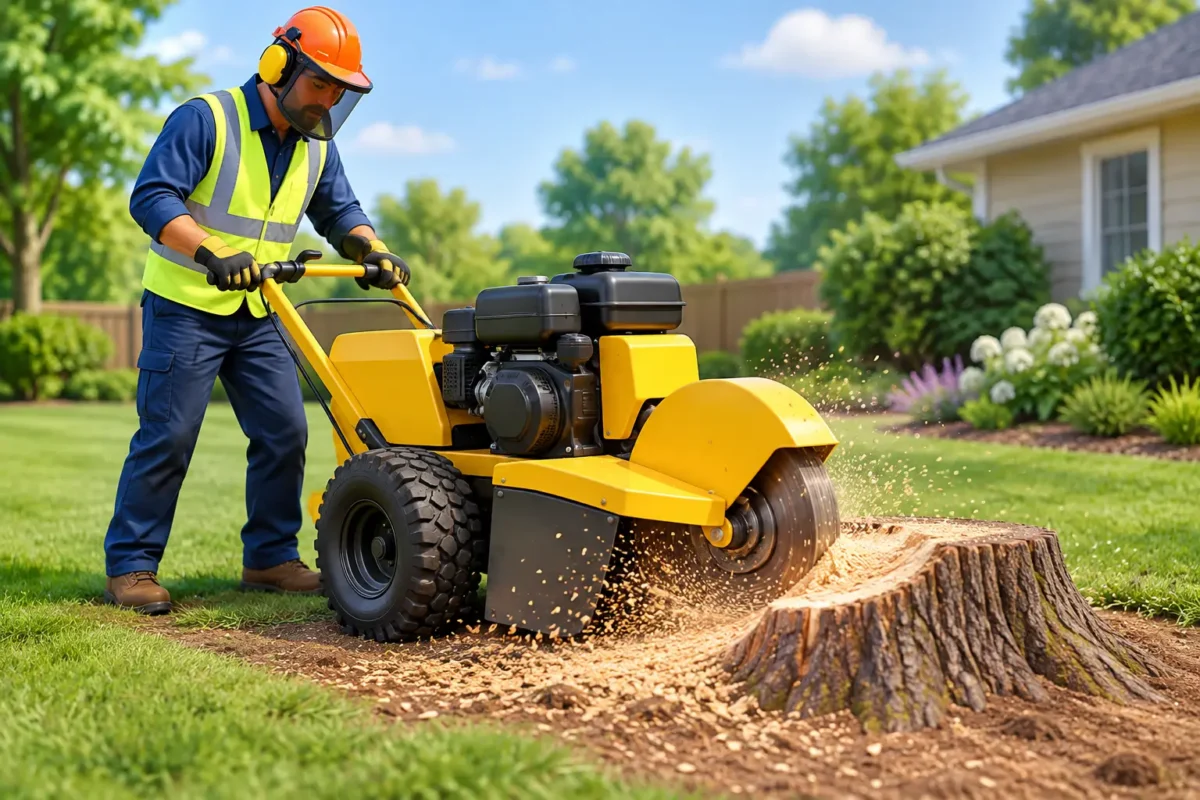
The grinder uses a spinning cutting wheel fitted with carbide teeth. The operator sweeps that wheel across the stump in controlled passes, removing wood a little at a time. The machine does not pull the stump out by force. It turns the stump into a mix of wood chips and soil-sized material while the operator gradually works lower.
For most residential projects, grinding continues several inches below the surrounding grade. The exact depth depends on what you plan to do with the area. If you want grass over the spot, a moderate depth may be enough. If you are installing a patio, driveway extension, fence post, garden bed, or new tree nearby, deeper grinding and additional root management may be necessary.
The Safety Work You Do Not See
Stump grinding is fast-moving work. The cutting wheel can throw wood chips, small stones, and hidden debris with force. A trained crew establishes a work zone, keeps children and pets clear, and directs bystanders away from the discharge area.
Professional operators wear proper eye, hearing, and foot protection. They also understand how the machine reacts to different kinds of wood. A fresh maple stump, an old decayed pine stump, and a dense oak stump do not grind the same way. Roots can also shift, soil can be uneven, and buried material can stop the work unexpectedly.
The operator watches the grinder throughout the job rather than trying to rush through a stump in one pass. Controlled movements help prevent damage to nearby structures and landscaping. This matters when a stump is close to a deck, foundation, driveway, air-conditioning unit, shed, or fence.
A qualified crew also knows when stump grinding is not the first task. If a damaged tree is still hanging over the stump, if storm debris blocks access, or if the ground is unstable after heavy rain, the site may need to be made safe before grinding can begin. The right answer is not always immediate grinding. It is the order of work that protects your property.
What Happens to the Roots?
Many homeowners expect every root to be removed. In most cases, that is not necessary and can create more damage than benefit. The main stump and surface roots near it are ground down, but large roots farther from the stump are usually left to decay naturally underground.
Chasing every root across a lawn can tear up healthy turf, disturb soil, and put nearby utilities or hardscape at risk. Professionals focus on the roots that affect your next step, such as roots that are lifting a walkway or sitting directly beneath a planned planting area.
If you are building over the location, tell the tree service before work begins. A crew can recommend the depth and cleanup level that make sense for that project. This is one reason a free on-site estimate is useful. The plan should fit how you will use the space, not follow a one-size-fits-all depth.
Managing Chips, Soil, and the Finished Area
Grinding creates a pile of wood chips mixed with soil. That material can be useful, but it should be handled correctly. Fresh stump grindings are not ideal for filling a planting hole or placing directly against a new plant because they can settle as the wood breaks down.
You may choose to have the grindings removed, spread them as mulch in an appropriate area, or leave some material behind for your own use. If you want to restore lawn, the crew can grind below grade and leave room for clean topsoil and seed. The area may settle over time, so it is normal to add a little more soil after the remaining roots decay.
For a clean lawn repair, remove excess chips, add quality topsoil, level the area, and seed or sod it. Keep the new grass watered as it establishes. If the stump came from a diseased tree, ask whether the grindings should be removed rather than reused around other plantings.
When a Stump Needs Extra Care
Some stumps are straightforward. Others deserve a closer inspection before equipment arrives. Call for professional advice if the stump is in a tight space, close to a structure, or located in an area with known utility or drainage concerns.
Extra planning is also smart when you see any of these conditions:
- The stump sits beside a driveway, retaining wall, patio, or building foundation.
- Surface roots have lifted pavement or created a tripping hazard.
- The tree came down during a storm and other broken or leaning trees remain nearby.
- The stump is surrounded by stone, old landscaping materials, or a fence that limits equipment access.
On commercial properties, stump location can affect liability. A low stump near a parking area, sidewalk, entrance, or tenant walkway can become a hazard for visitors and maintenance crews. Removing it promptly can make routine mowing safer and keep the site looking maintained.
Why Renting a Grinder Is Not Always the Cheaper Choice
Rental stump grinders can work for a small, open, easy-to-reach stump. But the rental price is only part of the cost. You also need transportation, time, fuel, safety gear, and the ability to operate a heavy machine around your property without causing damage.
The most common problems happen when homeowners underestimate stump size, root spread, access limits, or hidden debris. A rental grinder may be too small for a large hardwood stump, turning a planned afternoon job into several days of work. The machine can also leave ruts in soft ground or damage irrigation lines and landscape borders if it is not handled carefully.
Professional service makes more sense when the stump is large, close to structures, difficult to reach, or part of storm cleanup. An experienced operator can assess the risk, bring the right equipment, and leave the area ready for the next step.
AAA Tree Service NY provides stump grinding with the same safety-first approach used for tree removal and storm damage cleanup. With more than 26 years of experience, the goal is simple: remove the hazard without creating a new problem in your yard.
If a stump is in the way of safer mowing, a new project, or a clean recovery after tree removal, do not let it become another item you work around for years. A quick professional assessment can give you a clear plan for making that part of your property useful again.