
How to Protect Trees From Wind Before Storms

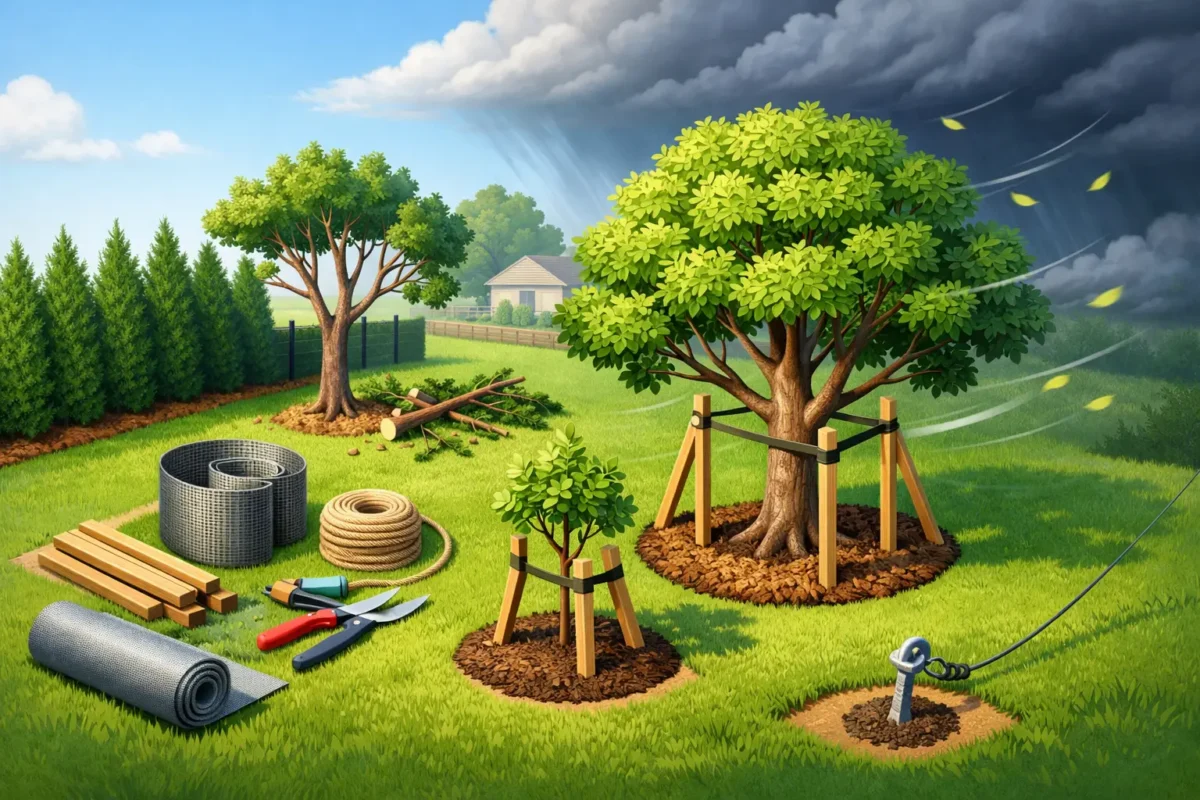
A mature tree can look perfectly healthy from the ground, then lose a heavy limb over your driveway in one hard gust. Learning how to protect trees from wind is less about trying to make every tree immovable and more about finding weak points before wind finds them first. The goal is simple: reduce the chance of broken limbs, uprooted trees, and costly damage to your home, vehicles, fence, or business.
Wind risk is not the same for every tree. A young maple needs different care than an older oak with wide, heavy limbs. Soil conditions, nearby construction, drainage, species, and past storm damage all matter. Still, a few practical steps make a major difference.
Start With a Ground-Level Tree Check
You do not need to climb a ladder or inspect every branch to spot many common wind hazards. Walk around each tree after a calm day, when you can see its structure clearly. Look up for dead, hanging, cracked, or rubbing limbs. Then look down at the base of the trunk and the soil around it.
Warning signs that deserve attention include a tree that has recently started leaning, soil that is lifting or cracking near the roots, mushrooms growing at the base, deep cracks in the trunk, and large limbs extending over a roof, parking area, or walkway. Dead branches are especially dangerous because they can fail without much warning, even in a moderate storm.
A lean is not always an emergency. Some trees grow naturally at an angle and remain stable for decades. A new lean, however, particularly after heavy rain or wind, can mean the root system has shifted. Keep people, cars, and pets away from the area until a qualified tree professional can assess it.
Prune for Strength, Not Just Appearance
Proper pruning is one of the best ways to protect trees from wind. It removes deadwood, reduces excess weight, and improves airflow through the canopy. A dense crown can catch wind like a sail. Selective pruning allows wind to move through the branches more naturally, reducing strain on major limbs and the trunk.
The key word is selective. Cutting too much from the interior or removing large amounts of healthy growth at once can weaken a tree instead of helping it. Topping, which means cutting large branch ends or the top of a tree back abruptly, is especially harmful. It often triggers weak, fast-growing shoots that are more likely to break in later storms.
A good pruning plan focuses on dead limbs, damaged branches, rubbing branches, and limbs with narrow attachments or visible cracks. It may also shorten an overly long limb that reaches toward your house or hangs over a driveway. The amount removed depends on the tree’s health, size, and species.
Know When Pruning Is Not a DIY Job
You can often remove small, reachable twigs with clean hand pruners. Anything larger, higher, near a structure, or near a utility line is different. Falling branches can swing, kick back, or damage property in ways that are hard to predict.
Never attempt to prune branches near power lines. Treat every overhead line as energized, keep your distance, and call the utility company or a trained tree service. If a tree has cracked limbs above a roof, sidewalk, or parked vehicles, professional removal is the safer choice.
Support Young Trees Correctly
Newly planted trees are more vulnerable to wind because their roots have not yet grown into surrounding soil. Staking can help, but leaving stakes on too long can create a different problem. A tree that cannot move at all does not develop the trunk strength it needs to stand on its own.
Use two or three stakes placed outside the root ball, with wide, flexible ties that will not rub or cut into the bark. The ties should hold the tree upright while allowing a small amount of movement. Check them regularly. In many cases, stakes can come off after one growing season, though exposed sites and larger new trees may need support longer.
If a young tree repeatedly leans, do not just tighten the ties. Check whether the root ball was planted too high, whether the soil is staying saturated, or whether the tree is in a wind funnel between buildings. Correcting the cause gives you better long-term results than relying on stakes year after year.
Protect the Root Zone
Wind protection begins below ground. Healthy roots anchor the tree, and roots need oxygen, moisture, and room to spread. Compacted soil, poor drainage, trenching, and vehicle traffic near the trunk can weaken that support system long before a storm arrives.
Keep lawn equipment, heavy vehicles, and building materials away from the area beneath the tree’s canopy whenever possible. Roots often extend well beyond the trunk, and construction damage is not always obvious right away. Avoid piling soil against the trunk or changing the grade around established trees without expert guidance.
A 2-to-4-inch layer of mulch around the root zone helps retain moisture and moderate soil temperatures. Keep mulch a few inches away from the trunk. A mound of mulch pressed against the bark can trap moisture, invite decay, and attract pests. The mulch should look like a flat ring, not a volcano.
Watering also matters. Drought-stressed trees can become brittle, while constantly saturated soil may loosen root hold. During dry periods, deep, slow watering is generally better than frequent shallow watering. If your yard has standing water after rain, drainage may need to be addressed before the next major storm.
Reduce Wind Hazards Around Buildings
The trees closest to your home, garage, storefront, driveway, and outdoor gathering areas deserve the most attention. You do not always need to remove a tree simply because it is large or near a structure. Healthy, well-maintained trees provide shade, value, and privacy. But a tree with decay, root damage, major cracks, or dead overhanging limbs may pose more risk than benefit.
Pay close attention to branches rubbing against siding or roofs. They can damage shingles and gutters even without a storm, then break when wind and ice add weight. Keep reasonable clearance around roofs, chimneys, service lines, and access paths for emergency crews.
For commercial properties, inspect trees along sidewalks, parking areas, loading zones, entrances, and signage. A failing limb can create a serious injury and liability issue. Scheduled trimming is usually less disruptive and less expensive than responding after a branch has already fallen.
Do Not Ignore Storm Damage
After a storm, resist the urge to pull on hanging limbs or cut a branch that is caught in another tree. Those branches may be under tension and can move suddenly. Stay clear of downed power lines, damaged trees touching utility equipment, and any tree that has shifted toward a building.
Take photos from a safe distance for insurance documentation if needed. Then arrange an inspection, especially if you see split trunks, exposed roots, large broken limbs, or a tree resting on a roof or fence. Fast action can prevent a partial failure from becoming a full collapse.
AAA Tree Service NY provides safety-first inspections, trimming, storm cleanup, and 24/7 emergency tree help for property owners who need a clear answer about what can be saved and what needs immediate removal. An honest assessment matters. Some damaged trees can be pruned and monitored, while others are too unstable to leave standing.
Plan Before the Forecast Changes
The best time to address deadwood, overextended limbs, and root-zone problems is before a weather alert appears on your phone. Schedule routine tree care during calm conditions, keep vehicles away from questionable trees when high winds are expected, and know who you will call if a limb comes down overnight.
A healthy tree will still move in the wind. That is normal. What you want to prevent is the kind of movement caused by decay, poor structure, overloaded branches, or failing roots. A careful inspection now can protect your property when the next storm puts every weak point to the test.