How to Respond After a Tree Hits Your House

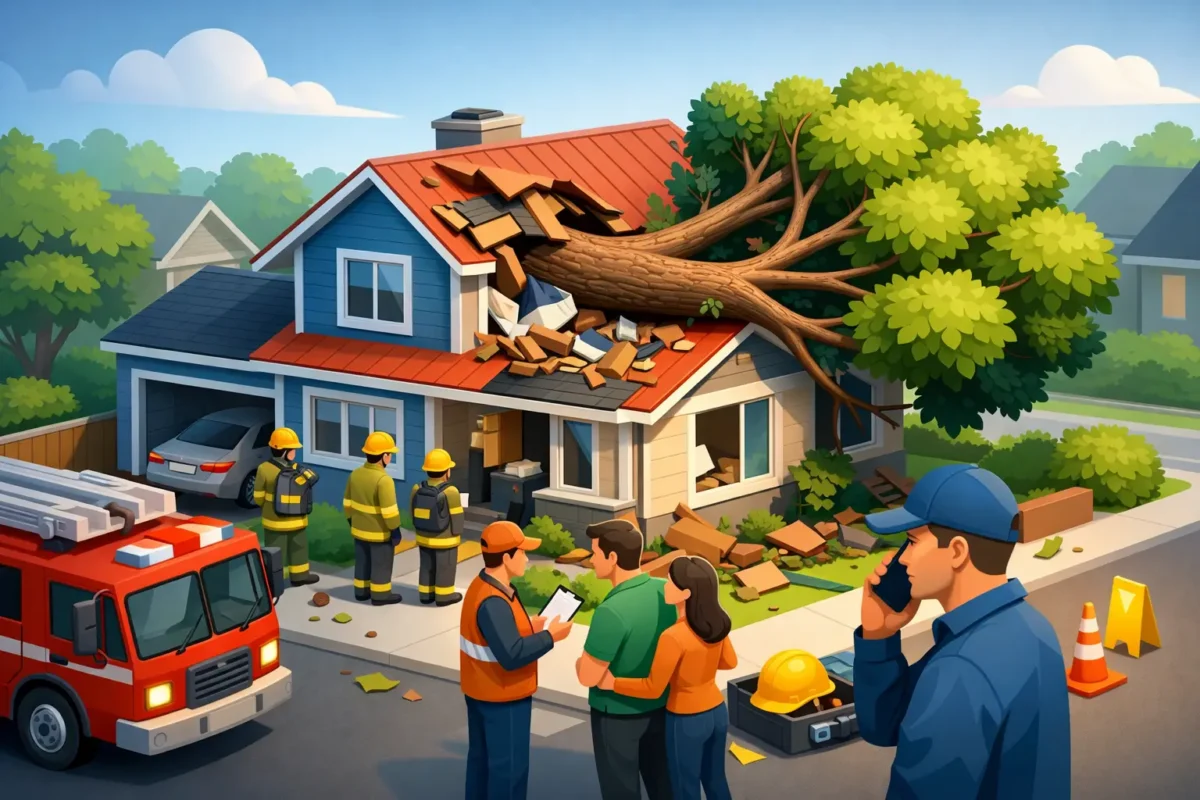
A tree can hit your house in seconds, but the first few decisions you make can protect your family and prevent the damage from getting worse. Knowing how to respond after a tree hits your house means putting safety ahead of cleanup, insurance paperwork, or trying to see how bad the roof looks.
If the tree has struck the roof, broken a window, damaged a wall, or pulled down wires, treat the area as unstable. Storm-damaged trees can shift without warning, and a limb that looks secure from the ground may still fall.
Protect people before you protect property
Get everyone away from the impact area. If the tree entered a bedroom, living area, garage, or another occupied part of the building, leave that section of the home immediately. If you see major structural damage, hear cracking, smell gas, or notice water coming through the ceiling near electrical fixtures, leave the whole house if it is safe to do so.
Do not run outside underneath the damaged side of the home. Falling branches, loose roof materials, and damaged gutters can create another hazard as you exit. Use a clear path away from the tree and move to a safe location, such as a neighbor’s house or your vehicle, as long as it is not parked beneath limbs or power lines.
Call 911 right away if there is a fire, gas odor, downed power line, injured person, or immediate danger to the building. If a power line is on the tree, near the tree, or lying on the ground, stay well back. Never touch the tree, a fence, a puddle, a vehicle, or anything else that could be energized.
Do not try to move the tree yourself
A tree resting on a roof is under pressure in ways you cannot see. Cutting one branch can cause the trunk to roll, the root ball to lift, or the remaining limbs to drop onto the house. This is not a safe job for a homeowner with a chainsaw, ladder, rope, or pickup truck.
Avoid these common mistakes after impact:
- Do not climb onto the roof to inspect or remove branches.
- Do not cut limbs that are supporting the tree’s weight.
- Do not pull the tree with a vehicle or use a rope tied to the trunk.
- Do not go near downed wires or assume a line is inactive.
- Do not let children or pets play near the damaged area.
Even a smaller tree can be heavy enough to collapse damaged roof decking or crack a wall when it shifts. A professional emergency crew can assess the tree’s weight, the direction of pressure, access for equipment, and the safest order for removal.
Assess the situation from a safe distance
Once everyone is safe, take a careful look from the ground and only from a position outside the fall zone. You do not need to diagnose the damage. You only need enough information to explain the situation when you call for emergency help and contact your insurance company.
Notice whether the tree is fully on the house, leaning against it, hanging over it, or has only dropped limbs onto the roof. Look for visible damage such as broken windows, holes in the roof, sagging ceilings, split siding, damaged chimneys, or blocked entrances. If the tree is still standing but has a cracked trunk, lifted roots, or a severe new lean, it may fail completely during the next wind gust.
For a commercial property, keep tenants, employees, customers, and delivery drivers away from the area. Use cones, caution tape, or another barrier only if you can place it without entering the hazard zone. A damaged tree near an entrance, parking area, or sidewalk can create a serious liability issue even when the building itself has not been hit.
Call the right emergency services and professionals
Your first call depends on the hazard. Call 911 for life safety threats. Contact the utility company for damaged electrical lines. Then call a licensed and insured emergency tree service to remove the tree safely.
When you call, be ready to share your address, whether anyone is hurt, whether wires are involved, the part of the home affected, and whether the tree is still moving or leaning. Clear information helps the crew bring the right equipment and prioritize the risk.
AAA Tree Service NY provides 24/7 emergency tree removal for homeowners and property owners who need fast, safety-first help after storms. An experienced crew should never rush into a dangerous cut. The right approach may involve securing limbs, using rigging, removing sections in a controlled order, and protecting the roof and surrounding property as much as conditions allow.
Emergency removal is about eliminating the immediate danger. It is not always the same as full cleanup or repair. In some cases, the crew may need to remove the tree first, then return for stump grinding, debris hauling, or removal of nearby damaged limbs after the property is stable.
Document the damage without putting yourself at risk
Insurance companies will usually need photos and a record of what happened. Take pictures and video from a safe distance before work begins, if conditions allow. Capture the tree, the impact point, roof damage, broken windows, debris, and any damage to vehicles, fences, sheds, or landscaping.
Keep notes on the date, time, weather conditions, and the actions you took. Save invoices for emergency tree removal, temporary protective measures, hotel stays if the home is unlivable, and other storm-related expenses. Do not throw away damaged property until your insurer tells you it is okay, unless it creates a health or safety issue.
Call your homeowners or commercial property insurance carrier as soon as you can. Tell them the tree struck the structure and ask what documentation they need. Many policies cover damage caused by a fallen tree, but coverage can depend on the cause of the fall, the condition of the tree, and the policy itself. Your insurer can explain your deductible, temporary repair procedures, and next steps for a claim.
Prevent additional water damage, but only when it is safe
After the tree is removed, the roof or wall may be exposed to rain. Temporary covering can limit water damage, but it should not be done while the structure is unstable or while branches remain overhead. If the fire department, emergency responders, or tree crew tells you to stay out of the area, follow that instruction.
A professional may install a temporary tarp after the tree is removed and the roof can be accessed safely. Move valuables away from leaks if you can do so without entering a damaged room. Place buckets under active drips, and turn off electricity to the affected area only if you can reach the breaker panel safely and there is no standing water.
Do not assume a small leak is minor. Water can travel through insulation, ceilings, walls, and electrical systems. Fast removal of the tree and prompt temporary protection often make a major difference in the final repair cost.
Watch for hidden damage after the emergency is over
The immediate crisis may be over once the tree is off the house, but the property still needs a careful inspection. Roof damage can be hidden under shingles. Ceiling cracks may appear days later. Doors and windows can become difficult to open if the structure shifted. Water stains, musty odors, bubbling paint, or new cracks around door frames are all reasons to have the home checked.
Ask the tree service to assess nearby trees as well. The tree that fell may have exposed weaknesses in surrounding trees, especially after high winds, saturated soil, or heavy snow. Dead limbs, trunk cavities, root damage, and trees leaning toward the home do not always require immediate removal, but they do deserve an honest professional evaluation before the next storm.
How to reduce the chances of another tree strike
You cannot control every storm, but regular tree care reduces avoidable risks. Pruning dead or overextended limbs, removing hazardous trees, and checking trees after severe weather can protect your roof, driveway, vehicles, and outdoor spaces.
Pay attention to branches growing over the house, limbs rubbing the roof, mushrooms near the base of a tree, peeling bark, deep trunk cracks, and roots lifting out of the ground. These signs do not automatically mean a tree must come down. They do mean it is time for a qualified assessment instead of waiting for wind, ice, or heavy rain to make the decision for you.
After a tree hits your property, take the situation seriously, stay clear of the danger, and get professional help before attempting cleanup. Acting quickly can protect your family now and give your home a safer path to recovery.