How to Spot Rotten Tree Limbs Before They Fall

A limb does not have to fall during a major hurricane to cause serious damage. In Albany County and across New York, a weakened branch can come down on a calm day after rain, heavy snow, or a single strong gust. Knowing how to spot rotten tree limbs gives you time to address the risk before your roof, vehicles, power lines, or family are in harm’s way.
Rot affects the strength of wood from the inside out. A branch may still have leaves and look healthy at a glance, yet be too weak to support its own weight. You do not need to diagnose every tree problem yourself, but you should know the warning signs that call for a professional inspection.
How to Spot Rotten Tree Limbs From the Ground
Start by standing far enough away to see the whole tree. Walk around it if you can do so safely. Look up from different angles, especially after leaves fall in autumn or after a storm exposes damaged areas.
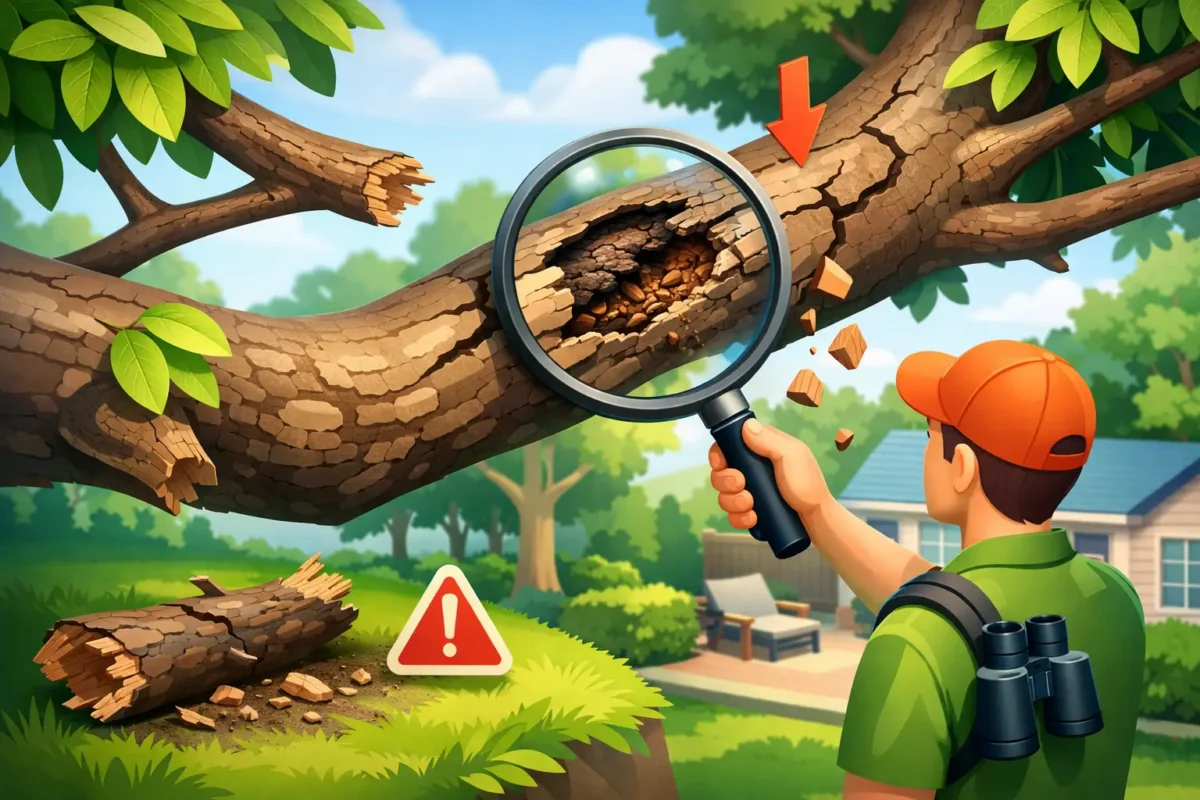
The clearest sign is a limb with no leaves when the rest of the tree is in season and healthy. Dead limbs often have brittle twigs, peeling bark, and a gray or faded appearance. However, dead does not always mean rotten, and a living limb can still have internal decay. Look for several signs together rather than relying on leaf loss alone.
Pay close attention to these visible changes:
- Large cracks running along the top, side, or underside of a branch
- Missing bark, loose bark, or deep wounds where wood is exposed
- Mushrooms, shelf-like fungi, or soft growth near the limb or branch union
- Hollow areas, cavities, dark stains, or crumbly wood around an old break
- A limb that is hanging lower than usual, bent, split, or resting on another branch
Fungi are especially worth taking seriously. Mushrooms do not automatically mean a tree is about to fail, but they can indicate decay in the wood beneath the bark. If you see fungal growth at the base of a large limb, where it joins the trunk, or near a major crack, arrange an inspection soon.
Check Where the Limb Connects to the Tree
A limb can look solid along its length but fail at the point where it meets the trunk. This area, called the branch union, carries a great deal of weight. Look for cracks, included bark, or a narrow V-shaped connection between two large stems. Included bark is bark trapped between stems instead of a strong wood connection. It creates a weak point that can split under snow, ice, wind, or the extra weight of wet leaves.
A healthy branch connection usually has a visible collar, which is the slightly raised area where the branch meets the trunk. If that area is swollen, cracked, oozing, deeply decayed, or missing bark, the limb may not be secure.
Be cautious with trees that have had large limbs removed in the past. Old pruning cuts and broken stubs can become entry points for moisture, insects, and decay. Trees can seal off some damage over time, but they do not heal wood the way skin heals. Decay may continue inside even when the outside appears closed.
Watch for Changes After Rain, Wind, Snow, or Ice
Bad weather often reveals problems that were already developing. After a storm, look for fresh cracks, dangling branches, torn bark, or limbs that have shifted position. A branch that suddenly droops may be partially broken, even if it has not fallen yet.
Do not stand under the limb to inspect it. Keep children, pets, tenants, and vehicles away from the area until it is checked. A partially attached branch can fall without warning, especially when wind picks up again.
Snow and ice are common troublemakers in New York. Evergreen branches can bend under heavy snow, while mature deciduous trees may carry ice weight on long, decayed limbs. If a limb is already hollow, split, or dead, winter weather can turn a manageable pruning job into an emergency removal.
Signs the Rot May Be Hidden Inside
Some of the most hazardous limbs look fairly normal from below. Internal rot is more likely when the tree has a history of storm damage, insect activity, repeated topping cuts, or major trunk wounds. Large, older limbs also deserve closer attention because their weight creates more force at the connection point.
You may notice woodpecker holes, ants moving in and out of a cavity, sawdust-like material, or areas where bark has sloughed off. These signs do not prove that a limb will fail, but they suggest the tree should be assessed by someone experienced with structural tree risk.
You can gently look at reachable lower branches, but do not poke cavities with tools, cut into the wood, or climb the tree. Striking a rotten limb can cause it to break, and climbing around compromised branches is dangerous. A professional can examine the limb from the ground, determine whether decay has affected its structure, and use the right equipment if closer access is needed.
When a Rotten Limb Needs Immediate Removal
Not every dead branch is an emergency. A small dead twig high over an open part of the yard is very different from a large decayed limb over your driveway. The urgency depends on the size of the limb, how likely it is to fail, and what it could hit.
Call for prompt help if you see a cracked, rotten, or hanging limb above your home, garage, deck, parking area, walkway, fence, or utility line. The same applies if a branch is touching your roof, scraping siding, or hanging over a neighbor’s property. Commercial property owners should act quickly around entrances, parking lots, loading areas, and public walkways, where a falling limb can create injury and liability concerns.
If a limb is already resting on a power line, do not approach it or try to move it. Keep everyone away and contact the utility provider or emergency services as needed. Tree crews can handle storm debris once the electrical hazard has been made safe.
Do Not Assume Pruning Is Always the Answer
Pruning can remove a decayed limb and reduce weight on a stressed branch, but the right solution depends on where the rot is located. If decay is limited to one branch, careful removal may protect the rest of the tree. If it extends into the trunk or affects several major branch unions, removing one limb may not eliminate the risk.
This is why topping a tree or cutting branches back aggressively is not a safe shortcut. Poor cuts can create new wounds, encourage weak regrowth, and leave the tree more vulnerable in the next storm. Proper pruning targets the hazardous wood while preserving as much healthy structure as possible.
A professional assessment should be honest about the options. Sometimes the recommendation is immediate removal. Sometimes it is targeted pruning, weight reduction, or monitoring over time. If the limb is small, isolated, and nowhere near a target, there may be no need for urgent work. The goal is not to remove every imperfect branch. It is to reduce real risk around your property.
Make Your Next Inspection Easier
Check mature trees at least twice a year: once when leaves are present and again after leaf drop. Add a quick inspection after major wind, ice, or heavy snow. Take a photo if you notice a crack, fungal growth, or a branch that appears to be changing. Comparing photos later can help you see whether a problem is getting worse.
Keep an eye on trees near structures before storm season arrives. Waiting until a limb is hanging over the roof limits your options and can make the work more expensive and hazardous. Routine pruning is usually safer than emergency work performed after damage has already occurred.
If you see decay, cracking, or a large dead limb over a place people use, treat it as a safety issue, not a weekend project. AAA Tree Service NY can assess the risk, explain what truly needs attention, and provide fast help when a storm-damaged limb cannot wait. A timely inspection today can keep the next storm from becoming a call for emergency cleanup.