Nassau County Storm Tree Cleanup Done Safely

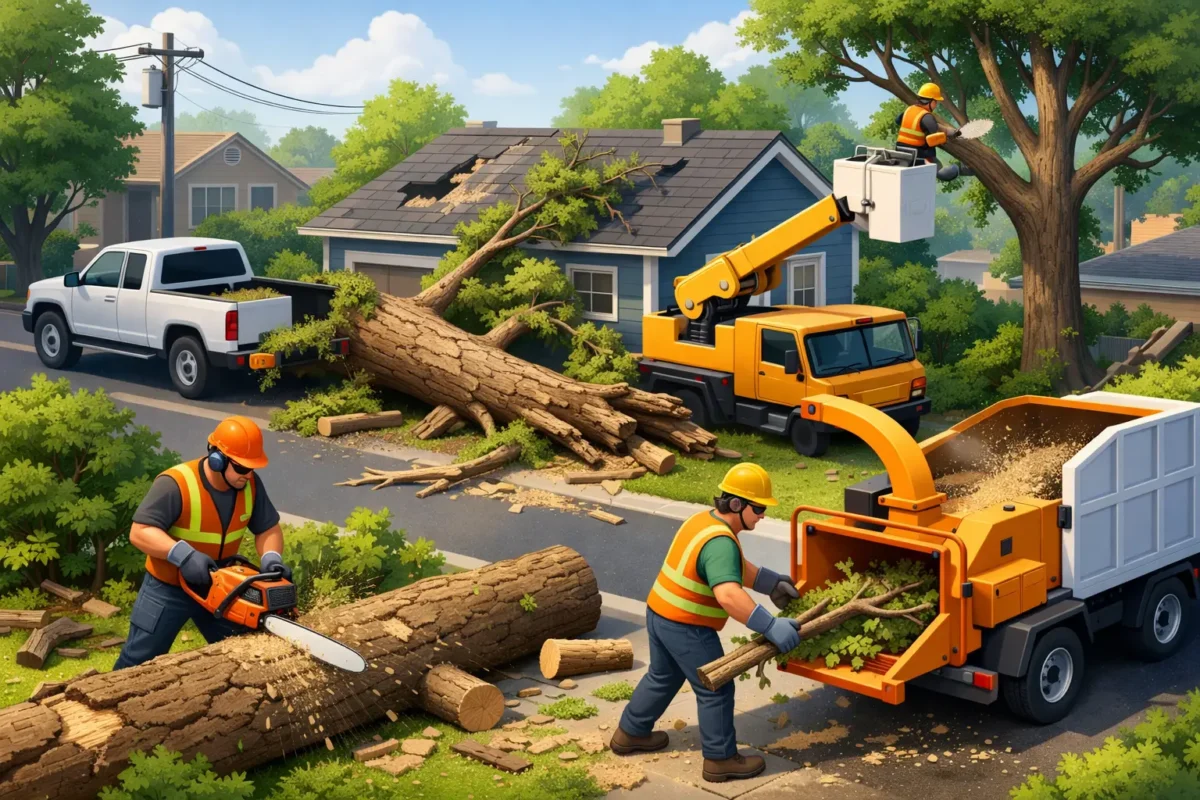
A fallen limb across your driveway is a problem. A split trunk hanging over your roof is an emergency. After heavy wind, rain, or wet snow, nassau county storm tree cleanup is not just about making your yard look normal again. It is about protecting your home, your family, your tenants, and anyone who has to walk or park near damaged trees.
Storm cleanup is one of those jobs that seems simple until you get close to the damage. Branches can be under tension. Trees can be leaning without fully failing. Root systems can lift days after a storm, not just during it. That is why the first step is not grabbing a saw. It is figuring out what is truly dangerous, what can wait a day or two, and what should only be handled by a licensed and insured tree crew.
What Nassau County storm tree cleanup really includes
When most people think about storm cleanup, they picture branches scattered across the lawn. That is part of it, but the real work is broader. Cleanup can include emergency tree removal, broken limb removal, clearing blocked driveways, cutting back branches resting on roofs or fences, and hauling away storm debris. In more serious cases, it also means taking down a tree that did not fully fall but is no longer stable.
Some storm-damaged trees are obvious hazards. Others are less dramatic but just as risky. A tree that lost a major limb may now be unbalanced. A cracked trunk may stay standing for the moment, then fail in the next wind event. If the storm exposed decay inside the tree, cleanup may turn into a removal decision. review us https://g.page/r/CStxEtE-dy74EBE/review
For homeowners and small commercial property owners, that is the hard part. You want fast help, but you also do not want to pay for work you do not need. Honest storm response means separating urgent hazards from damage that can be handled during normal scheduling.
What to do first after a storm
Start with distance. If a tree or limb is touching a power line, stay clear and keep everyone else away. Do not try to move branches, even if they look small. Utility-related tree hazards are never a DIY situation.
Next, do a visual check from the ground. Look for limbs hanging in the canopy, fresh cracks in the trunk, roots lifting out of the soil, or a tree leaning more than it did before. Check structures too. A branch on a shed may be annoying. A branch pressing into your roofline or chimney can turn into water damage fast.
Take photos if you can do it safely. That helps with insurance and gives a tree service company a clearer picture before arrival. Then focus on access and safety. If a driveway, sidewalk, entrance, or parking area is blocked, that usually moves the job up in urgency because it affects daily use and liability.
If you are unsure whether the damage is serious, treat it as serious until a professional says otherwise. That is especially true after overnight storms, when limited visibility can hide split limbs and suspended debris.
When storm tree damage is an emergency
Not every broken branch needs a same-night response. Some cleanup can wait until daylight. But certain situations call for immediate service.
A tree on a house, garage, vehicle, or commercial building is urgent. So is a large limb hanging over an entrance, driveway, or public walkway. A partially uprooted tree is another major risk, even if it has not fallen yet. The same goes for a trunk with a visible split, especially if the tree is close to the home.
There is also the issue of secondary damage. A branch that punctured roofing or gutters may allow water inside long before the tree work is complete. A leaning tree near a neighboring property can create liability if it fails later. Quick action matters, but it has to be safe action.
That is why experienced crews often begin with hazard reduction. The first goal is to stabilize the situation, remove immediate threats, and clear access. Full cleanup and trimming can happen after the danger is under control.
What can usually wait a little longer
Small branches in the yard, minor canopy thinning, and cosmetic debris cleanup usually do not require emergency dispatch. A healthy tree with one broken outer limb may only need scheduled pruning. In some cases, the best move is to wait for a full inspection in daylight rather than rushing into unnecessary work. Follow us in google https://maps.app.goo.gl/7Y6VTiE9bbN9S7TQ7
This is where experience matters. A safety-first company should tell you if the damage looks urgent, and also tell you when it does not. If a limb is down in the backyard and there is no structure, wire, vehicle, or walkway involved, it may be reasonable to schedule regular cleanup instead of paying for emergency service.
That kind of honesty matters after storms because homeowners are stressed, tired, and trying to make quick decisions. You need clear advice, not pressure.
Why DIY storm cleanup goes wrong
Storm-damaged trees behave differently from healthy trees during routine trimming. Wood fibers can twist under pressure. Limbs can spring when cut. A tree that appears grounded may still be loaded against another branch, fence, or structure. That is how people get hurt.
Chainsaws make the risk worse when the cut plan is wrong. So do ladders, especially on wet ground. Even removing debris from a roof can be dangerous if the branch is supporting weight in an unpredictable way.
The other issue is what you cannot see from the ground. Storms expose hidden decay, cracked unions, and root failure. A trained crew looks at the whole tree, not just the branch that already came down. That is often the difference between a quick cleanup and a preventable second call after another failure.
How professional Nassau County storm tree cleanup protects your property
A professional response is not just about speed. It is about controlling risk while getting your property usable again. The right crew evaluates where the tree is carrying weight, what nearby structures are exposed, and whether partial removal or full removal is the safer choice.
That matters if a tree is over a roof, fence, pool, detached garage, or parking area. It also matters for commercial properties, where blocked access, tenant safety, and insurance concerns can raise the stakes quickly.
Licensed and insured tree service is especially important after storms because the work is inherently unstable. You want a crew that knows how to remove damaged sections in sequence, not one that treats storm cleanup like routine yard work. Fast response is valuable, but controlled removal is what prevents more damage.
For example, a storm-split oak may still be salvageable with corrective pruning if the main structure is sound. A hollow maple with major trunk damage may need full removal before the next round of weather. The answer depends on species, condition, location, and how the tree failed.
After the cleanup, ask the next question
Once the debris is gone, the next issue is prevention. Storm cleanup often reveals trees that were already a problem before the weather hit. Dead limbs, overextended branches, weak crotches, and visible decay do not improve on their own.
That is why post-storm inspections are worth taking seriously. One damaged tree can draw attention to several others on the property that need trimming or removal before the next storm system rolls through. In many cases, selective pruning reduces wind load and lowers the chance of major limb failure.
This is also the right time to think about stumps, root zones, and site clearance. If a tree came down near a driveway expansion, fence line, or new building area, it may make sense to handle stump grinding or additional clearing while equipment is already planned.
Choosing the right help after storm damage
You do not need the cheapest voice on the phone. You need a company that will tell you what is urgent, what is not, and how soon they can safely get to your property. Ask whether they are licensed and insured. Ask if they handle emergency removals and debris hauling. Ask whether they can assess nearby trees that may also be compromised.
It also helps to work with a company that understands local storm patterns and how different trees fail after coastal wind, saturated soil, or heavy wet snow. Practical judgment matters as much as equipment.
AAA Tree Service NY built its reputation around that kind of response – fast when you need it, careful when the situation is unstable, and straightforward about what work actually needs to be done.
Storm damage leaves a mess, but the bigger risk is assuming the mess is only cosmetic. If a tree is cracked, leaning, hanging, or too close to your home to trust, do not wait for the next storm to make the decision for you.