Powerline Tree Removal for Safer Properties

A branch rubbing against a service line may look like a routine trimming job. It is not. Powerline tree removal calls for a different level of caution because one wrong move can damage electrical equipment, cut off power, start a fire, or seriously injure someone nearby.
If a tree on your property is leaning into utility wires, has broken limbs over a line, or came down after a storm, keep people away from the area first. Then get the right help. Some situations belong with the utility company, while others require a qualified tree crew working under an approved plan. Knowing the difference protects your home, your neighbors, and the people doing the work.
When a Tree Near a Power Line Is an Emergency
Treat the situation as urgent if a tree, branch, ladder, fence, or other object is touching a power line. Do not touch the tree, the wire, or anything in contact with either one. Electricity can travel through wet wood, soil, puddles, metal fencing, and other surfaces you might not expect.
Call 911 right away if a line is down, sparking, smoking, or blocking access to your home or business. Notify the electric utility as well. Keep everyone at least 30 feet away from a downed line and the surrounding area. That includes children, pets, vehicles, and anyone trying to move storm debris.
You should also act quickly when a large tree is freshly leaning toward a line, especially after heavy rain, high wind, snow, or ice. The tree may not have made contact yet, but saturated soil and damaged roots can turn a close call into an outage without much warning.
Never assume a line is safe because it is quiet, looks insulated, or appears to be a cable or phone line. Leave identification to the utility and trained professionals.
Who Handles Powerline Tree Removal?
The answer depends on where the tree is located and which line is involved. The electric utility is generally responsible for its distribution equipment and vegetation management around public power lines. A homeowner is generally responsible for trees on private property, including trees close to the line that serve the home.
That split can be confusing, but the safe next step is simple: contact the utility when branches are in or immediately threatening electrical lines. The utility can determine whether it needs to de-energize the line, remove a hazard, or coordinate access for tree work.
A professional tree service can handle the tree itself when the utility has confirmed conditions are safe and the work is within the crew’s qualifications and equipment limits. For a branch near a line running from the pole to your house, known as a service drop, you may need both parties involved. The tree crew should not cut first and hope the line stays clear.
At AAA Tree Service NY, we give homeowners and property managers honest risk assessments. If the utility needs to be involved before tree work begins, that is the recommendation. Fast service never means taking a shortcut around electrical safety.
Warning Signs You Should Not Ignore
Not every tree near a line needs removal. Healthy trees can often be pruned to create proper clearance and reduce future risk. But certain conditions make removal the safer and more practical choice, particularly when the tree is large, unstable, or repeatedly growing into the utility corridor.
Watch for these warning signs:
- A trunk that is leaning more than before, especially toward a line, driveway, roof, or parking area.
- Cracks, cavities, dead wood, or mushrooms near the base that may point to decay inside the tree.
- Roots lifting from the ground, soil heaving, or a new gap between the trunk and the soil after a storm.
- Large dead limbs hanging over wires or branches that have already started rubbing against them.
- A tree with a history of dropped limbs, storm damage, or repeated utility trimming that has left it poorly balanced.
A tree does not have to be fully dead to be dangerous. A live tree with weakened roots or a split trunk can fail suddenly during the next storm. In Albany County and other parts of New York, ice, wet snow, and wind can add enough weight to bring down an already stressed limb.
Why DIY Cutting Near Wires Is So Dangerous
Homeowners often see one accessible limb and think a pole saw, ladder, or quick cut will solve the problem. Near power lines, that judgment can change in seconds. A branch can shift as it is cut, swing into a wire, pull a service line loose, or fall somewhere you did not plan.
Ladders add another serious risk. A metal ladder, wet ground, and an overhead line are a dangerous combination. So are ropes, chainsaws, and long-handled tools used from underneath branches. Even if you never touch the wire directly, the tree can become an electrical path.
There is also the property side of the problem. Damaging the service drop, meter equipment, or utility line can leave you without power and create expensive repairs. For commercial property owners, an outage can interrupt tenants, customers, refrigeration, security systems, and daily operations.
The safest homeowner action is to clear the area, take photos from a safe distance if needed for reporting, and make the proper calls. Do not attempt to pull, cut, tie back, or brace a tree that is close to energized lines.
What Safe Tree Work Looks Like
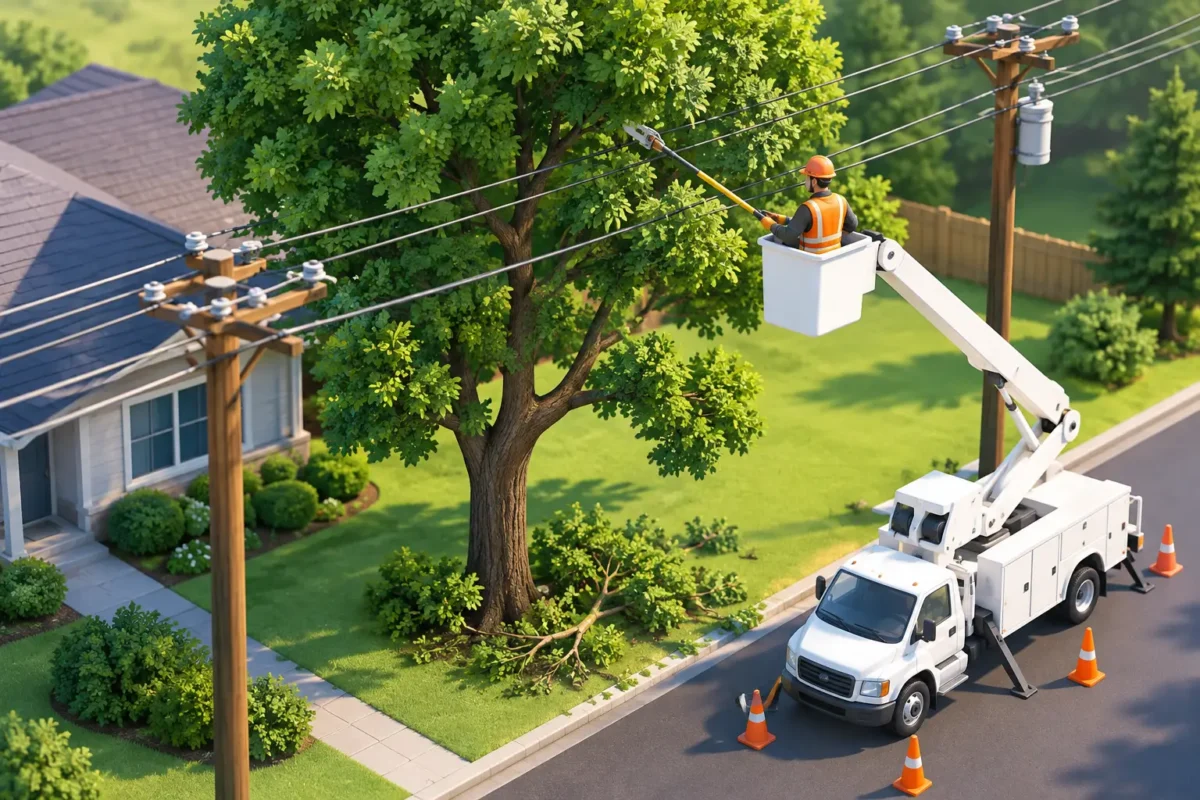
Professional powerline tree removal begins before a crew unloads equipment. The job needs a site assessment that looks at the tree’s condition, line location, access, traffic, nearby structures, and where branches can safely land. The crew also needs to identify whether the line is utility-owned equipment, a private service line, or a communications line that still requires care.
The work plan may involve utility coordination, traffic control, a bucket truck, rigging, controlled dismantling, or crane support for a large hazardous tree. Sometimes the utility may need to temporarily disconnect or de-energize a line. That can feel inconvenient, but it is far better than risking an uncontrolled electrical incident.
Removal is not always the only answer. Selective pruning may preserve a healthy tree while moving growth away from the line. On the other hand, repeated hard pruning can weaken the tree’s structure and lead to fast, poorly attached regrowth. If a tree will keep creating the same hazard, removal and stump grinding may be the more responsible long-term option.
A reliable tree company should explain that trade-off clearly. You deserve to know whether a trim will genuinely reduce the risk or only postpone a larger problem.
How to Prepare for the Crew and Utility Visit
Once help is scheduled, keep access routes open and move vehicles away from the work zone if it is safe to do so. Let the crew know about gates, septic systems, underground irrigation, parked equipment, pets, or tenants who may be affected by noise and temporary access restrictions.
Do not stack brush near the tree or try to remove loose limbs if wires are nearby. Keep children and pets indoors during the work. If your power needs to be shut off, plan for garage doors, medical devices, electronics, refrigeration, and business operations ahead of time.
For building owners, communication matters. Tell tenants or employees when crews will be present, where not to park, and whether there may be a brief outage. A little preparation keeps the job moving and reduces avoidable liability.
Get Help Before the Next Storm
A tree near a power line is not something to watch for another season and hope stays put. If you see dead limbs, new leaning, root movement, or branches pressing into the wires, schedule an assessment before wind, snow, or ice makes the decision for you.
For an active emergency, call 911 and your utility first. For a tree that needs professional evaluation, contact a licensed and insured tree service for a free estimate. Acting early can protect your family, keep your property accessible, and prevent a manageable tree problem from becoming a dangerous outage.