A Property Manager Guide to Storm Cleanup

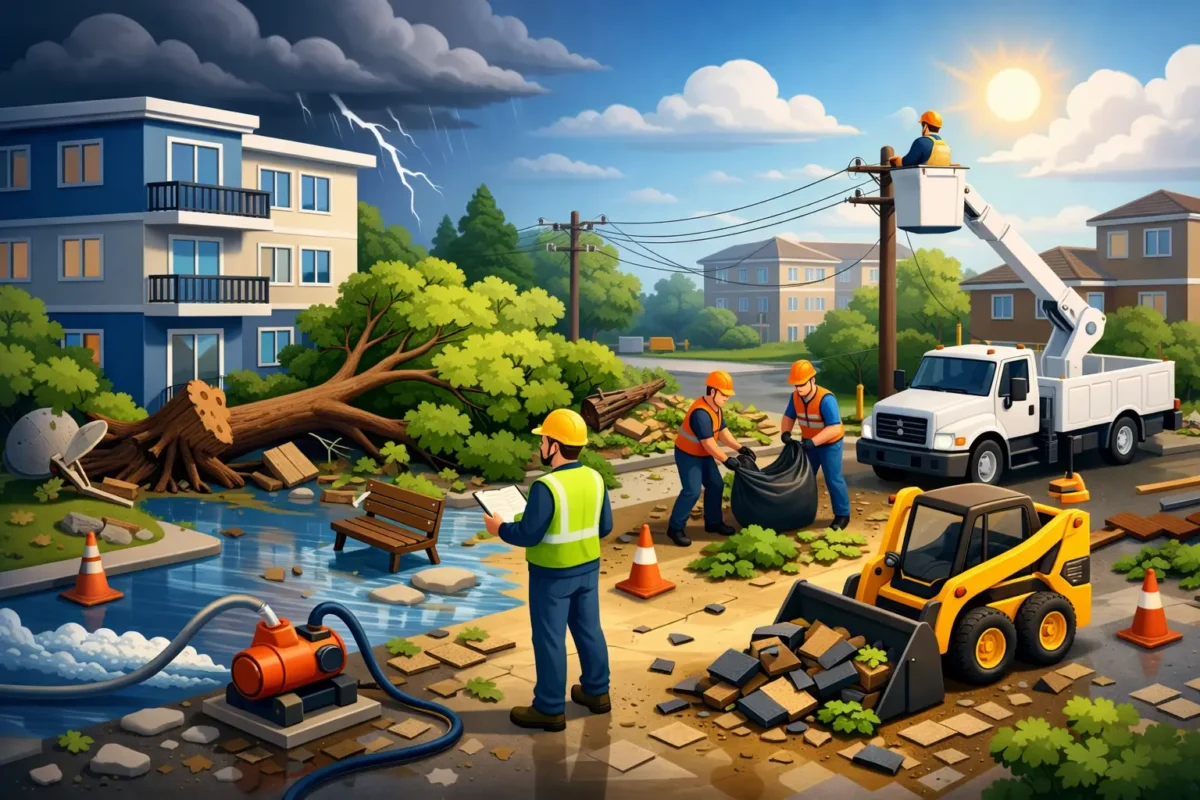
A storm can turn a normal property into an urgent safety issue before your first cup of coffee. A tenant may report a limb on a car, a parking lot may be blocked by debris, or water may be entering through a roof damaged by a fallen tree. This property manager guide to storm cleanup helps you make the right calls in the right order: protect people first, control access, document the damage, and bring in qualified help for hazardous work.
Storm cleanup is not just about making the grounds look presentable. For apartment buildings, retail sites, offices, and rental homes, a fast and organized response can reduce injuries, tenant complaints, insurance complications, and further damage to the property.
Start With Safety, Not Cleanup
Your first responsibility is to identify immediate hazards. Do not send maintenance staff outside to drag limbs, climb ladders, or cut damaged trees simply because the storm has passed. Wind-damaged trees can be under extreme pressure, and a limb that looks stable can shift without warning.
Walk the site only when conditions are safe. Bring a flashlight if power is out, but avoid standing under hanging branches, leaning trunks, loose gutters, damaged awnings, or sagging utility lines. If a tree or limb is touching a power line, stay clear, keep tenants away, and contact the utility provider or emergency services as appropriate. No one should attempt to remove it.
Set up temporary barriers around dangerous areas. Cones, caution tape, temporary fencing, and clear tenant notices can help keep people away from downed limbs, broken glass, flooded walkways, and damaged structures. If you manage a larger property, check every entrance, sidewalk, parking area, playground, dumpster enclosure, and fire lane before reopening normal access.
Decide What Requires an Emergency Call
Some storm damage can wait for regular business hours. A small branch in an unused lawn area, for example, may be a routine cleanup job. Other situations need immediate professional attention.
Call for emergency tree service when a tree has fallen on or is leaning toward a building, vehicle, fence, road, or occupied area. The same is true for split trunks, hanging limbs over walkways, uprooted trees, blocked emergency access, and branches that have damaged a roof. If you are unsure whether a tree is stable, treat it as a hazard until a trained professional can assess it.
For Albany County and other storm-prone areas of New York, heavy wet snow, ice, high winds, and saturated soil can create delayed failures. A tree may remain standing after a storm but fail later because its roots have lifted or a major limb has cracked. That is why a post-storm inspection matters even when the obvious debris has been removed.
Your Property Manager Guide to Storm Cleanup Priorities
A clear response sequence prevents your team from losing time on cosmetic cleanup while a real liability issue remains. Think of the job in four stages: stabilize the site, document conditions, arrange repairs, and communicate with the people affected.
1. Stabilize Access and Protect Tenants
Keep emergency exits and fire lanes clear. If a fallen tree blocks an entrance, direct residents or visitors to a safe alternate route and post clear instructions. For commercial properties, notify tenants if loading zones, customer entrances, or parking sections are closed.
Address water and slip hazards early. Remove standing water where possible, place warning signs around wet surfaces, and check drainage areas for debris. Leaves, limbs, and mulch can block storm drains quickly, causing a manageable rain event to become a flooding problem around foundations and parking lots.
If the building has structural damage, such as a punctured roof, broken windows, or damaged siding, take reasonable temporary measures to prevent more water from entering. Do not put anyone at risk to install tarps or make high repairs during unsafe conditions. Use qualified contractors for elevated or structurally compromised areas.
2. Document Before Debris Is Removed
Take wide and close photos of the damage before cleanup begins. Capture the tree or limb, the affected structure or vehicle, the surrounding area, and any visible pre-existing conditions. Record the date, time, weather conditions, and any tenant reports you received.
This documentation is useful for insurance claims, owner updates, contractor estimates, and future maintenance planning. It can also help explain why an area was closed or why emergency work was necessary.
Keep a simple incident log. Include who reported the issue, what action you took, when a contractor was contacted, and when the area was made safe. If a tenant’s vehicle was damaged, avoid making assumptions about fault. Provide factual information and encourage them to document the damage with their insurer as well.
3. Use the Right Contractor for Tree Hazards
Storm-damaged tree work is not ordinary landscaping. A partially fallen tree can be tangled in a roof, fence, utility line, or another tree. Cutting the wrong section can cause the remaining trunk or branches to shift suddenly.
Use a licensed and insured tree service with emergency experience for hazardous removals. Ask whether the crew can safely remove trees from structures, handle large limbs, provide cleanup, and identify remaining hazards on site. A reputable company should explain what needs immediate work and what can wait. Not every damaged tree has to be removed, but a tree with major trunk damage, root failure, or a dangerous lean may not be safe to keep.
Be clear about the scope before work begins. Emergency removal may focus first on getting a tree off a roof or reopening a driveway. Stump grinding, routine pruning, hauling, and landscape restoration may be separate steps. That is normal, especially after widespread storms when safety work must come first.
4. Communicate Early and Clearly
Tenants do not expect you to control the weather. They do expect clear information about safety, access, and next steps. Send a short update as soon as you know what has happened and what areas are affected.
Tell residents or commercial tenants which entrances, parking spaces, sidewalks, or amenities are closed. Give them a safe alternative route when one is available. If repairs are underway, provide a realistic update rather than promising an exact completion time you cannot control.
For larger properties, designate one point of contact for storm-related questions. This keeps messages consistent and prevents maintenance staff from being interrupted while managing active hazards.
Inspect for Damage That Is Easy to Miss
Once the emergency is under control, inspect the property again in daylight. Look beyond the obvious fallen branch. Check trees for cracks where limbs join the trunk, fresh splits in the bark, lifted roots, soil mounding around the base, and branches hanging in the canopy.
Also inspect roofs, gutters, downspouts, fencing, lighting, signs, HVAC equipment, and drainage paths. A branch that never hit the building may still have clogged a gutter or damaged a downspout, leading to water intrusion during the next rain.
Pay special attention to trees near parking lots, sidewalks, play areas, and building entrances. These are high-traffic zones where even a small dead limb can become a serious liability. If a tree has repeated branch failures, decay, or poor structure, schedule an evaluation before the next storm exposes the problem again.
Build a Better Storm Plan After the Cleanup
The best time to improve your storm response plan is after you have seen where it failed. Review your incident log and ask practical questions. Did your team know who to call? Were tenant contact details current? Could staff quickly locate shutoffs, emergency supplies, and alternate entrances? Did debris block drainage or fire access?
Create a seasonal inspection schedule for trees and grounds, especially before periods of high wind, heavy snow, or hurricane-related rain. Preventive pruning can reduce the risk of dead, overextended, or poorly attached limbs failing over your property. It will not make every storm harmless, but it can reduce avoidable damage.
Keep trusted emergency contacts available to your maintenance team and property owners. Waiting until a tree is on a roof to search for a qualified crew adds stress and delays. AAA Tree Service NY provides 24/7 emergency response, licensed and insured tree work, and practical recommendations for property owners who need help after severe weather.
A clean property matters, but a safe property matters more. Close off the danger, document what you find, and bring in experienced help before a damaged tree or blocked access point becomes your next emergency.