
Safe Tree Work Around Power Lines: When to Call

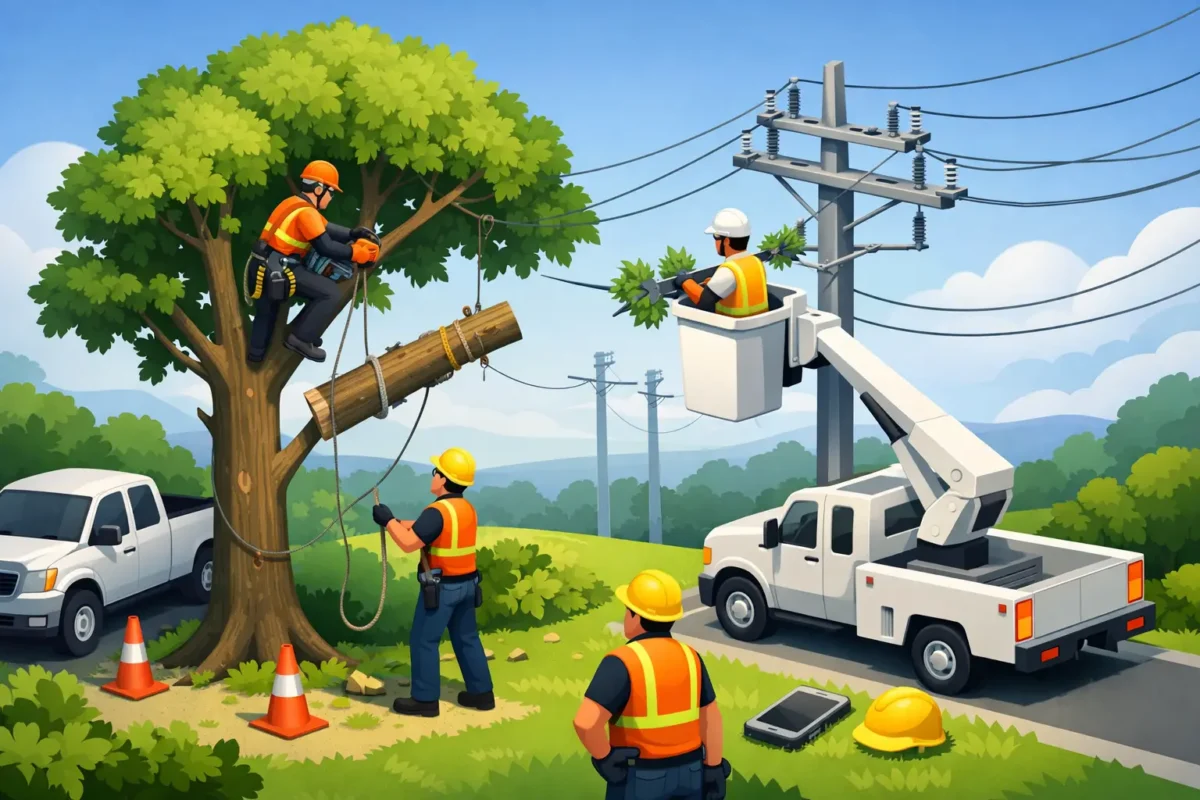
A branch does not have to touch a wire to create a dangerous situation. Safe tree work around power lines means recognizing when a routine trimming job has crossed into utility-related work – and knowing when to step away. A bad cut, a falling limb, or a metal ladder placed too close can put you, your family, and your property at risk.
For homeowners and building owners, the goal is simple: keep trees from damaging lines without taking chances near electricity. Some pruning can wait. A dead limb hanging over service wires, a storm-damaged tree leaning toward the line, or a branch already resting on a wire cannot.
Why Power-Line Tree Work Is Different
Trees near electrical equipment are not handled like trees in the middle of a yard. Electricity can travel through branches, equipment, wet ground, and people. Even a branch that looks dry or harmless may become a path for electrical current if it contacts an energized line.
There is also a big difference between the power line running from the utility pole to your home and the higher-voltage lines along the street. In either case, you should treat every wire as energized. You cannot safely identify voltage by looking at it, and you should never assume an insulated-looking wire is safe to touch.
The risk is not limited to direct contact. When a limb is cut, it can swing, drop, or snap back into a line. A rope can pull a branch in the wrong direction. A ladder can shift. Wet weather adds another layer of danger. That is why careful planning matters as much as cutting skill.
Warning Signs You Should Not Ignore
If you see a tree or limb interacting with a power line, do not try to move it yourself. Keep children, pets, vehicles, and anyone else away from the area. Do not touch the tree, the wire, a fence connected to the tree, or puddles and standing water nearby.
Call your electric utility right away if a branch is on a line, a wire is down, or you see sparks, smoke, buzzing, or flashing. If there is immediate danger, fire, or a wire on the ground, call 911 first. Utility crews handle electrical hazards; tree crews coordinate around those hazards once the area is made safe.
You should also arrange a professional assessment when you notice these conditions:
- Dead, split, or hanging limbs directly above or beside service lines
- A tree that has recently started leaning toward wires or a utility pole
- Cracked trunks, exposed roots, or soil lifting around a tree near lines
- Branches rubbing wires during wind or growing through the open space around them
- Storm damage that leaves limbs tangled in lines or suspended above driveways and roofs
Not every branch near a line requires emergency removal. A healthy limb with adequate separation may only need scheduled pruning. But a damaged, dead, or rapidly growing limb near electrical service deserves prompt attention before the next windstorm turns it into a larger problem.
What You Should Never Do Near Electrical Lines
Homeowners often get into trouble when they try to solve a small-looking issue quickly. Avoid using pole pruners, chainsaws, ladders, ropes, or bucket equipment anywhere a branch could reach a wire. A tool can extend your reach into a danger zone even when you believe you are standing far enough away.
Do not pull a branch off a wire. Do not throw a rope over it. Do not drive under or park beneath a tree that is resting on a line. If a limb falls onto your service drop, do not attempt to restore power or inspect the connection yourself.
It is also unsafe to assume that rubber gloves, work boots, or a wooden ladder make the job safe. Household protective gear is not a substitute for utility clearance procedures, specialized equipment, and trained crews.
Safe Tree Work Around Power Lines Starts With a Plan
A qualified tree professional begins by looking at the entire situation, not just the branch that concerns you. That includes the tree’s health, its lean, decay, the direction limbs are likely to fall, access for equipment, nearby buildings, traffic, and the location of all overhead lines.
If the work is close enough to create an electrical hazard, the utility may need to be involved before pruning or removal begins. This can mean de-energizing lines, providing clearance, or handling the vegetation work themselves, depending on the line and local utility rules. The right approach depends on who owns the line, how close the tree is, and whether the tree is already in contact with electrical equipment.
For a tree that can be safely worked without entering the utility’s required clearance area, a professional crew may use controlled pruning methods to reduce weight and redirect future growth. The goal is not to cut every branch back aggressively. Over-pruning can weaken a tree, encourage fast regrowth, and create more breakage in future storms.
Sometimes removal is the safer choice. A severely decayed tree, a tree with a failing root system, or one that repeatedly threatens service lines may be too risky to keep. Honest recommendations matter here. Removing a healthy tree is not always necessary, but delaying work on a compromised tree can lead to a power outage, roof damage, or a serious injury.
Pruning Is Often Preventive Work
The best time to address vegetation around lines is before it becomes an emergency. Routine pruning can remove deadwood, shorten overextended limbs, and improve clearance without putting the tree under unnecessary stress.
For commercial properties, preventive work also reduces liability. A neglected tree near a parking area, entryway, or overhead service can affect tenants, customers, employees, and deliveries. Scheduling an inspection after major storms and before seasonal high winds is often less disruptive and less expensive than responding after a branch comes down.
Storm Damage Changes the Rules
After heavy snow, ice, wind, or thunderstorms, trees can look stable when they are not. Limbs may be partially broken and held up by nearby branches or wires. A trunk can crack internally without falling right away. Root damage may not show until the ground dries or the next storm arrives.
Walk the property from a safe distance after severe weather. Look up for hanging branches, but do not stand under them. Look for new leaning, split crotches, torn bark, fresh sawdust-like debris from insect damage, and soil heaving near the base of a tree. If you see any damage near lines, keep clear and report electrical hazards to the utility.
Once the electrical risk is addressed, a professional tree crew can remove storm debris, handle unstable limbs, and assess whether the remaining tree can be saved. Fast action is useful, but rushed, unplanned cutting is not. A crew needs a safe drop zone and a clear understanding of what is holding the damaged wood in place.
Choosing the Right Help
Tree work around electrical lines is not the time to hire solely on the lowest estimate or a promise to get it done immediately. Ask whether the company is licensed and insured, whether it has experience with storm-damaged trees, and how it handles work near utility lines. A responsible company will explain when utility coordination is needed rather than taking shortcuts.
At AAA Tree Service NY, we assess the actual risk on your property and recommend the work that makes sense. With more than 26 years of experience, our crews help homeowners and property owners address hazardous limbs, storm damage, and trees that are too close for comfort – without treating every tree as an emergency removal.
If a tree is touching a line, stay back and call the utility or emergency services as needed. If it is growing too close, damaged, or showing signs of failure, arrange an inspection before the next storm gives you fewer options.