7 Signs Tree Is Hollow Inside

A tree can look solid from the driveway and still be weak where it matters most. If you are noticing signs tree is hollow inside, the real concern is not appearance – it is whether that tree can still hold up through wind, rain, or the next heavy storm without failing onto your home, cars, fence, or walkway.
A hollow tree is not always an emergency. Some trees can live for years with interior decay. But hollowing changes the way a trunk handles weight and weather, and that is where the risk starts. The harder part for most property owners is knowing the difference between a tree that needs monitoring and one that needs fast action.
Signs tree is hollow inside
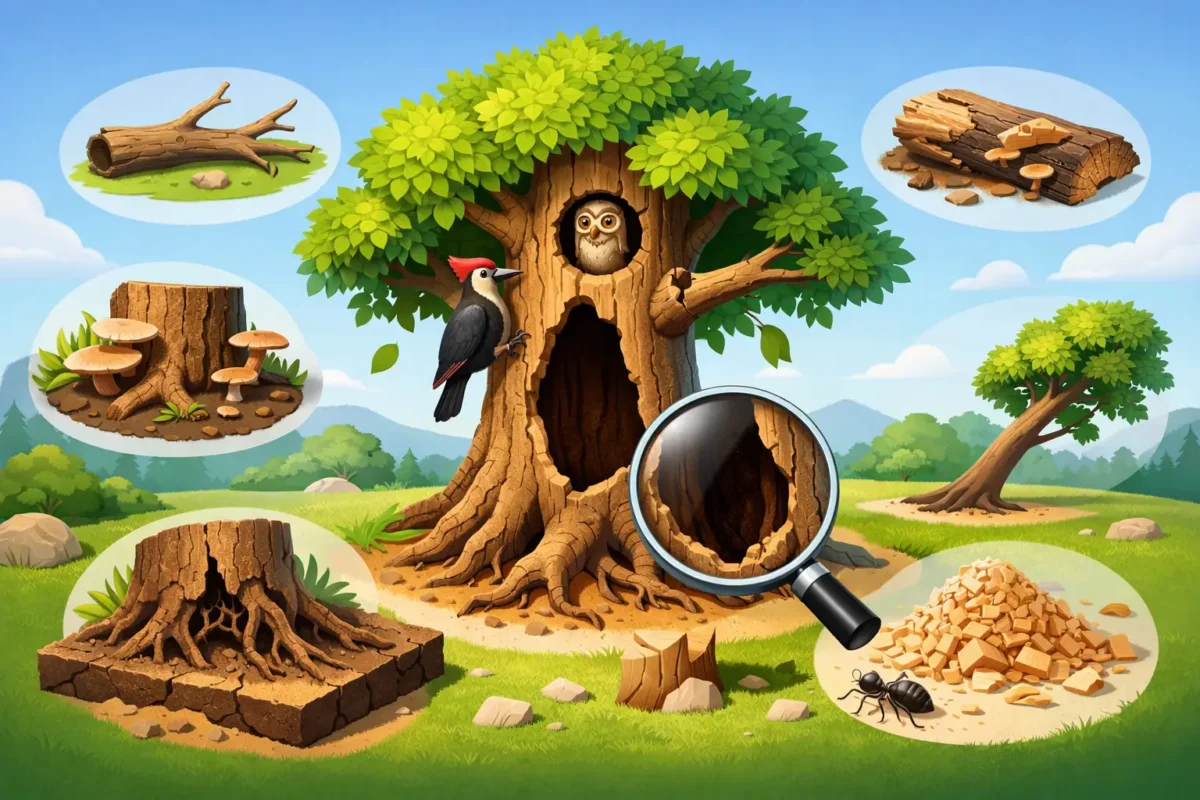
The most obvious sign is an open cavity in the trunk. If you can see a hole, missing bark, or a section where the wood has broken away, decay may already extend deeper than what is visible from the outside. The opening itself is not the whole problem. What matters is how much sound wood is still left around it.
Another common warning sign is fungal growth on the trunk or around the base. Mushrooms, conks, and shelf-like fungi often mean the tree is breaking down internally. Not every fungus means a tree is about to fail, but when you see fungal bodies growing directly from the wood, that usually points to active decay.
Cracks and seams along the trunk also deserve attention. A vertical crack can mean the trunk is under stress, especially if the tree has already lost interior strength. If a hollow area combines with splitting wood, the risk of failure goes up fast.
Dead or thinning limbs in the upper canopy can be another clue. When a tree is decaying inside, it may struggle to move water and nutrients properly. You may notice bare sections, smaller leaves, dieback at branch tips, or limbs dropping without much warning.
You might also hear a difference. In some cases, tapping the trunk with a rubber mallet or similar tool produces a hollow sound instead of a solid one. That is not a reliable do-it-yourself test by itself, but it can be one more piece of the puzzle when paired with visible damage.
Insects can point to trouble too. Carpenter ants, beetles, and other wood-boring pests are often drawn to decaying wood. They do not always cause the original problem, but they can take advantage of a tree that is already breaking down inside.
Finally, watch the base of the tree closely. Heaving soil, root damage, bark loss near the root flare, or soft, crumbling wood at ground level can be more serious than a cavity higher up the trunk. A hollow trunk is one thing. A compromised base is often where stability becomes a real concern.
Why hollow trees can become dangerous
A tree does not need to be dead to fail. That surprises a lot of homeowners. Living tissue can still be supporting leaves and branches while the inner wood is decayed enough to weaken the trunk.
The key issue is structural strength. Trees rely on the outer layers of sound wood to carry load, but there is a limit. If too much of the trunk has rotted away, especially on one side, the tree may not handle wind pressure, saturated soil, or the extra weight of snow and ice.
This is why location matters. A hollow tree standing alone in a back wooded area may not need the same response as a hollow tree leaning over a roof, driveway, sidewalk, or commercial parking area. The level of urgency depends on both the condition of the tree and what it could hit if it fails.
In places like Albany County or Nassau County, where storms, wet weather, and seasonal wind can put extra pressure on weakened trees, waiting too long can turn a manageable problem into emergency removal.
A hollow tree does not always mean removal
This is where honest advice matters. Not every hollow tree has to come down right away. Some mature trees develop cavities and still remain stable for a period of time, especially if the outer shell of sound wood is thick and the canopy is balanced.
But this is not something you want to guess at from the ground. Two trees can show similar surface damage and have very different internal strength. One may only need pruning and monitoring. The other may be one storm away from splitting.
That is why a professional inspection matters. A trained tree expert looks at the cavity size, trunk diameter, amount of sound wood, lean, root condition, canopy health, previous storm damage, and whether the decay is advancing. The recommendation should be based on risk, not fear.
What you should not do
If you think a tree may be hollow, do not climb it, do not cut large limbs yourself, and do not assume filling the cavity will fix the issue. Old advice about filling holes with concrete or sealants is outdated and can make things worse. It does not restore structural strength, and it can trap moisture or hide ongoing decay.
You also do not want to wait for obvious movement before taking action. By the time a tree starts shifting, cracking loudly, or dropping large limbs, the situation may already be dangerous.
If the tree is close to your house, utility lines, a road, or areas where people walk or park, treat it as a safety issue first.
How a tree service evaluates the risk
A proper assessment is more than a quick glance. The first step is visual inspection. The crew will look for cavities, fungal growth, decay pockets, deadwood, cracks, weak branch unions, root problems, and signs of storm stress.
From there, they consider the target area. A hollow tree over open ground may allow for a slower decision. A hollow tree over a home, shed, fence line, or business entrance changes the recommendation because the consequences are higher.
They may also look at species. Some trees tolerate internal decay better than others for a period of time. Size matters too. A small hollow ornamental tree carries a different level of risk than a large oak or maple near a structure.
The goal is simple: determine whether the tree can be made safer with pruning or support, whether it should be monitored, or whether removal is the most responsible option.
When to call right away
You should call for fast help if the tree has a visible cavity and is also leaning, cracking, dropping large limbs, or showing root movement. The same goes for any hollow tree near your home, garage, play area, driveway, sidewalk, or commercial access point.
Recent storm damage is another reason not to wait. A tree that was weakened before the storm may be much less stable afterward, even if it is still standing. Heavy rain can soften soil around compromised roots, and strong wind can expose weaknesses that were not obvious before.
If you are unsure, treat uncertainty itself as a reason to get it checked. A licensed and insured tree service can tell you whether the problem is urgent, whether the tree can stay for now, or whether removal is the safer call.
What the next step usually looks like
In many cases, the next step is a site visit and a free estimate. If the tree is dangerous but still standing, the crew may recommend priority removal before the next storm. If the structure is still sound enough, they may suggest trimming dead limbs, reducing weight in the canopy, and keeping an eye on changes over time.
For emergency situations, speed matters. If a hollow tree is threatening your property or has already partially failed, you want a team that can respond quickly, work safely, and handle cleanup without creating more damage. That is especially important on tight residential lots where there is not much room for error.
AAA Tree Service NY handles both urgent removals and routine evaluations with that same safety-first approach. If a tree does not need to come down yet, you should be told that. If it does, you need a clear answer before weather makes the risk worse.
A hollow tree is one of those problems that gets more expensive the longer it is ignored. If something about the trunk, canopy, or base looks off, trust that instinct and have it checked. A quick inspection now can spare you a much bigger mess after the next storm.