Top Reasons Trees Fall on Homes and Yards

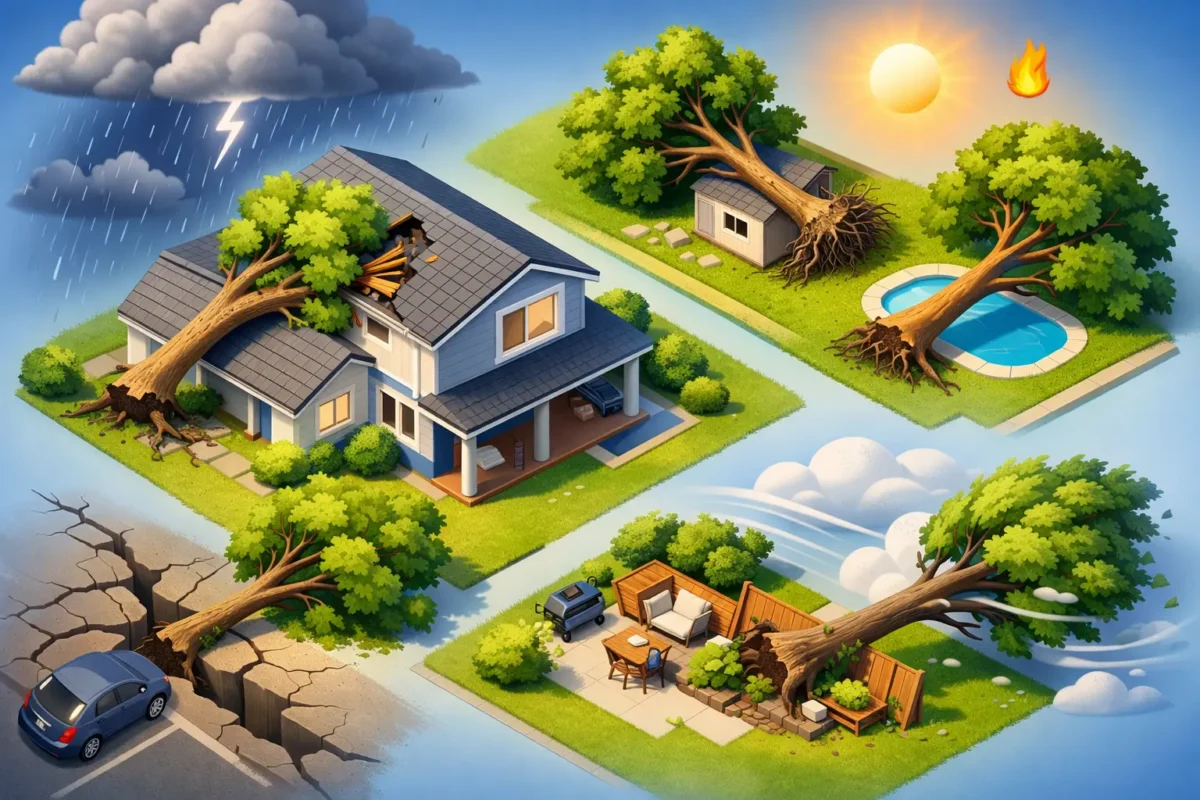
A large tree can look perfectly healthy from your kitchen window, then come down during a storm with little warning. The top reasons trees fall usually start below ground, inside the trunk, or high in the canopy – problems that can be easy to miss until wind, rain, snow, or ice puts the tree under pressure.
For homeowners and property owners, the goal is not to remove every mature tree. Healthy trees add shade, value, and privacy. The goal is to identify trees with real risk before they strike a roof, vehicle, fence, utility line, or person.
The Top Reasons Trees Fall
1. Root damage and weak root systems
Roots are the tree’s anchor. When roots are damaged, decayed, cut, or unable to grip saturated soil, even a tree with a full green canopy can fail at the base.
Construction is a common cause. Digging for a driveway, patio, sewer line, or foundation work can cut major roots without showing immediate damage above ground. Soil compaction from heavy equipment and repeated parking near the trunk can also suffocate roots over time. A tree may decline slowly for years, then fall during the first major windstorm.
Root rot creates a similar danger. Fungi in wet soil can break down structural roots, leaving the tree standing on a weakened foundation. Watch for mushrooms or fungal growth near the base, soft soil around the trunk, exposed roots, or a new lean. These signs do not always mean a tree will fall, but they deserve a professional inspection.
2. Saturated ground after heavy rain
Long periods of rain can make the ground too soft to hold a large tree in place. This is especially true for trees in clay-heavy soil, low spots, recently disturbed yards, and areas with poor drainage. When strong wind arrives after the rain, the root plate can lift right out of the ground.
You may notice soil cracking or heaving on one side of the trunk. That is an urgent warning sign. Keep people, pets, and vehicles away from the area, especially if the tree is near your house, driveway, or power lines. Do not try to pull, push, or brace the tree yourself.
3. High winds, ice, and snow loading
Wind is often the final force that brings down a compromised tree. A healthy, well-rooted tree can flex with normal wind. A tree with decay, root damage, a heavy one-sided canopy, or a narrow branch connection may not be able to handle the same conditions.
In New York, winter weather adds another layer of stress. Wet snow and ice can add hundreds of pounds to limbs, particularly on evergreen trees and trees with crowded branches. A limb may snap under the weight, or the entire tree may become unbalanced and fail.
Storm damage is not always obvious from the ground. After a major storm, look for hanging limbs, fresh cracks in the trunk, split branch unions, and branches resting on service lines. If a limb is tangled in wires, assume the line is energized. Stay clear and contact the utility company or an emergency tree service.
4. Internal trunk decay
A tree can be alive on the outside while seriously decayed on the inside. Cavities, fungal infection, old wounds, and insect activity can slowly weaken the wood that gives the trunk its strength. By the time a hollow area is visible, the decay may already extend farther than you can see.
Warning signs include large dead sections of bark, deep vertical cracks, hollow openings, mushrooms growing from the trunk, sawdust-like material from insects, and a trunk that sounds hollow when lightly tapped. Multiple stems growing from the same base can also be a concern if the connection between them has included bark or a visible crack.
Decay does not automatically mean removal is necessary. The location of the tree, the amount of sound wood remaining, its lean, and what it could hit all matter. A decayed tree in an open wooded area is different from one over a bedroom, parking area, or playground.
5. Dead, diseased, or stressed trees
Dead trees are unpredictable because dry, brittle wood can break without much force. Disease and insect damage can create similar risks by weakening roots, branches, or the trunk. A tree that leafs out late, loses leaves early, has bare upper branches, or drops large dead limbs may be under serious stress.
Not every brown branch means the whole tree is dying. Some species naturally shed interior limbs, and a single dead branch can often be pruned safely. The concern rises when dead wood is widespread, the crown is thinning, bark is peeling away in large sections, or the tree has changed quickly from one season to the next.
Prompt pruning can remove hazardous limbs before they fall. When the main trunk or root system is affected, removal may be the safer choice. An honest assessment should separate routine maintenance from a true emergency.
6. Poor structure and unbalanced growth
Some trees develop a weak shape as they grow. Co-dominant stems, where two main trunks compete from the same point, are a frequent failure point. If bark is squeezed between those stems instead of strong wood connecting them, the union can split apart under wind or snow load.
A canopy that extends heavily toward one side can also pull a tree off balance. This often happens when a tree reaches toward sunlight, grows beside a building, or has been pruned unevenly in the past. Topping a tree – cutting off large upper sections – can make the problem worse by encouraging weak, fast-growing shoots.
Proper trimming reduces weight selectively while preserving the tree’s natural structure. It is not about cutting back everything. Over-pruning can stress a tree and leave it more vulnerable to sun damage, decay, and weak regrowth.
7. Improper planting and limited growing space
A tree planted too deeply, too close to a structure, or in a small strip of compacted soil may never develop a stable root system. Girdling roots are another hidden issue. Instead of spreading outward, roots circle the trunk and slowly restrict the tree’s ability to take in water and nutrients.
This problem is common with young landscape trees, but its effects may not show up until the tree is much larger. A tree that stays small, has a thin canopy, or begins leaning after several years may need evaluation before the next storm tests it.
Warning Signs That Need Fast Attention
Some tree issues can wait for a scheduled estimate. Others should be treated as urgent. Call for help promptly if you see a sudden lean, soil lifting around the base, a split trunk, a large limb hanging over a roof or driveway, or a tree resting on another tree.
A cracked limb over a target can fall even on a calm day. The same is true of a dead tree with loose bark and brittle branches. Keep the area clear until the hazard is removed. For commercial properties, block off parking spaces, walkways, or entrances beneath the tree to reduce liability and protect visitors.
If a tree has already fallen, do not assume it is safe to approach. Tensioned branches can spring when cut, and a fallen tree may be holding up another damaged limb. Power lines, gas lines, and damaged structures add further risk. Emergency tree removal requires the right equipment, planning, and controlled cutting.
What You Can Do Before the Next Storm
A quick walk around your property a few times each year can catch many developing problems. Check trees after heavy rain, strong wind, snowstorms, and construction work. Look up for dead limbs and down for root-zone changes, cracks in the soil, fungal growth, or new leaning.
Avoid piling soil, mulch, firewood, or heavy materials against the trunk. Keep mulch a few inches away from the bark, and do not routinely park or drive over the root area. If branches are approaching your roof, service line, driveway, or neighboring property, arrange pruning before storm season rather than waiting for a break.
For large trees, climbing, cutting, and using a ladder are not safe homeowner projects. A branch can shift its weight in an instant, and one bad cut can bring wood down in the wrong direction. AAA Tree Service NY can evaluate high-risk trees, explain what work is actually needed, and provide fast emergency help when a storm has already caused damage.
The safest time to address a dangerous tree is when the ground is dry, the weather is calm, and you have choices. If you have noticed a new lean, dead upper limbs, or roots lifting near your home, act before the next storm makes the decision for you.