10 Top Signs a Tree Needs Removal Before Storms

A mature tree can add shade, privacy, and value to your property. But when its structure starts to fail, that same tree can become a serious threat to your roof, vehicles, power lines, and the people outside your home or building. Knowing the top signs a tree needs removal helps you act before high winds, heavy snow, or saturated soil turn a manageable problem into an emergency.
Not every unhealthy-looking tree needs to come down. Some can be pruned, cabled, treated, or monitored. The difference comes down to the tree’s condition, location, and likelihood of failure. If you are unsure, a professional on-site assessment is the safest next step.
1. The Tree Is Leaning More Than It Used To
A tree that has grown with a slight, stable lean is not always dangerous. A sudden lean is different. If the trunk has shifted after a storm, the ground around the base is lifting, or the tree now points toward your house, driveway, sidewalk, or business entrance, treat it as a warning sign.
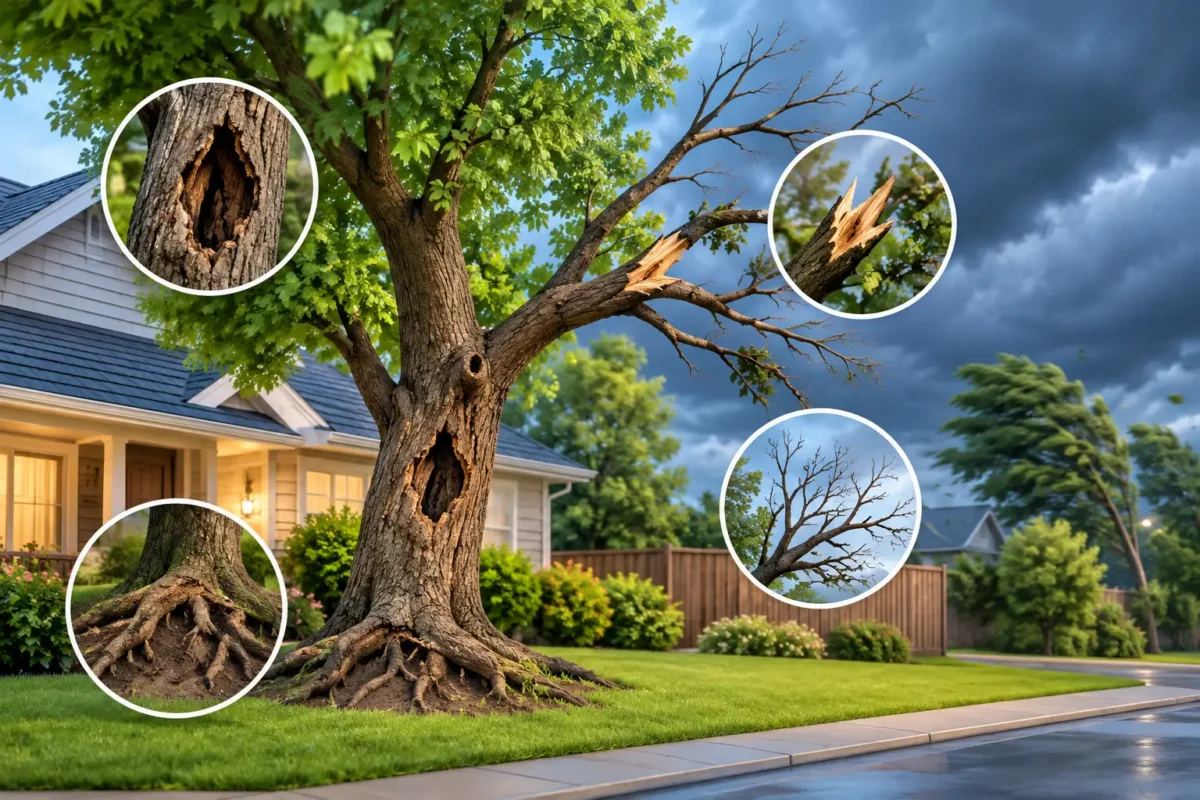
Look for exposed roots, cracked soil, or a mound of dirt on the side opposite the lean. These can mean the root plate is pulling out of the ground. Wind can finish the job quickly, especially when the soil is wet.
Do not try to pull, straighten, or brace a large leaning tree yourself. Keep people and vehicles out of the fall zone and call for professional help right away.
2. Major Limbs Are Dead, Broken, or Hanging
Dead branches are more than a cleanup issue. Large dead limbs can fall without warning, even on a calm day. Branches that are cracked, split, partly detached, or hanging above a roof, patio, driveway, playground, or sidewalk deserve prompt attention.
A single dead limb does not automatically mean the whole tree needs removal. In many cases, careful pruning solves the problem. But widespread deadwood throughout the canopy can point to decline, disease, root damage, or structural failure. When a tree is losing large limbs in several areas, removal may be the safer choice.
After a storm, avoid standing beneath damaged branches. Limbs can remain caught in the canopy and fall later when wind picks up or temperatures change.
3. You See Deep Cracks or Splits in the Trunk
The trunk is the tree’s main support system. Deep vertical cracks, open seams, hollow sections, and split trunks all reduce its ability to carry the weight of the canopy. A crack that runs through a major branch union, where two large stems meet, is especially concerning.
Some bark imperfections are cosmetic. Others reveal that wood fibers have already separated inside the tree. The risk increases when the crack faces a target such as your home, garage, fence, or a busy parking area.
A tree with a small, stable crack may sometimes be managed with pruning or support systems. A tree with a large, widening split often needs removal before it comes apart during the next storm.
4. Mushrooms or Decay Are Growing at the Base
Mushrooms growing from the trunk, root flare, or nearby ground can be a sign that decay fungi are breaking down internal wood. Soft, crumbly wood; peeling bark; cavities; and hollow areas also deserve attention.
Decay does not always mean immediate removal. Many older trees have cavities and can remain standing for years. What matters is how much sound wood remains, where the decay is located, and what the tree could hit if it fails.
Decay at the base is particularly serious because the roots and lower trunk hold up the entire tree. If you notice fungal growth combined with leaning, dead limbs, or loose soil around the roots, do not wait for a storm to test it.
5. The Roots Have Been Damaged or Are Failing
Tree roots extend well beyond the visible trunk. Construction work, trenching, driveway installation, grading changes, soil compaction, and repeated vehicle traffic can all injure roots. The tree may not show obvious trouble until months or years later.
Warning signs include thinning leaves, early leaf drop, dead branches in the upper canopy, new leaning, and soil heaving near the base. Roots that are cut, rotted, or lifted out of the ground cannot properly anchor the tree.
This is common around recently renovated homes and commercial sites where excavation took place close to mature trees. If a damaged-root tree is near a structure or regularly used area, removal may be safer than waiting for progressive decline.
6. The Tree Has Lost a Large Portion of Its Canopy
A healthy tree should have a reasonably full canopy for its species and season. If major sections are bare while surrounding trees are leafing out, or if the crown is dying back from the top down, the tree may be under significant stress.
Storm damage can also leave a tree unbalanced. Losing one or more large limbs changes how wind moves through the canopy and shifts weight onto the remaining trunk and roots. A tree that survived the first storm may be more likely to fail in the second.
Pruning can sometimes rebalance a tree after minor damage. When too much of the canopy is gone, however, aggressive trimming can make the situation worse. An experienced tree professional can tell you whether corrective pruning is realistic or whether removal is the responsible option.
7. There Is Disease or Pest Damage Throughout the Tree
Discolored leaves, unusual leaf drop, holes in the bark, sawdust-like material around the trunk, and dead branch tips can all signal disease or insect activity. Some problems are treatable when caught early. Others spread through the tree’s vascular system or weaken the wood from the inside.
The key question is not only whether the tree is sick. It is whether illness has made it structurally unsafe. A diseased tree in an open part of a large yard may be monitored in some cases. The same tree hanging over a house, sidewalk, or neighboring property requires a more cautious decision.
Avoid cutting into a diseased or insect-damaged tree without proper equipment and training. Brittle wood, hidden decay, and unstable limbs make this work risky.
8. The Tree Is Too Close to Your Home or Power Lines
Location can turn a moderate tree issue into an urgent one. Branches rubbing against a roof can damage shingles and gutters. Limbs overhanging a bedroom, entrance, parking space, or outdoor seating area leave little margin for error when they break.
Trees growing into utility lines need special care. Never attempt to trim branches near energized wires. Keep your distance, contact the utility company when appropriate, and use a qualified tree service for work that can be done safely.
A healthy tree does not need removal just because it is near a house. But a tree with structural defects, decay, or a heavy lean near a target should be assessed quickly.
9. The Tree Has Been Hit by a Storm
Storm damage is not always obvious from the ground. Lightning strikes can damage internal tissue. High winds can twist trunks and loosen roots without immediately knocking the tree down. Heavy snow and ice can overload branch unions that were already weak.
After severe weather, walk around your property from a safe distance. Look for fresh cracks, hanging limbs, new leaning, broken tops, lifted roots, and branches touching structures or wires. If the tree changed shape after the storm, assume its risk level changed too.
For an immediate hazard, keep everyone away from the area. Emergency tree removal is about controlling danger first, then handling cleanup once the site is safe.
10. The Tree Is Dead
A dead tree will not recover, and it becomes less predictable as it dries out and deteriorates. In winter, it can be harder to identify because healthy deciduous trees have no leaves. Look for brittle twigs, missing bark, extensive deadwood, fungal growth, and no visible buds when nearby trees begin to grow.
Dead trees can stand for a while, but their condition only gets worse. Limbs often drop first. Eventually, the trunk or root system can fail. If a dead tree is within striking distance of your home, garage, fence, vehicles, or a neighbor’s property, removal should not be put off.
What to Do When You Notice These Warning Signs
Start by keeping people, pets, and vehicles away from the tree’s likely fall area. Do not climb the tree, use a ladder near it, or attempt to cut large limbs with a chainsaw. A tree that looks stable can shift unexpectedly once weight is removed.
Take clear photos from a safe distance and arrange a professional assessment. A qualified crew can evaluate the trunk, roots, canopy, nearby targets, and access for safe removal. They can also tell you honestly when pruning, trimming, or monitoring is enough.
For homeowners and property owners in Albany County and across the areas AAA Tree Service NY serves, fast action before the next storm can prevent a far more expensive emergency. If a tree is leaning, splitting, dropping large branches, or threatening a structure, trust your concern and get it checked. The safest time to remove a dangerous tree is before it chooses the time for you.