
Tree Removal: When Your Property Is at Risk

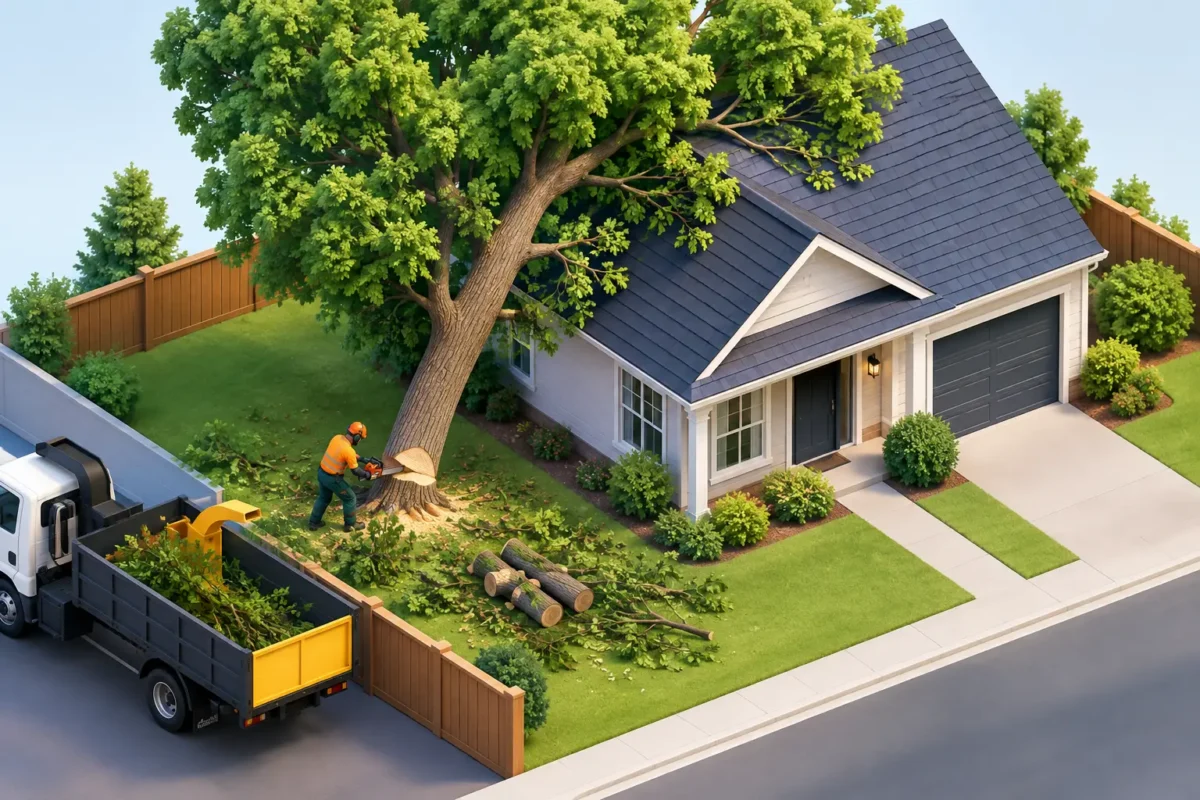
A tree can look solid from the ground and still be one hard wind away from failing. A crack in the trunk, a sudden lean, dead limbs over the roof, or exposed roots after heavy rain can turn into a real hazard fast. Professional tree removal is not about cutting down every mature tree on your property. It is about removing the trees that can no longer be managed safely and protecting the people, buildings, vehicles, and utility lines around them.
For homeowners and small commercial property owners, the right decision often comes down to condition, location, and timing. Some trees need immediate attention. Others can be monitored, pruned, or treated. The goal is an honest recommendation before the next storm makes the decision for you.
When tree removal should not wait
Call for emergency help when a tree or large limb has already fallen, is resting on a structure, is tangled in power lines, or is blocking your driveway or access route. Do not climb on the tree, pull it with a vehicle, or try to cut branches under tension. A fallen tree can shift without warning, and damaged electrical lines create a serious risk even when they do not appear to be sparking.
A standing tree may also need urgent removal if it has developed a sudden lean, especially after wind, snow, flooding, or soil movement. Freshly exposed roots, lifted soil on one side of the trunk, or a new gap where the roots meet the ground can mean the tree is losing its anchor.
Other warning signs are less dramatic but still deserve a prompt inspection. Watch for deep vertical cracks, large dead sections in the crown, hollow areas, peeling bark, mushrooms growing near the base, or limbs hanging directly over your roof, parking area, or sidewalk. No single sign automatically means a tree must come down. Together, however, they can point to internal decay or structural weakness.
In Albany County and across areas with heavy snow, ice, and strong seasonal storms, waiting until a tree fails usually costs more than addressing the risk early. Removal before an emergency gives the crew more options, reduces damage to your landscape, and avoids the added complexity of working around a broken roof or blocked entrance.
When a tree can stay
Removal is a major decision, and a reputable tree service should not recommend it just because a tree has a few dead branches or looks overgrown. Many healthy trees benefit from pruning instead. Selective trimming can remove deadwood, reduce weight on long limbs, improve clearance over a roof, and lower the chance of storm damage without sacrificing the tree.
A tree near a house is not automatically dangerous. Distance matters, but so do species, root condition, trunk structure, branch attachments, and the direction a tree could fall. A healthy, well-maintained tree can add shade, privacy, and value to your property. The better question is whether it presents a reasonable risk that pruning or routine care cannot address.
This is where experience matters. You deserve a clear explanation of what is wrong, what can be corrected, and why removal is recommended if it is the safest option. If the tree is not an immediate concern, monitoring it and scheduling maintenance may be the smarter, more affordable choice.
What safe tree removal looks like
Tree removal is controlled dismantling, not simply cutting a trunk at ground level. Before work begins, the crew should assess the tree’s lean, decay, access, nearby structures, fences, landscaping, overhead utilities, and escape routes. Those details determine whether the tree can be safely felled in one direction or needs to be taken down in smaller sections.
For trees near a house, garage, pool, road, or power line, crews commonly remove limbs and trunk sections from the top down. Each piece is lowered or directed into a clear drop zone to avoid damage below. This takes more time than dropping a tree in an open field, but it is the right approach when your property is close to the work area.
Weather also affects the plan. High wind, lightning, icy footing, and saturated ground can make a job unsafe. Fast service matters after a storm, but rushing into dangerous conditions helps no one. A safety-first crew will secure the area, address immediate hazards where possible, and complete the work when conditions allow safe control.
If utility lines are involved, keep everyone away from the area and contact the utility company. Tree crews should not attempt to remove branches from energized lines without the proper utility coordination. Treat every downed wire as live.
What affects the cost of tree removal
There is no honest flat price for every tree because every property presents different risks. A small tree in an open yard may be straightforward. A large dead oak leaning over a roof, with limited access and a nearby fence, is a completely different job.
The main factors are tree height and diameter, its health and stability, how close it is to structures or lines, equipment access, and whether the wood and debris need to be removed. Emergency work may also cost more because the crew is responding outside normal hours or working around storm damage.
Stump grinding is usually a separate part of the project. Leaving the stump is often acceptable if it is out of the way and you are not planning to replant or expand the lawn. Grinding is worth considering when the stump creates a tripping hazard, attracts pests, interferes with mowing, or prevents you from using the area.
Ask for a free estimate that explains the scope of work. You should know whether cleanup, hauling, wood removal, stump grinding, and restoration of disturbed areas are included. The lowest number is not always the best value if it leaves you with debris, an unsafe stump, or damage that should have been prevented.
How to prepare your property before the crew arrives
A little preparation helps the job move faster and protects your belongings. Move vehicles out of the driveway and away from the work zone. Bring in patio furniture, grills, toys, planters, and anything else that could be damaged by falling debris. Keep children and pets indoors or well away from the area.
If you have gates, fences, sprinklers, septic components, underground utilities, or landscaping features near the tree, point them out before work starts. Clear access to the yard is especially helpful for equipment, but do not remove fencing or attempt to trim dangerous limbs yourself to make room.
You should also tell the crew about any changes since the estimate, such as a branch that fell, new storm damage, or a vehicle that must remain on-site. Good communication prevents surprises and lets the removal plan be adjusted before cutting begins.
Tree removal after a storm
After a storm, your first job is to protect people, not to clean up quickly. Stay clear of hanging limbs, split trunks, uprooted trees, and power lines. Keep neighbors and visitors away from the affected area. If a tree has damaged your home, take photos from a safe distance for insurance documentation, but do not go onto a damaged roof or under unstable branches.
Once the immediate danger is controlled, a professional crew can remove the tree, clear access points, and handle storm debris. Some damage may be obvious, while other problems show up days later. Check your yard again after the storm for new leans, cracked leaders, and branches caught high in the canopy. Those hanging branches can fall long after the sky clears.
AAA Tree Service NY provides 24/7 emergency response for urgent tree hazards and can also help you plan routine work before conditions become critical. With more than 26 years of experience, the focus is simple: remove the risk safely, protect your property, and recommend only the work your trees actually need.
Do not wait for the next storm
If a tree is dead, leaning, cracked, or dropping large limbs near your home or business, it is worth getting it checked now. A free estimate can give you a practical plan, whether that means removal, pruning, or monitoring. Acting early gives you more control over the cost, the schedule, and most importantly, the safety of your property.