Windthrown Maple Cleanup After Severe Storms

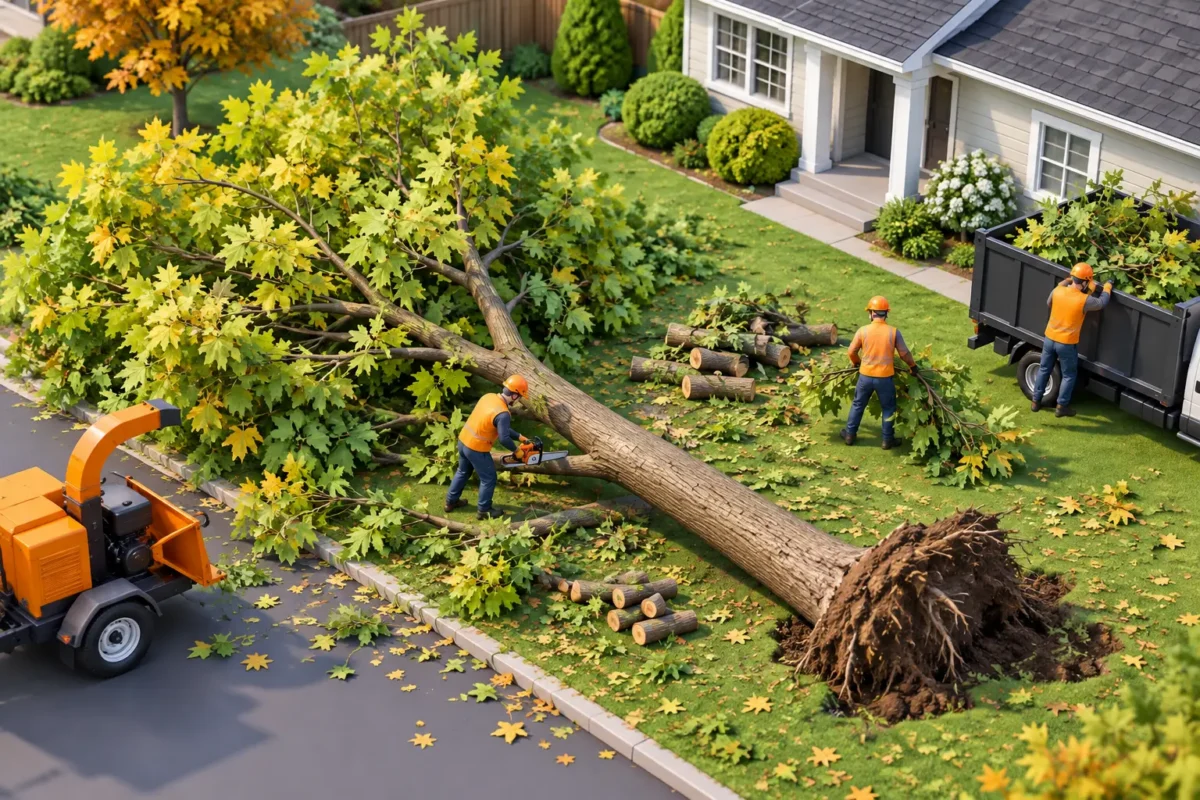
A windthrown maple can turn a quiet yard into a serious safety problem in minutes. Windthrown maple cleanup is not simply a matter of cutting up fallen branches. A mature maple can be heavy, twisted under tension, connected to utility lines, or resting on a roof, fence, vehicle, or neighboring property. Your first job is to keep people clear and prevent a manageable storm loss from becoming an injury.
Maples are common across New York properties, and their broad canopies catch a great deal of wind. When saturated soil, weakened roots, ice, or high gusts are involved, even a healthy-looking tree can fail at the base. Whether you are dealing with a fully uprooted tree or a maple that is partially down and caught in another tree, treat the area as unstable until a qualified crew has assessed it.
What to Do First After a Maple Falls
Start by checking from a safe distance. Do not walk beneath hanging limbs, step under a leaning trunk, or climb over the tree to inspect damage. A fallen maple may shift without warning, especially if its root ball is lifted, its trunk is split, or branches are supporting weight in several directions.
If the tree is touching a power line, service drop, transformer, or electrical equipment, stay well away. Keep everyone out of the area and contact your utility provider or emergency services as appropriate. Never attempt to move branches off a wire, even if the line appears to be inactive.
If there is no immediate electrical danger, document the scene before anything is moved. Take clear photos of the tree, visible damage, the root area, and any structures involved. This can help with insurance claims and gives the cleanup crew a better picture when you request service. If your roof, siding, fence, driveway, or vehicle has been damaged, contact your insurer promptly and take reasonable steps to keep additional weather out, but do not put yourself at risk to do it.
A tree blocking a driveway is frustrating. A tree pressing on a house, threatening an occupied building, or blocking emergency access is more than frustrating – it needs prompt professional attention.
When Windthrown Maple Cleanup Is an Emergency
Not every downed tree requires the same response time. A maple lying flat in an open part of your yard may be able to wait for scheduled removal if nobody can access the area. A tree under load near people or property should be treated as urgent.
Call for emergency tree service when the maple has fallen on your home or commercial building, is resting on a roof, is leaning into another tree near a target, or is blocking a driveway that you need for safe access. Immediate help is also needed when large limbs are suspended overhead, the root plate has lifted beside a sidewalk or foundation, or the tree is near electrical equipment.
For Albany County homeowners and property managers, storm conditions can change fast. Heavy rain can soften the ground further, and a second round of wind can move a tree that looked settled after the first storm. It is usually safer to secure the area and have a trained crew evaluate it before conditions get worse.
Why a Fallen Maple Can Be Hard to Remove
A windthrown tree rarely lands in a neat, predictable position. The trunk may be carrying tension on one side and compression on the other. Cutting in the wrong place can cause the trunk to roll, spring upward, or pinch the saw bar. Large branches can also act like springs when they are bent against the ground or another tree.
The exposed root ball creates another concern. It may weigh several tons and can drop back into the hole as sections of the trunk are removed. That is why a professional crew plans the sequence before making cuts. The right approach may involve removing limbs first, using rigging to control sections, supporting damaged wood, or bringing in equipment to lift and haul material safely.
The cleanup method also depends on where the maple landed. A tree in an open yard may be processed differently than one over a garage, fence, pool, septic area, garden, or parked car. Saving a structure from additional damage often requires slower, more controlled work. Fast does not mean rushed.
What You Can Safely Do Yourself
You can help without putting yourself in the cutting zone. Keep children, pets, visitors, and tenants away from the affected area. Move vehicles only if they can be moved without driving under limbs or near wires. If possible, mark off the area with cones, tape, or another visible barrier.
You can also clear very small, loose twigs from a safe open area after the storm has passed. Stop immediately if a branch is bent, caught, elevated, or connected to larger wood. Do not use a chainsaw on a trunk, a hanging limb, or anything resting against a structure unless you have the training, protective equipment, and a clear understanding of the forces involved.
Avoid pulling on branches with a truck, tractor, winch, or rope. That shortcut can shift the entire tree toward you, pull down a nearby limb, or cause further property damage. A downed maple does not need to be large to create dangerous stored energy.
How a Professional Cleanup Crew Handles the Job
A safe crew begins by evaluating the tree, the root system, overhead hazards, access points, and anything the tree could strike if it moves. They identify tension points, decide where equipment can safely be placed, and determine whether the work needs to be done in sections.
For a maple on a structure, the crew may use controlled lowering methods to remove branches and trunk sections without dropping weight onto the roof. If the tree is fully uprooted in an open area, they can work through the canopy and trunk in a planned order while accounting for the exposed root plate.
Cleanup should include more than cutting the tree into pieces. Ask what will happen to brush, logs, sawdust, and the remaining stump. Depending on your needs, wood can be removed, cut into manageable lengths, or left for firewood. Stump grinding may be a good next step if the tree was close to a lawn area, walkway, or future planting site. If the root ball tore up a large section of ground, the site may also need grading and restoration after removal.
AAA Tree Service NY provides emergency response and practical cleanup recommendations based on the actual risk at your property. Some jobs need immediate action. Others can be scheduled after the area is secured. You should get an honest assessment, not pressure to remove trees that are not a current threat.
Check Nearby Trees Before the Next Storm
One windthrown maple can be a warning sign, but it does not automatically mean every nearby tree needs removal. Look for changes that deserve an inspection: newly exposed roots, soil heaving around the base, fresh cracks in the trunk, a canopy that now leans, broken major limbs, or branches rubbing against your roof.
Maples with dense canopies can benefit from selective pruning to reduce wind resistance and remove dead or poorly attached limbs. Pruning is not a cure for major root decay, trunk cracks, or severe lean, but it can reduce risk when the tree is otherwise sound. The best recommendation depends on the tree’s condition, its location, and what it could hit if it fails.
If a maple came down near a building, do not assume the cleanup is complete once the trunk is gone. Walk the area after removal and look for damaged gutters, loose siding, cracked pavement, torn fencing, and drainage issues around the uprooted area. Addressing those problems early can prevent a small repair from becoming a larger one.
Get Help Before You Start Cutting
When a storm leaves a maple on your property, give yourself permission to pause. Secure the area, document the damage, and bring in experienced help for anything large, loaded, elevated, or close to a structure. A careful windthrown maple cleanup protects your home, your family, and the people who use your property long after the storm has moved on.