
How Much Does Emergency Tree Removal Cost?

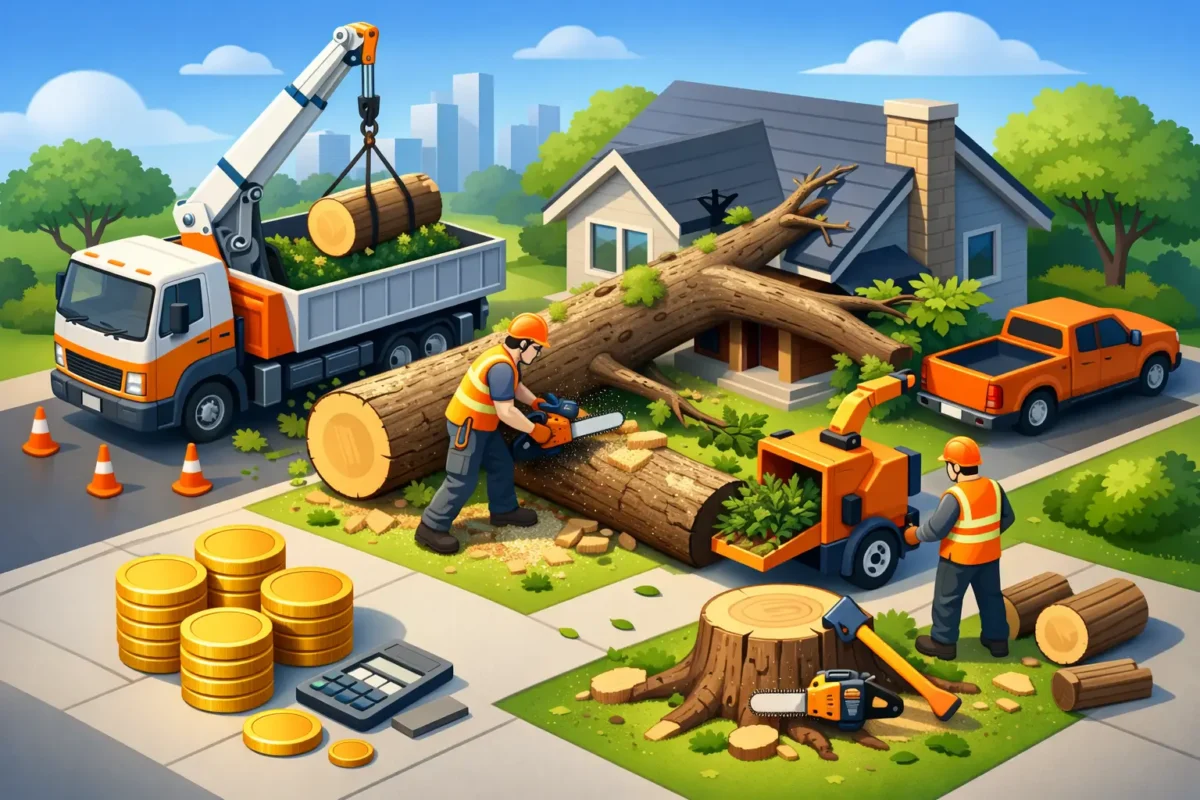
A tree on the lawn can wait. A tree on your roof, across your driveway, or hanging over power lines cannot. If you are asking how much does emergency tree removal cost, you are usually not planning ahead – you are trying to protect your home, your family, and your next move.
For most homeowners, emergency tree removal usually falls somewhere between $500 and $5,000+, with some smaller jobs on the low end and major storm-damage removals climbing well beyond that. That is a wide range, and there is a reason for it. Emergency work is priced around danger, access, urgency, equipment, and the condition of the tree, not just the tree’s height.
How much does emergency tree removal cost in real situations?
The fastest way to understand pricing is to look at what crews are actually dealing with on site. A small tree or large limb that fell cleanly into an open yard is a very different job from a split oak resting on a house. In one case, removal may be straightforward. In the other, the crew may need rigging, cranes, roof protection, traffic control, and extra labor to take the tree apart piece by piece.
In practical terms, a simple emergency removal for a smaller tree may cost around $500 to $1,200. A mid-sized tree blocking a driveway or leaning dangerously after a storm might land closer to $1,200 to $2,500. If the tree is large, tangled in structures, or located near wires, the price can move into the $2,500 to $5,000+ range quickly.
The emergency part matters. After a storm, tree companies are responding fast, often after hours, in bad weather, and under hazardous conditions. That urgency increases labor demands and equipment scheduling, especially when homeowners need immediate stabilization before the next storm hits.
What drives the price up or down?
Tree size and weight
Larger trees cost more because they take longer to dismantle and create more debris. A tall maple with a broad canopy simply requires more cutting, more rigging, and more hauling than a smaller ornamental tree.
Weight matters just as much as height. Water-soaked wood, split trunks, and uprooted root balls can turn an already difficult job into a heavy-lift situation.
Where the tree landed
If the tree is lying in an open area with easy equipment access, the job is usually more affordable. If it is on a roof, fence, garage, shed, or vehicle, pricing rises because the crew has to work slower and more carefully to avoid making the damage worse.
A tree that is still partially standing can be even more dangerous than one already on the ground. Cracked trunks and hanging limbs are unstable. They can shift without warning, which adds complexity and risk.
Access to the site
Backyards with tight gates, steep slopes, septic systems, retaining walls, or limited truck access often cost more. When heavy equipment cannot get close, the crew may need to climb, rig sections manually, or carry debris farther.
That extra labor adds time, and time adds cost.
Proximity to power lines
This is one of the biggest variables. If a tree is touching or threatening power lines, the job may require coordination with the utility company. In some cases, only certain parts of the work can begin once the power situation is made safe.
Homeowners should never try to cut or move a tree near energized lines. The danger is immediate, and the wrong move can turn a tree emergency into a life-threatening incident.
Time of day and storm demand
Emergency service at night, on weekends, or during major storm cleanup periods can cost more than daytime work scheduled during normal hours. When a region gets hit hard, demand spikes fast. Crews may be booking priority jobs based on hazard level, especially for trees on homes, blocking roads, or creating active safety risks.
That does not mean every company is overcharging during storms. It means emergency response requires extra staffing, rapid dispatch, and specialized equipment at the exact time everyone needs help.
Insurance and emergency tree removal cost
Many homeowners want to know whether insurance will pay. The answer depends on what the tree hit and why the damage happened.
If a tree falls on a covered structure such as your house or garage because of a storm, homeowners insurance may help cover removal as part of the claim. If the tree falls in the yard and does not damage a covered structure, coverage is often more limited or may not apply at all.
Policies vary, so it is smart to document everything right away. Take photos from a safe distance, note the time of the storm, and keep any written estimate or emergency invoice. If the tree created immediate danger, getting it secured quickly is still the priority. You can sort out the paperwork after the site is safe.
It is also worth asking whether debris hauling, roof protection, or temporary stabilization is included in your claim. Some homeowners assume the full cleanup is covered and later find out there are limits.
When a tree removal is truly an emergency
Not every damaged tree needs same-night removal, but some situations absolutely do. If the tree is on a structure, leaning toward the home, blocking emergency access, hanging over a driveway, or cracked near the base, it should be treated as urgent.
The same goes for large broken limbs suspended overhead. What looks stable from the ground may fail with the next gust of wind. If children, pets, neighbors, or parked vehicles are anywhere near the drop zone, waiting can get expensive fast.
A good emergency tree company will tell you honestly whether you need full removal immediately or whether the hazard can be stabilized first. That kind of recommendation protects both your property and your budget.
How to avoid paying more than necessary
Emergency work is never cheap, but there are ways to avoid paying more than the situation requires. The first is simple: do not wait once the tree becomes dangerous. A leaning tree or split trunk after a storm can sometimes be handled before it lands on the house. Once impact damage happens, the job becomes more complex and more expensive.
The second is to ask what is included in the estimate. Some prices cover only cutting the tree down, while others include debris removal, hauling, cleanup, and stump grinding. In a true emergency, stump grinding is often a separate service and not always needed right away.
The third is to work with a licensed and insured company that handles hazardous removals regularly. The cheapest quote is not always the best value when a crew is working above your roofline or near utility hazards. Experience matters because mistakes in emergency tree work can cost far more than the original estimate.
What homeowners in storm-prone areas should expect
In New York and other storm-prone regions with mature trees, emergency pricing often reflects local conditions. Wet snow, high winds, saturated soil, and older trees near homes create a lot of partial failures – leaning trunks, cracked leaders, uprooted bases, and heavy limbs over driveways.
That is why local experience matters. A company familiar with regional weather patterns can often spot whether a tree is likely to fail further, whether the root system has been compromised, and whether the immediate priority is removal, trimming, or securing the area until full work can begin. AAA Tree Service NY built its reputation on exactly that kind of fast, safety-first response.
The real question behind the price
When homeowners ask how much does emergency tree removal cost, they are usually asking something bigger: how serious is this, and how fast do I need to act? The price matters, but so does the cost of waiting. A tree that is barely hanging on today can be through the roof tomorrow.
If you are dealing with storm damage, do not guess from the ground and do not try to move a hazardous tree yourself. Get a professional assessment, ask for a clear estimate, and focus on making the property safe first. The best emergency tree service does more than remove wood – it helps you take control of a bad situation before it gets worse. Book us