What Is Emergency Tree Removal?

A tree does not have to be completely on the ground to be an emergency. If a large limb is split over your roof, the trunk is suddenly leaning toward your house, or roots have lifted after a storm, you may already be dealing with a dangerous situation. That is what is emergency tree removal really comes down to – removing a tree, or part of a tree, right away because it poses an immediate risk to people, homes, vehicles, power lines, or access areas like driveways.
For homeowners, the biggest mistake is waiting too long because the damage does not look dramatic enough yet. Trees often fail in stages. A crack gets wider, the lean gets worse, and one hard rain or wind gust turns a problem into a costly insurance claim. Emergency tree removal is about acting before that next step happens.
What Is Emergency Tree Removal?
Emergency tree removal is the urgent removal of a hazardous tree or broken tree section that has become unsafe due to storm damage, structural failure, disease, root failure, impact damage, or sudden leaning. Unlike routine tree work, this is not scheduled weeks out for appearance or basic maintenance. It is a rapid-response service focused on immediate safety and property protection.
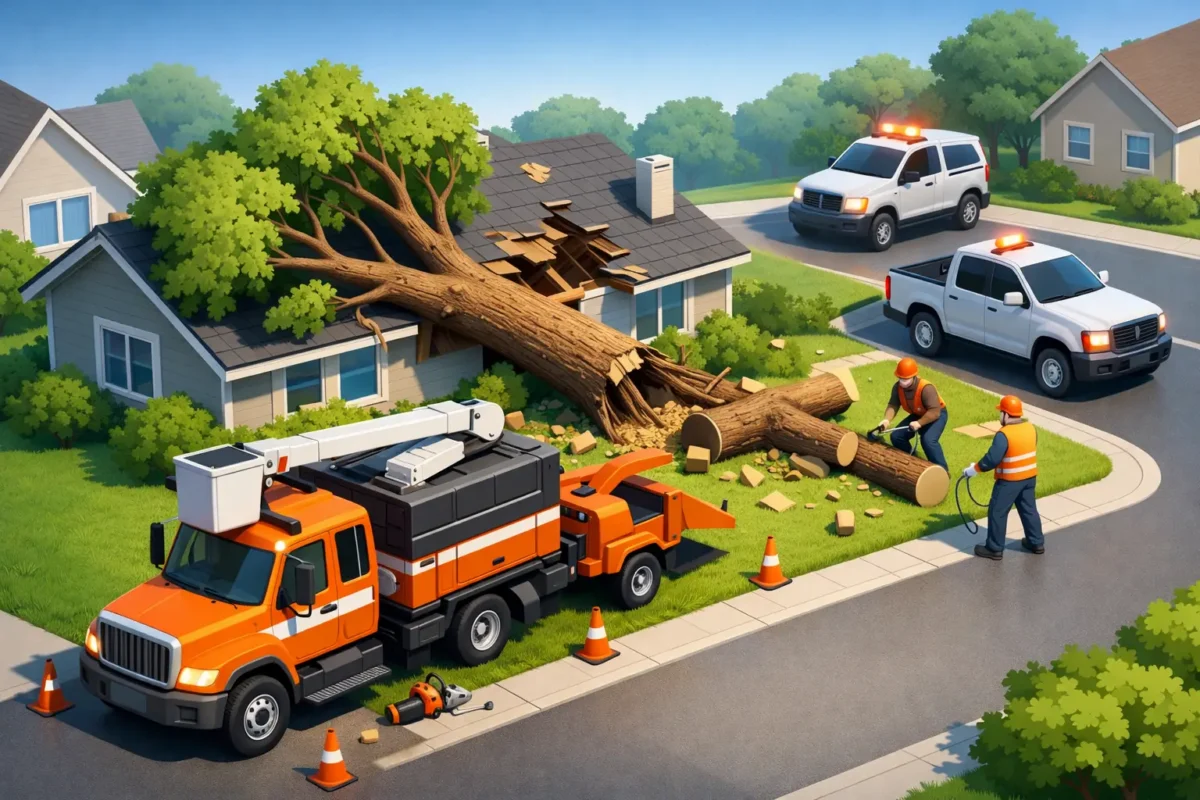
In practical terms, emergency tree removal usually happens when a tree has already fallen, is partially fallen, is hanging dangerously, or is likely to fail very soon. The goal is to stabilize the scene, remove the hazard safely, and prevent more damage.
That can mean taking a whole tree down, removing a broken top, cutting apart a tree lying on a house, or clearing a blocked driveway so emergency vehicles or homeowners can get through. Every job is different, which is why fast assessment matters.
When a Tree Problem Becomes an Emergency
Not every damaged tree needs same-day removal, but some situations should never wait. If the tree is touching a home, resting on a garage, blocking your main entrance, or threatening utility lines, it is an emergency. The same goes for a tree that is suddenly leaning after a storm, especially if the soil around the base is lifting or cracking.
Another common emergency is a split trunk or major limb failure. A heavy branch hanging over a roof, sidewalk, or parked car can come down with very little warning. Homeowners also run into trouble when a tree looks stable from one angle but is hollow, decayed, or broken inside.
This is where experience matters. The risk is not always obvious to someone standing in the yard. A damaged tree can hold together just long enough to make people think it is safe. Then it fails during cleanup, while someone is moving a car, or overnight in higher winds.
Common Causes of Emergency Tree Removal
In New York and other storm-prone areas, weather is the main trigger. High winds, heavy snow, ice buildup, and saturated soil can all cause sudden tree failure. Mature trees close to homes are especially vulnerable when limbs are overextended or root systems have weakened over time.
But storms are not the only reason. Emergency removals also happen because of internal decay, disease, pest damage, lightning strikes, construction damage to roots, or old pruning wounds that weaken the structure. Sometimes a tree has been declining for years and one rough weather event finally pushes it past the point of recovery.
That is also why preventive care matters. Regular trimming and pruning can reduce some storm risks, but not every emergency can be prevented. When a failure happens, the priority shifts from maintenance to safe removal.
Signs You May Need Emergency Tree Removal Right Now
Some warning signs should push a homeowner to call for help immediately. A tree that is newly leaning, especially toward the home, is a serious concern. So is exposed root lifting, fresh cracks in the trunk, hanging limbs, or a tree that dropped a major branch and still has visible splitting overhead.
You should also treat it as urgent if you notice the tree touching utility lines, pressing against the roof, or blocking access to your property. If a storm just passed and something looks off, trust that instinct and get it checked.
A few situations are less obvious but still dangerous. For example, if bark has suddenly torn away, the ground around the tree is heaving, or the canopy is twisted unevenly after strong wind, the structure may already be failing. It depends on the tree, the load, and what it could hit if it comes down. That is why a quick professional assessment is worth it.
Why Emergency Tree Removal Is Different From Routine Removal
Routine tree removal is planned. The tree is inspected, equipment is staged, and the work is done under controlled conditions. Emergency removal is different because the tree is already unstable, the property may already be damaged, and the work often has to happen around active hazards.
That could include broken limbs under tension, trees resting on structures, unstable root plates, slick ground, or limited access due to debris. In some cases, power lines are nearby, which adds another level of danger and often requires utility coordination.
This is not the kind of job for a ladder, a chainsaw, and good intentions. A compromised tree can shift without warning. Pieces under pressure can spring or roll. What looks like a simple cut can change the entire load path of the tree.
What Happens During an Emergency Tree Removal Service
The first step is usually a hazard assessment. The crew identifies what is unstable, what is supporting weight, what structures are at risk, and how to remove the tree with the least additional damage. The removal plan depends on where the tree landed, how badly it is broken, and whether access is open for equipment.
In some emergencies, the immediate goal is not full cleanup. It is making the area safe as fast as possible. That may mean removing the section on the house first, taking pressure off a structure, or clearing a driveway so the homeowner can get in and out safely.
After the hazard is controlled, the rest of the tree and debris can be cut, lowered, hauled away, or staged for full cleanup. If the stump or root ball is part of the danger, that may be addressed too, though sometimes final stump work is done later once the urgent risk is gone.
What Homeowners Should Do Before Help Arrives
The safest move is simple: stay away from the tree. Do not walk under hanging limbs, do not try to cut branches yourself, and do not touch anything near utility lines. If the tree is on the house, get everyone clear of the area that is affected and avoid rooms under the damage.
If it is safe to do so, take photos for insurance and keep pets and children away from the scene. Move vehicles only if the path is clear and there is no overhead hazard. If power lines are involved, treat the area as live and stay back.
Speed matters, but safety matters more. A lot of homeowner injuries happen after the storm, during cleanup attempts that seem minor in the moment.
Does Insurance Cover Emergency Tree Removal?
Sometimes yes, sometimes no. Coverage often depends on why the tree fell and what it damaged. If a tree falls on a covered structure like your house or garage, insurance may help with removal related to that damage. If the tree falls in the yard and does not hit anything, coverage is less certain.
Policies vary, deductibles vary, and storm-related claims can get complicated. That is why documentation helps. Clear photos, a record of the date and weather event, and a professional assessment can make the process smoother.
For homeowners, the main thing is not to delay urgent work while trying to sort out every insurance detail first. If the tree is dangerous, get it secured. The cost of waiting can be much higher than the cost of acting.
How to Reduce the Chances of a Future Emergency
You cannot control the weather, but you can reduce your risk. Trees near roofs, driveways, fences, and power-adjacent areas should be checked regularly, especially if they are older, damaged, or have a history of dropping limbs. Pruning dead wood, thinning overloaded branches, and removing compromised trees before storm season can prevent a lot of emergency calls.
Honest recommendations matter here. Not every tree needs removal. Sometimes trimming is enough. Sometimes the right answer is monitoring a tree for changes. But when a tree is already failing, delaying service usually does not save money. It just increases the chance of property damage.
At AAA Tree Service NY, that is why emergency work and preventive care go hand in hand. The goal is always the same – protect the home, protect the family, and solve the problem before it gets worse.
If a tree on your property looks unstable, do not wait for the next storm to make the decision for you. Fast action today is often the simplest way to avoid a much bigger problem tomorrow. chat whit Us