
Stump Grinding vs Stump Removal

That stump in your yard is not just an eyesore. It can trip someone, attract pests, get in the way of mowing, and turn a simple landscaping project into a bigger job. When homeowners compare stump grinding vs stump removal, the real question is usually this: what solves the problem without creating a new one?
The right answer depends on what you plan to do with the area, how close the stump is to your home or hardscape, and how fast you want the yard usable again. Sometimes grinding is the smart, affordable fix. Other times, full removal is worth it because leaving roots behind will cause trouble later.
Stump grinding vs stump removal: what is the difference?
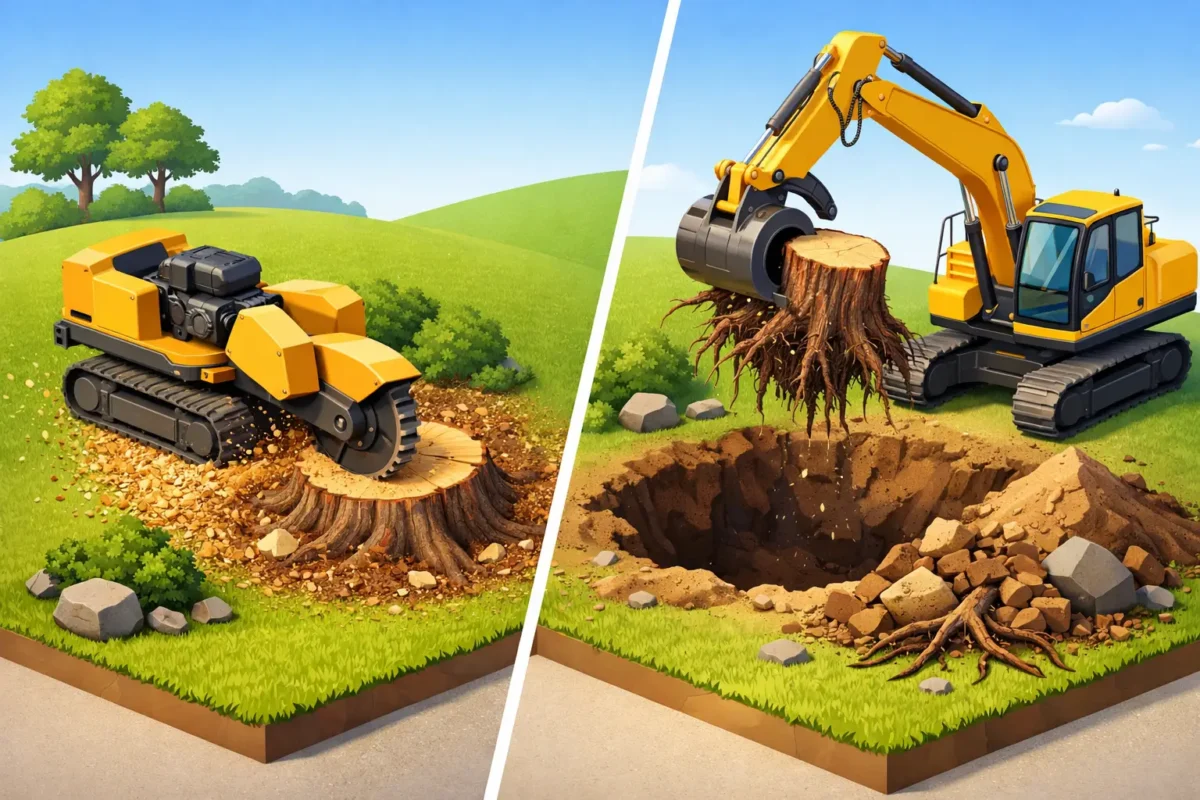
Stump grinding means using a powerful machine to grind the stump down below ground level. The visible stump is turned into wood chips, and the root system is mostly left in place to break down naturally over time. The surface becomes much easier to level, cover with soil, and blend into the yard.
Stump removal is more aggressive. It involves pulling out the entire stump along with the main root ball. That leaves a larger hole and a more disrupted area, but it clears the way for full regrading, construction, or replanting where roots cannot be left behind.
For many residential properties, grinding handles the immediate hazard with less damage to the yard. Removal is often chosen when the site needs to be completely cleared or when root issues are likely to interfere with future work.
When stump grinding makes more sense
If your main goal is to get rid of the visible stump fast and keep costs under control, grinding is usually the better fit. It is less invasive, typically faster to complete, and easier on surrounding lawns, walkways, and garden beds.
This is why many homeowners choose grinding after a tree has been removed. The stump is gone from sight, the area can be restored without major excavation, and the property becomes safer and easier to maintain. If you want to seed grass, add mulch, or simply stop tripping over the stump, grinding often does the job.
Grinding also makes sense when the stump is near fences, patios, driveways, or underground utilities. Pulling a full root ball can disturb more soil and create more risk around nearby structures. A careful grinding approach can reduce that disruption.
Another factor is cleanup. Grinding leaves mulch-like wood chips that can sometimes be reused in the landscape. Removal creates more debris and usually requires heavier restoration afterward.
When full stump removal is the better call
There are situations where grinding is not enough. If you are planning to build an addition, install a foundation feature, pour concrete, or do major hardscaping in the exact area, the roots may need to come out completely.
Removal is also worth considering if the stump is tied to root problems that could continue after grinding. Some species can sprout from remaining roots. In other cases, old roots may interfere with drainage work, trenching, or new planting plans.
If the stump came from a diseased tree, the decision may require a closer look. Grinding is still common in many cases, but if there is concern about soil health, root decay, or future planting in the same spot, a more complete removal may be the safer long-term choice. This is where honest site assessment matters. You do not want to pay for more work than you need, but you also do not want to leave behind a hidden problem.
Cost, speed, and yard damage
For most property owners, this is where the decision gets real. Grinding is usually less expensive than removal because it takes less labor, less excavation, and less restoration. It is often the fastest way to eliminate the hazard and improve the look of the yard.
Removal tends to cost more because it is a bigger operation. The equipment may need more access. The crew has to extract the stump and root mass, haul material away, and deal with the hole left behind. If the stump is large or in a tight area, the work gets more complicated.
Yard damage is another trade-off. Grinding is usually easier on the surrounding landscape. Removal can tear up more of the lawn and leave a section that needs substantial fill, grading, and reseeding. If your property already has limited access or carefully maintained landscaping, that matters.
That does not mean removal is the wrong choice. It just means the value has to match the goal. If complete root clearance is necessary, doing the bigger job once is often better than trying to work around leftover roots later.
What happens to the roots?
This is one of the biggest points of confusion in stump grinding vs stump removal. With grinding, the large visible stump is gone, but many roots remain underground. In most cases, those roots will decay naturally. For a lot of homeowners, that is perfectly acceptable.
The catch is that root decay takes time. As roots break down, the ground can settle somewhat. If you plan to plant grass, this is usually manageable with some added soil over time. If you are planning a structure or precise grade work, it may be a problem.
With removal, the main root mass comes out, which reduces those future settling concerns in the immediate area. Smaller roots may still remain depending on the job, but the site is much more fully cleared.
Safety matters more than most people think
A stump job can look simple from the street. It is not. Grinding equipment is powerful, heavy, and capable of throwing wood and debris at high speed. Full stump removal adds excavation risks, possible utility concerns, and more ground disturbance.
That is why this is not a weekend rental decision for most property owners. If the stump is close to a home, fence, utility area, driveway, or public-facing part of a property, one mistake can cost far more than professional service. A licensed and insured crew should assess access, underground risk, nearby structures, and how to leave the area safe when the work is done.
That matters even more after storm damage. In parts of New York where heavy weather can bring down trees fast, a stump may be the last visible part of a larger root failure issue. What looks like cleanup might actually need a more careful plan.
Which option is best for your property?
If you want the shortest answer, choose grinding when you want a faster, less invasive, more affordable way to get rid of the stump. Choose removal when you need the roots out for construction, major landscaping, or to prevent future interference.
But there is an it-depends factor that should not be ignored. Tree species, stump size, location, access, soil condition, and future plans for the yard all matter. A stump in the back corner of a lawn is one thing. A stump near a sidewalk, foundation, or future patio is another.
For homeowners and building owners, the biggest mistake is delaying the decision while the stump keeps creating risk. It can become a tripping hazard, a mower obstacle, a pest issue, or a roadblock to drainage and grading work. If the area is already compromised from a removed or fallen tree, waiting rarely improves the situation.
A good tree service company should not push one option every time. They should explain what solves the actual problem, what the yard will look like afterward, and whether paying more now will save money later. That honest recommendation is what protects your property.
If you are weighing stump grinding vs stump removal, focus on your end goal, not just the stump itself. Ask what is being left behind, what the area will be used for next, and what level of disruption you can tolerate now. The best choice is the one that makes the site safer, cleaner, and easier to live with before the next project – or the next storm – forces the issue.