Can Dead Trees Fall Suddenly? Warning Signs

A dead tree can look unchanged for months, then come down during one hard wind gust. So, can dead trees fall suddenly? Yes. While the decline usually happens over time, the actual failure can be fast, unpredictable, and severe enough to damage a roof, vehicle, fence, power line, or nearby building.
If you have a dead, dying, or visibly damaged tree near your home or commercial property, do not assume it will stay standing until you have time to deal with it. The safer approach is to have it assessed before the next storm puts pressure on an already weakened trunk or root system.
Why dead trees can fail without much warning
A living tree has active tissues that help it respond to stress. Its roots hold soil, its wood retains some flexibility, and its canopy can recover from routine weather damage. A dead tree loses those defenses. As decay moves through the trunk, major limbs, or roots, the tree may still look solid from a distance while becoming structurally weak inside.
Wind is often the final trigger, but it is rarely the only reason a tree falls. Heavy rain can loosen soil around compromised roots. Snow and ice can overload brittle branches. A sudden thaw can saturate the ground and reduce root support. Even a calm day can be enough if a decayed trunk finally gives way under its own weight.
That is why a tree does not need to be completely leafless or lying on the ground to be dangerous. Some trees die gradually from disease, insects, root damage, or old age. Others decline after construction work, drought, flooding, lightning, or storm damage. The outside appearance tells part of the story, not all of it.
Can dead trees fall suddenly in calm weather?
They can. A severe storm makes failure more likely, but dead trees and large dead limbs sometimes drop on relatively calm days. Internal rot may have weakened the wood for years. Once the remaining healthy wood can no longer carry the load, the trunk can split or a branch can break with little warning.
This risk is especially serious when the tree is close to a house, driveway, sidewalk, parking area, play space, or neighboring property. For building owners, a hazardous tree can also create a preventable liability issue if someone is injured or property is damaged.
A standing dead tree in an open wooded area may not require the same urgency as one leaning over your roof. Risk depends on both the tree’s condition and what it could hit if it fails. That distinction matters. Honest tree care means addressing the real hazard, not recommending removal for every tree with a few dead branches.
Warning signs that a tree may be unstable
Some trees provide clear clues before they fail. Walk around your property from a safe distance and look for changes after storms or during regular yard maintenance. Do not climb, shake, or pull on suspicious branches to test them.
Call for a professional assessment if you notice several warning signs, especially on a large tree:
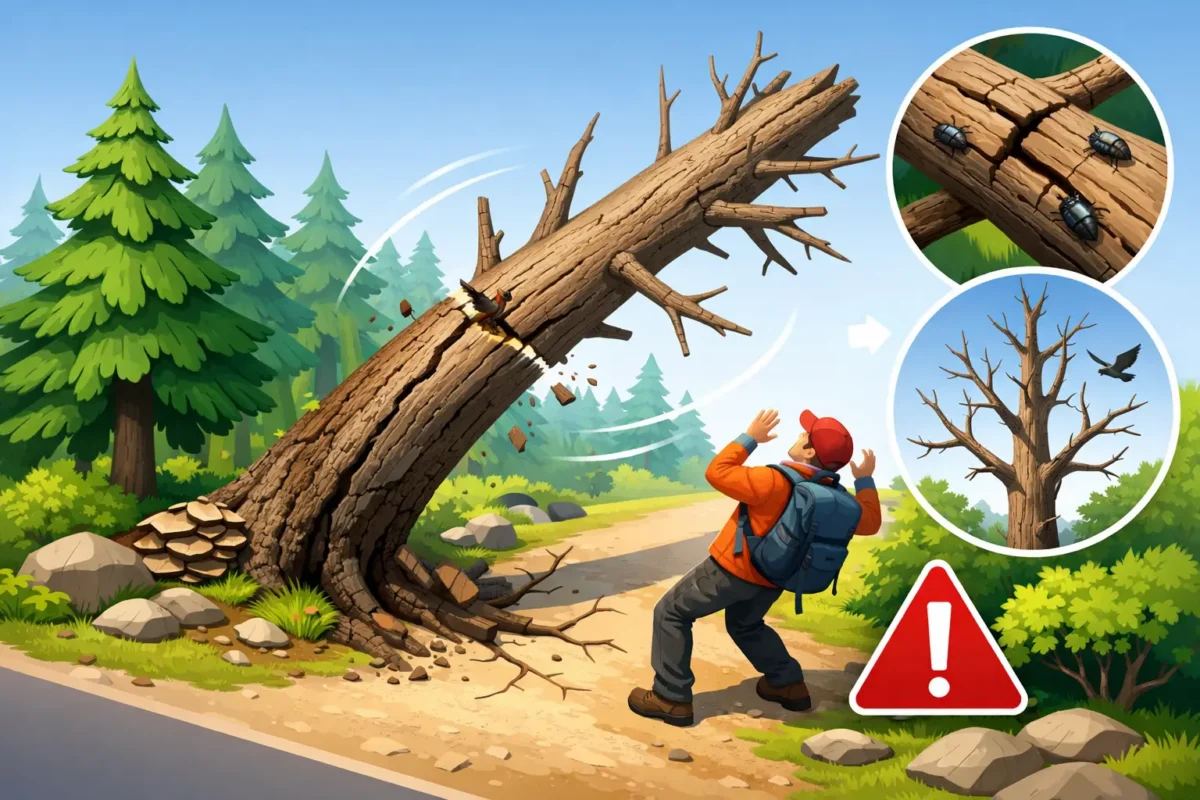
- A trunk that is cracked, split, hollow, soft, or missing bark in large sections
- Mushrooms or fungal growth at the base of the tree or on the trunk
- Major dead limbs, hanging branches, or a canopy that is mostly bare during the growing season
- A new or worsening lean, particularly toward a structure, driveway, or utility line
- Soil lifting, cracking, or mounding around the base, which can signal root movement
- Deep cavities, insect activity, or wood that crumbles easily around a damaged area
- Branches that have broken off repeatedly, leaving large wounds in the trunk
A lean alone does not always mean a tree is about to fall. Many healthy trees naturally grow at an angle. The concern is a recent change in lean, exposed roots, lifted soil, trunk cracking, or a lean that developed after heavy rain or wind. These are signs that the tree may no longer be securely anchored.
Dead limbs are hazards too
You do not need a whole dead tree to have a serious problem. A large dead limb hanging over your roof, deck, driveway, or entrance can fall suddenly and cause expensive damage. Dead branches are often dry, brittle, and unable to flex under wind or snow load.
Pruning can be the right solution when the rest of the tree is healthy and stable. If the trunk or roots are decayed, however, removing a few limbs may not solve the larger structural issue. A qualified tree professional can help you understand the difference.
What makes a dead tree more likely to fall?
Location is a major factor. A dead tree growing close to a building or in a narrow backyard may be difficult to remove safely because there is little room for it to fall. Trees near utility lines require extra care and should never be handled by a homeowner. If branches are touching or close to power lines, keep everyone away and contact the utility company or an experienced tree service.
Weather also changes the urgency. In Albany County and throughout New York, windstorms, wet snow, ice, and saturated spring soil can turn a manageable tree concern into an emergency. Long Island properties in Nassau and Suffolk counties can face high winds and coastal storm conditions that expose weak limbs and shallow root systems.
Tree species, size, and decay location matter as well. A small dead ornamental tree may be manageable with basic professional removal. A tall hardwood with a hollow trunk, decay at the base, and a house beneath it requires a more controlled plan, trained crews, and proper equipment. The goal is not simply to get the tree down. It is to bring it down without creating a second emergency.
What you should do if you suspect a dead tree is dangerous
Start by keeping people, pets, and vehicles out of the fall zone. Do not park beneath dead limbs or let children play near a leaning or damaged tree. If possible, move outdoor furniture, equipment, and vehicles away from the area, but do not place yourself at risk to do it.
Do not try to cut down a dead tree with a chainsaw unless you have the training, equipment, and a clear safe work area. Dead wood can break differently than healthy wood. A trunk may split, limbs may drop unexpectedly, and a tree can shift in the middle of a cut. Ladder work adds another serious risk.
If the tree has already fallen onto a structure, vehicle, or power line, stay clear. Treat downed or sagging wires as energized. Do not touch the tree, the wire, or anything in contact with it. Contact emergency services or the utility company when there is an immediate electrical danger, then arrange professional storm damage cleanup once the area is safe.
For a tree that is still standing but looks unstable, schedule an inspection promptly. A licensed and insured tree service can evaluate visible decay, root concerns, lean, canopy condition, and the targets below the tree. You should receive a straightforward recommendation based on risk: pruning, removal, monitoring, or no immediate action if the tree is not currently hazardous.
When removal should not wait
Some situations deserve same-day attention. A tree or major branch that is cracked and suspended over a roof, blocking access, leaning heavily after a storm, or threatening a frequently used entrance should be treated as urgent. The same applies when roots are lifting and the tree is moving in the soil.
Emergency service is also appropriate after a tree has partially failed. A trunk may be split but still attached, or a branch may be hung up in another tree. These situations are unstable and can worsen without warning. Keep the area clear and let trained professionals use the right rigging, equipment, and removal method.
AAA Tree Service NY provides 24/7 emergency response for hazardous tree situations, along with planned removal and pruning for property owners who want to prevent storm damage before it starts. With more than 26 years of experience, the focus is on safe work, clear recommendations, and protecting what is below the tree.
Preventing the next tree emergency
You cannot stop every storm, but you can reduce the chance that dead wood becomes a crisis. Regular pruning removes hazardous limbs before they break. Prompt removal of dead trees prevents decay from advancing until the tree becomes unstable. Paying attention after high winds, heavy snow, construction near roots, or major flooding can catch problems early.
The best time to deal with a dangerous tree is when the weather is clear, access is open, and removal can be planned safely. If a dead or leaning tree is close to your home, building, driveway, or power lines, trust what you are seeing and get a professional opinion before the next storm makes the decision for you.