How to Prevent Tree Damage to Driveway

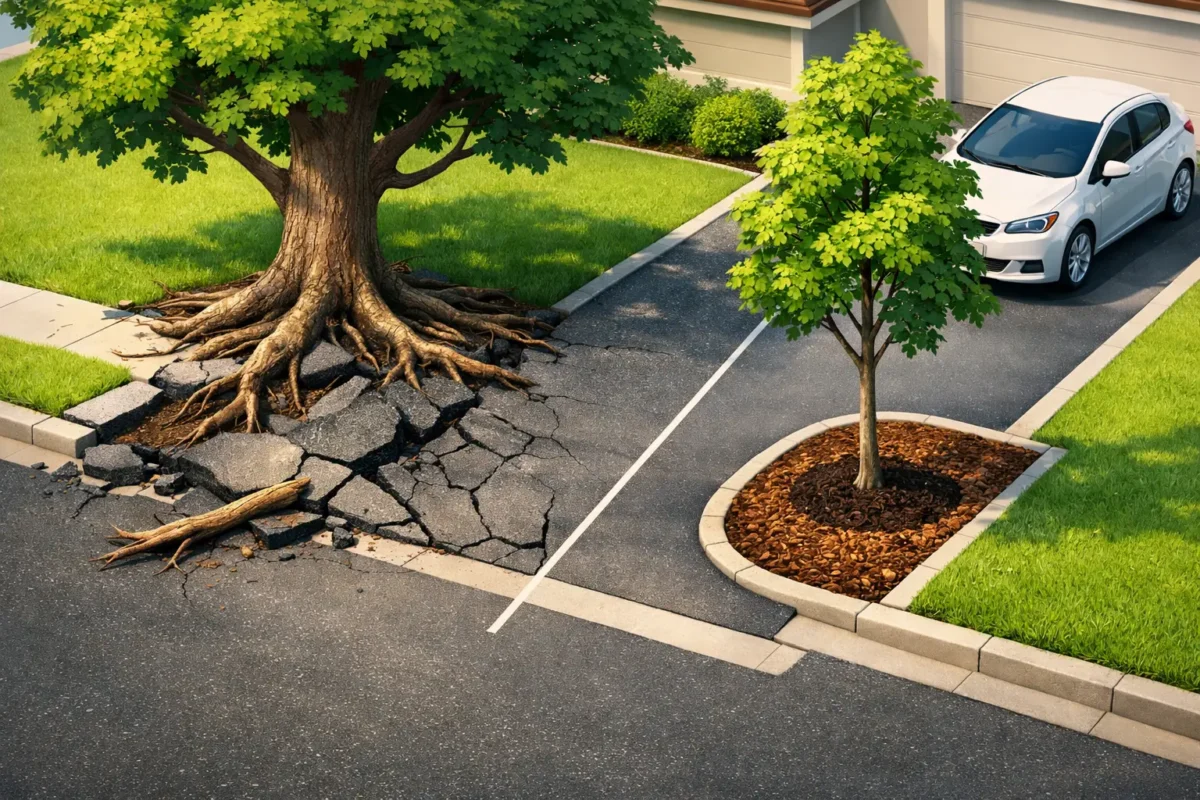
A cracked driveway usually does not start with the concrete. It starts underground, years earlier, when a tree is planted too close, the wrong species is chosen, or root growth goes unchecked. If you want to prevent tree damage to driveway surfaces, the best time to act is before you see lifting, heaving, or long surface cracks.
That does not mean every tree near your driveway is a problem. Plenty of trees can coexist with pavement when they are planted in the right place and maintained properly. The key is knowing what causes damage, what warning signs matter, and when a small correction now can save you from a major repair later.
Why trees damage driveways in the first place
Most homeowners assume roots “break” concrete by drilling through it. In reality, roots usually exploit weak points that already exist. If your driveway has thin sections, poor base preparation, existing cracks, or compacted soil that limits where roots can go, roots may push upward as they expand and search for moisture and oxygen.
The biggest issue is not aggressive roots in the movie sense. It is normal tree growth meeting a surface that was never designed for that pressure. Large shade trees, fast-growing species, and trees planted in narrow strips between the driveway and the yard are the most common troublemakers.
Soil conditions matter too. In parts of New York, freeze-thaw cycles already put stress on pavement. Add expanding roots under a slab or asphalt edge, and the damage can speed up fast. What might look like a small rise one season can become a trip hazard or drainage problem by the next.
The best way to prevent tree damage to driveway areas
The most effective fix is good planning before planting. Once a mature root system is under your driveway, your options get more limited and more expensive.
Start with the right tree in the right place
Tree size at maturity matters more than the size of the tree when you buy it. A young ornamental may look harmless near the edge of a driveway, but if it eventually reaches a broad canopy and a wide root zone, that small planting decision can become a costly mistake.
As a general rule, larger trees need much more distance from pavement than most homeowners expect. Small ornamental trees may work closer to a driveway, while large maples, oaks, and similar species usually need much more room. The exact spacing depends on species, soil, and driveway construction, so there is no one-size-fits-all number, but if the area feels tight now, it will feel tighter later.
It also helps to avoid species known for shallow, wide-spreading roots when planting near hard surfaces. Fast growth can be appealing, especially if you want quick shade, but that speed often comes with trade-offs.
Give roots a better path
Roots often move toward the areas with the best access to water, air, and loose soil. If the ground next to your driveway is heavily compacted and the only hospitable space is just under the pavement edge, roots will naturally head there.
That is why proper soil preparation matters. A healthier planting bed, deeper watering away from the driveway, and enough open soil around the tree can all encourage better root distribution. The goal is not to stop roots from growing. It is to reduce the chance that they grow where they can lift your pavement.
Use root barriers when they make sense
Root barriers can help, but they are not a magic fix for every situation. Installed properly, they can redirect root growth downward and away from the driveway. Installed poorly, they can fail or create new issues for the tree.
Barriers work best as part of a planting plan, not as a last-minute patch after damage has already started. They also need to match the species and site. A barrier that is too shallow or too close can be ineffective. In some cases, forcing roots downward is helpful. In other cases, especially with poor drainage or difficult soil, it may not solve the problem the way you hope.
Early warning signs you should not ignore
Driveway damage rarely appears overnight unless a storm uproots a tree or a major root shifts suddenly. Most of the time, the signs build slowly.
Look for small cracks that keep widening, sections of pavement that start to lift, asphalt edges that buckle, or one slab sitting slightly higher than the next. Water pooling where it never used to is another sign. So is a tree base that seems to be flaring more heavily on the driveway side.
Inside the yard, exposed surface roots are worth paying attention to, especially if they are growing toward the pavement. You may also notice that mowing around the tree has become harder because the root line is becoming more visible. That does not always mean your driveway is in immediate danger, but it does mean the tree should be evaluated before the next few growing seasons make the problem worse.
What not to do if roots are already close
A lot of driveway and tree damage gets worse because of well-meant DIY work.
The biggest mistake is cutting major roots without understanding how much structural support or water uptake they provide. Remove the wrong roots and you may trade driveway damage for a leaning or unstable tree. That risk gets even higher with older trees, trees close to the house, or trees already stressed by storms, drought, or decay.
Another common mistake is grinding down lifted concrete without addressing the root pressure underneath. That may reduce the trip hazard for a while, but it does not solve the cause. The same goes for repeatedly patching cracks while roots continue to expand below the surface.
Piling extra soil over exposed roots is not a dependable fix either. Sometimes a light adjustment in grade is workable, but burying root flare or changing drainage around a tree can create health problems over time.
Can pruning help prevent driveway damage?
Pruning the canopy does not directly stop roots from growing under a driveway. That is an important point because many homeowners assume reducing the top of the tree will shrink the root system enough to solve the problem. Usually, it does not work that way.
Still, pruning can be part of the bigger prevention picture. A well-maintained tree is less likely to suffer storm failure, limb drop, or structural imbalance that adds stress to already vulnerable areas of your property. If a tree near your driveway has dead limbs, poor structure, or storm damage, pruning may reduce overall risk even if it does not reverse root-related lifting.
This is where honest advice matters. Sometimes pruning is worthwhile maintenance. Sometimes the root issue is advanced enough that pruning will not meaningfully protect the driveway.
When removal becomes the safer, cheaper option
Not every tree should be removed just because it is close to pavement. Mature trees add shade, value, and curb appeal. But there are situations where removal is the most practical decision.
If the driveway is already significantly lifted, if major roots are directly under key sections, or if the tree also shows signs of decline, instability, or storm vulnerability, preserving both the tree and the driveway may no longer be realistic. In those cases, delaying action can cost more. You may end up paying for repeated pavement repairs and then tree removal later anyway.
For homeowners in areas like Albany County, Nassau County, Suffolk County, and other parts of New York where storms and seasonal ground movement add pressure, waiting too long can turn a manageable issue into an urgent one. A tree that is both damaging the driveway and becoming structurally unsafe should be addressed before the next storm does it for you.
What a professional inspection should look at
A proper tree and driveway assessment should look at both the tree and the hardscape, not just one or the other. You want to know the species, age, vigor, root flare condition, visible surface roots, distance from the driveway, and signs of structural weakness. You also want to know whether the driveway damage is truly root-related or partly caused by poor installation, drainage issues, or age.
That distinction matters because the right solution depends on the real cause. In some cases, selective root management and hardscape changes may be enough. In others, the tree is too large for the space, or the risk of root cutting is too high. An experienced, licensed, and insured tree service should be able to tell you plainly what needs attention now, what can wait, and what is not worth spending money on.
AAA Tree Service NY takes that approach because not every crack means emergency removal, but some warning signs do deserve fast action.
A smarter long-term approach for your property
If you are planning a new driveway, replacing an old one, or reworking your landscaping, this is the best time to think ahead. Coordinating tree placement, drainage, and driveway design can prevent years of frustration. Giving trees enough room, avoiding oversized species in tight spaces, and addressing root issues early almost always costs less than repairing heaved pavement later.
If your driveway already shows signs of lifting, do not wait for the damage to spread across more slabs or create a safety hazard. A quick inspection now can tell you whether you need monitoring, pruning, root management, or removal before the next storm or freeze-thaw cycle adds to the problem.
The goal is simple: keep the trees that make sense, fix the risks before they get expensive, and protect your property while you still have options.