What Is Tree Trimming and Pruning?

That branch hanging over your roof is not just an eyesore. It is a risk. The same goes for dead limbs over a driveway, low branches near power lines, or a tree canopy so thick it catches every bit of wind in the next storm. If you have ever wondered what is tree trimming and pruning, the short answer is this: both are ways to cut back parts of a tree, but they are done for different reasons and at the right time to protect the tree, your property, and the people around it.
For homeowners and building owners, that difference matters. A bad cut, the wrong timing, or putting off needed work can turn a manageable maintenance job into a cracked roof, smashed car, blocked driveway, or expensive emergency removal. Good tree care is not about making a yard look neat for a week. It is about reducing risk before the next storm exposes the problem.
What is tree trimming and pruning?
People often use these terms like they mean the same thing, but they are not exactly identical.
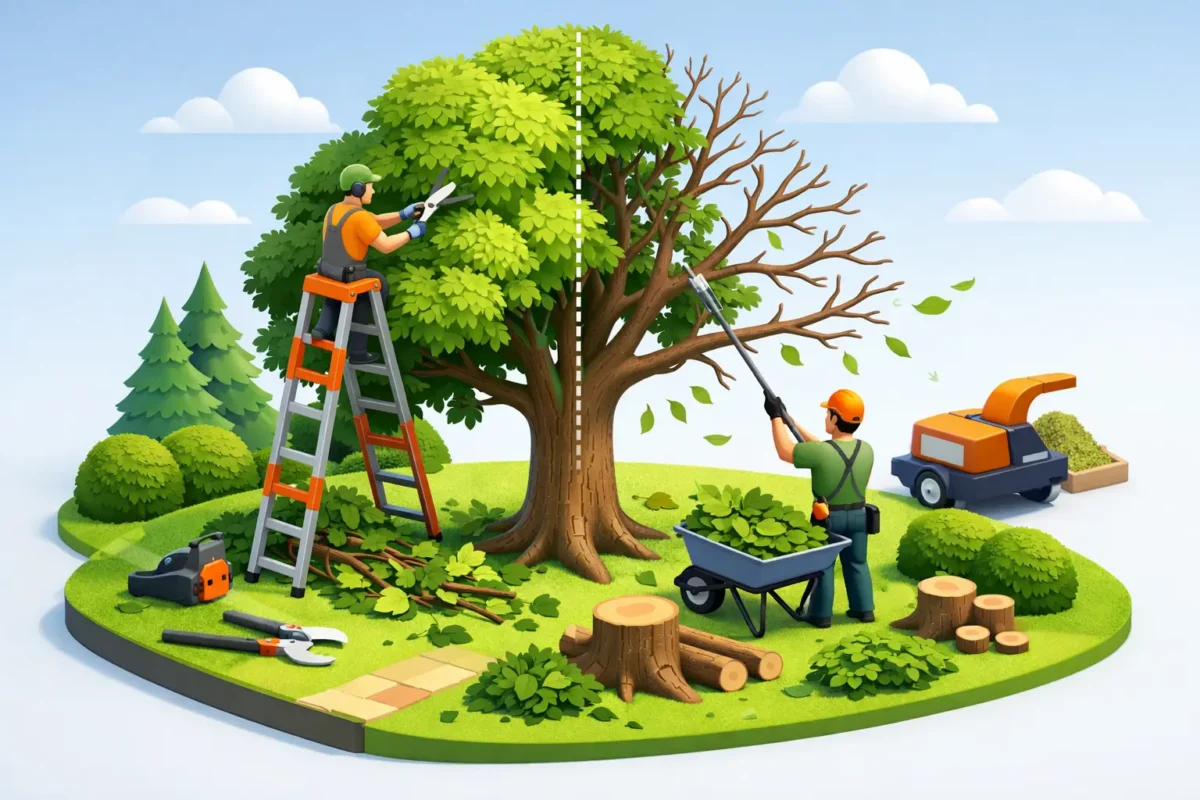
Tree trimming usually refers to cutting back overgrown branches to control shape, size, and clearance. This is the work that keeps limbs away from roofs, siding, walkways, driveways, fences, and utility areas. It is often focused on appearance and safety at the same time.
Tree pruning is more selective. It means removing specific branches that are dead, diseased, damaged, weak, crossing, or growing in the wrong direction. The goal is to improve the tree’s health, structure, and long-term stability.
In real life, many jobs involve both. A mature maple might need trimming to pull it back from the house and pruning to remove deadwood and weak branch unions. That is why a professional inspection matters. The work should match the actual problem, not a one-size-fits-all service.
Why the difference matters to your property
If a tree is simply overgrown, trimming may solve the issue. If a tree has decay, storm damage, or structural weakness, pruning becomes much more important. Treating every tree the same way can make things worse.
For example, cutting too much live growth just to reduce size can stress a healthy tree. On the other hand, leaving dead or cracked limbs in place because the tree “looks fine” can leave a serious hazard overhead. The right approach depends on species, age, location, and condition.
This is especially true in parts of New York where heavy snow, wind, and summer storms put extra pressure on mature trees. Limbs that seem stable in calm weather can fail fast when ice loads or strong gusts hit. Preventive care is usually far less expensive than emergency cleanup.
What tree trimming is meant to do
Tree trimming is usually the service people think of first because the results are visible right away. The canopy looks cleaner, the tree is pulled back from structures, and the property feels more open.
But trimming is not just cosmetic. Proper trimming can reduce branch contact with your roof, improve clearance over sidewalks and driveways, keep limbs away from windows, and lower the chance of storm-related breakage. On commercial properties, it can also improve visibility around signage, parking areas, and entry points.
There is a limit, though. Trimming should not mean hacking a tree into an unnatural shape or removing too much foliage at once. Over-thinning can expose limbs to sun damage, reduce the tree’s ability to produce energy, and trigger weak regrowth. Fast results are not always good results.
What pruning is meant to do
Pruning is more targeted and more strategic. It is often the better choice when the concern is tree health or structural safety.
A pruning job may remove dead branches before they fall, cut out diseased limbs before the problem spreads, reduce rubbing branches that create wounds, or thin a crowded interior to improve airflow. It can also help train younger trees to develop stronger structure, which lowers future failure risk.
This kind of work takes judgment. If the wrong limb is removed, the tree may become unbalanced or vulnerable to decay. If a cracked limb is left in place, the hazard remains. Pruning is not just cutting. It is deciding what should stay, what should go, and what the tree will look like years from now, not just this season.
Signs your tree may need trimming or pruning
Most property owners do not inspect trees until something is obviously wrong. By then, the job is often more urgent and more expensive.
Warning signs include branches touching the roof, limbs hanging over vehicles or play areas, deadwood in the canopy, visible cracks where major limbs attach, branches rubbing against each other, uneven growth after a storm, and trees with dense canopies that sway hard in wind. You may also notice mushrooms near the base, bark splitting, or sections that fail to leaf out like the rest of the tree.
Not every issue means the tree is unsafe, but every one of those signs deserves attention. Waiting to see what happens is a gamble when people, homes, and parked cars are under the canopy.
When is the best time to do the work?
It depends on the tree and the reason for the work.
For many species, dormant-season pruning is a smart option because the branch structure is easier to see and the tree is under less active stress. In other cases, light trimming can be done during the growing season if a branch is creating an immediate clearance issue. Dead, broken, or hazardous limbs should be removed as soon as they are noticed, regardless of season.
There are also species-specific concerns. Some trees respond poorly to cuts at certain times of year, while others are more vulnerable to insects or disease after pruning during warm months. That is why timing should be based on the condition of the tree, not just convenience.
If storm damage is involved, the priority shifts from ideal timing to immediate safety. A split limb or partially uprooted tree should be evaluated right away.
What can go wrong with improper trimming and pruning?
A lot, and the damage is not always immediate.
Poor cuts can invite decay. Topping can create weak, fast-growing shoots that break more easily later. Removing too much canopy can shock the tree and reduce its strength. Cutting near power lines is dangerous. Climbing a damaged tree without proper equipment is even worse.
This is where homeowners often get burned by cheap work. A low price may mean rushed cutting, no real assessment, no insurance, and no plan for how the tree will respond. The branch comes down, but the problem does not actually get solved.
Professional tree care should start with risk assessment. What is hanging over the house? Is the trunk sound? Is the tree worth saving? Does it need pruning, trimming, cabling, or full removal? Honest recommendations matter because not every tree should be heavily cut, and not every tree can be saved.
Trimming vs. pruning vs. removal
Sometimes the safest answer is not trimming or pruning at all.
If a tree is severely decayed, leaning after root failure, split through the main trunk, or dropping large limbs repeatedly, cutting it back may only delay a bigger failure. In those cases, removal may be the more responsible choice.
That is not a sales pitch. It is the kind of straight answer property owners need. Good tree service is not about pushing work you do not need. It is about preventing the kind of damage that costs far more once the tree makes the decision for you.
How to know what your property needs
Start with the obvious risk areas. Look at trees over the house, driveway, sidewalk, deck, fence line, and utility corridors. Pay attention after storms, because fresh cracks, hanging branches, and sudden leaning can show up fast. If a tree has not been maintained in years, that alone is reason for an inspection.
For homes and commercial properties alike, the goal is simple: remove hazards early, protect healthy trees, and avoid emergency situations when possible. That is the value of trimming and pruning done correctly. It is not just maintenance. It is prevention.
If you are unsure whether a tree needs light trimming, selective pruning, or immediate removal, get it looked at before the next storm tests it for you. A tree does not have to fall to become expensive.
The best time to deal with a risky limb is when it is still a routine job, not when it is lying across your roof at 2 a.m.