
Will Stump Grinding Kill Regrowth for Good?

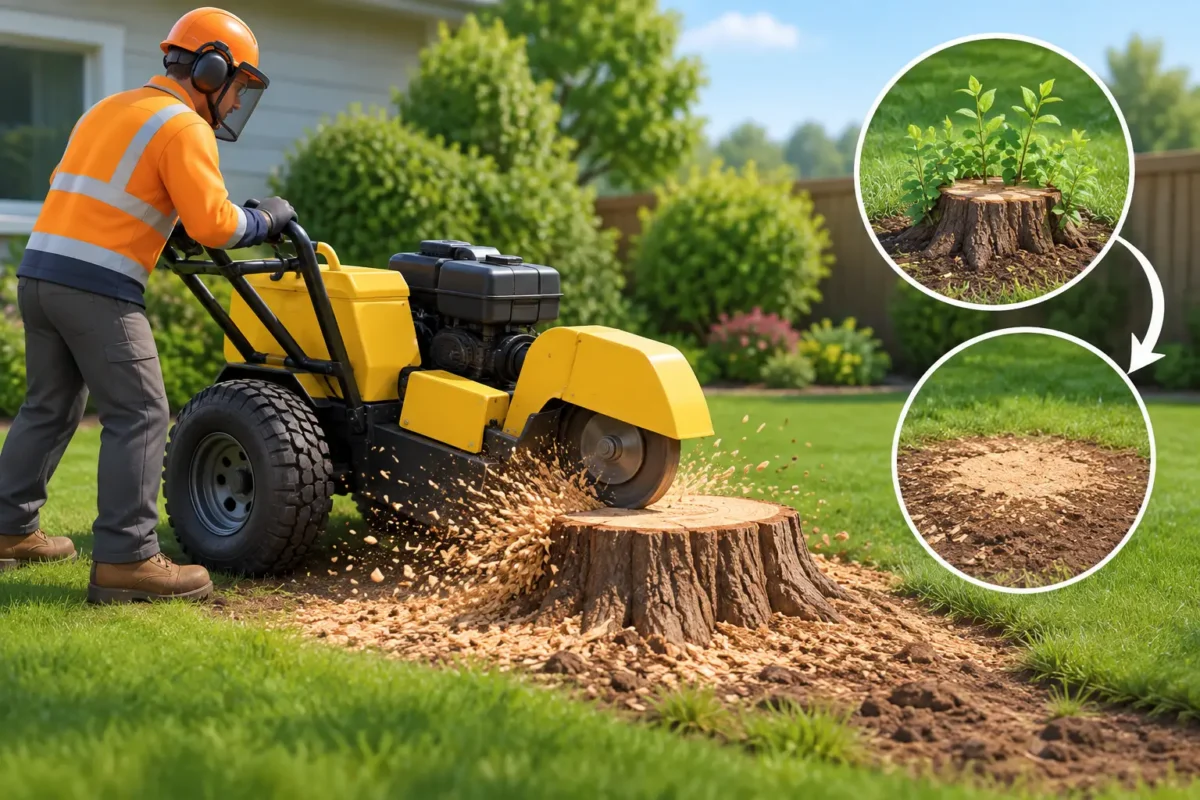
A freshly ground stump looks like the end of the problem, but homeowners often ask, will stump grinding kill regrowth? The honest answer is: sometimes, but not always. Grinding removes the visible stump and makes the area safer and easier to use. It does not automatically stop every living root from sending up new shoots.
Whether regrowth happens depends on the tree species, how healthy the roots were before removal, and how completely the stump was ground. If you want a clean lawn, a new planting area, or a site ready for construction, it helps to know the difference between removing a stump and fully stopping the tree’s ability to sprout.
What Stump Grinding Actually Does
Stump grinding uses a machine with a cutting wheel to break the stump into wood chips below ground level. In most residential settings, the stump is ground deep enough that you can cover the area with soil and seed, sod, mulch, or a new landscape bed.
This process gets rid of the tripping hazard, mower obstacle, and the exposed wood that can attract insects and decay. It also improves the appearance of your property right away. For many homeowners, that is exactly the result they need.
But the grinding machine is focused on the stump itself. It does not pull out every major root spreading through your yard. Those roots will gradually decay, but some species can use stored energy in their root system to produce sprouts after the trunk is gone.
Will Stump Grinding Kill Regrowth From Every Tree?
No. Some trees are much more likely to send up suckers or shoots than others. Maples, willows, poplars, black locust, tree-of-heaven, and some ornamental trees can be persistent. A vigorous tree that was cut down while healthy may have enough energy in its roots to try growing again.
In contrast, many stumps simply die after grinding because the tree can no longer produce enough new growth to support the root system. The remaining roots break down naturally over time. This is why two stumps removed the same way can have very different results.
The size and age of the tree matter too. A small, young tree can sometimes resprout aggressively. A large, mature stump may have extensive roots, but it may also have less ability to recover once the trunk and stump are removed. There is no one-size-fits-all guarantee.
Sprouts Do Not Mean the Stump Grinding Failed
A few shoots appearing near the old stump or along a root line do not mean the work was done poorly. They mean part of the root system is still alive. This is common with certain species and can usually be handled before it becomes a larger problem.
If you notice new shoots, remove them early. Repeated cutting forces the roots to use stored energy without replacing it through leaves. Over time, that weakens the remaining root system. Letting the shoots grow tall and leafy does the opposite – it gives the roots fuel to keep going.
When Grinding Is Usually Enough
For most homeowners, stump grinding is the practical choice. Full root removal can tear up a large section of lawn, disturb nearby plantings, damage hardscape, and cost more than the project calls for. Roots left underground are not automatically a danger.
Grinding is usually enough when you want to restore the lawn, eliminate a visible stump, prevent trips and mower damage, or make space for a garden bed. It is also a good option when the old tree was not known for aggressive suckering and there are no signs of sprouts after removal.
The wood chips left behind can be useful, but do not leave a deep pile in the hole if you plan to plant grass. As the chips decompose, they can settle and may temporarily affect soil conditions. A professional can grind the stump, remove or redistribute excess chips as needed, and leave the area ready for final landscaping.
When You May Need More Than Stump Grinding
There are situations where your property needs a more complete plan. If the tree has a history of sending up shoots across the yard, grinding the stump alone may not give you the clean break you expect.
You may need additional treatment or root management if:
- New shoots keep appearing around the former stump or several feet away in the lawn.
- You are removing an invasive or highly aggressive species.
- You need to install a patio, driveway, pool, utility line, or building foundation near the old tree.
- You plan to plant a new tree in almost the same location.
Treatment options depend on the tree, site conditions, and your plans for the area. In some cases, repeated cutting is enough. In others, a properly selected stump treatment may be considered to stop active regrowth. Any chemical approach should be handled carefully, especially near vegetable gardens, water, pets, wells, or desirable trees whose roots may be nearby.
Full root excavation is generally reserved for construction or major landscape changes. It is more disruptive than grinding, and it is not necessary just because roots remain underground. A qualified tree service should explain that trade-off clearly instead of selling you more work than your property needs.
Can You Plant a New Tree Where the Old Stump Was?
You can, but avoid planting directly in the old stump hole whenever possible. The spot may contain wood chips, decaying roots, and soil that will settle as material breaks down. Your new tree needs stable soil and room for its roots to establish.
A better approach is to plant several feet away from the original stump location. This gives the new tree cleaner soil and keeps its roots from competing with the old root mass. If your yard is small and you have limited options, have the planting area assessed before you invest in a replacement tree.
For shrubs, grass, and many garden plants, the old stump area can usually be restored with fresh topsoil after the grinding debris is managed. Just expect some settling over the first year or two and add soil if the area dips.
How to Tell Whether Regrowth Is Still Active
Watch the area through the first growing season after stump removal. Small shoots may emerge during warm weather, especially after rain. Pull or cut them while they are young and before they develop woody stems.
Pay attention to shoots that appear away from the stump. Root suckers can surface along the path of larger roots, sometimes near a fence, garden edge, or driveway. If you mow regularly, tiny shoots may be cut before you notice them. That is helpful, but a cluster that keeps returning deserves attention.
Do not confuse mushrooms or soft, decaying wood with active regrowth. Fungi around old roots usually indicate decomposition, not a new tree forming. Green shoots with leaves are the sign that living roots are still trying to grow.
Get the Right Recommendation for Your Yard
Stump grinding is an effective, affordable way to remove a stump without excavating your whole yard. But if the goal is to prevent regrowth completely, the tree species and the condition of its roots matter. A professional should look at the stump, surrounding landscape, and your plans for the space before recommending the next step.
AAA Tree Service NY provides straightforward stump grinding guidance for homeowners and commercial property owners. If you have a stump that is sprouting, sitting near a structure, or getting in the way of a project, ask for an assessment and a free estimate. Acting before shoots spread can save you repeated cleanup and help keep your property ready for whatever comes next.