Storm Damaged Tree Cleanup Done Safely

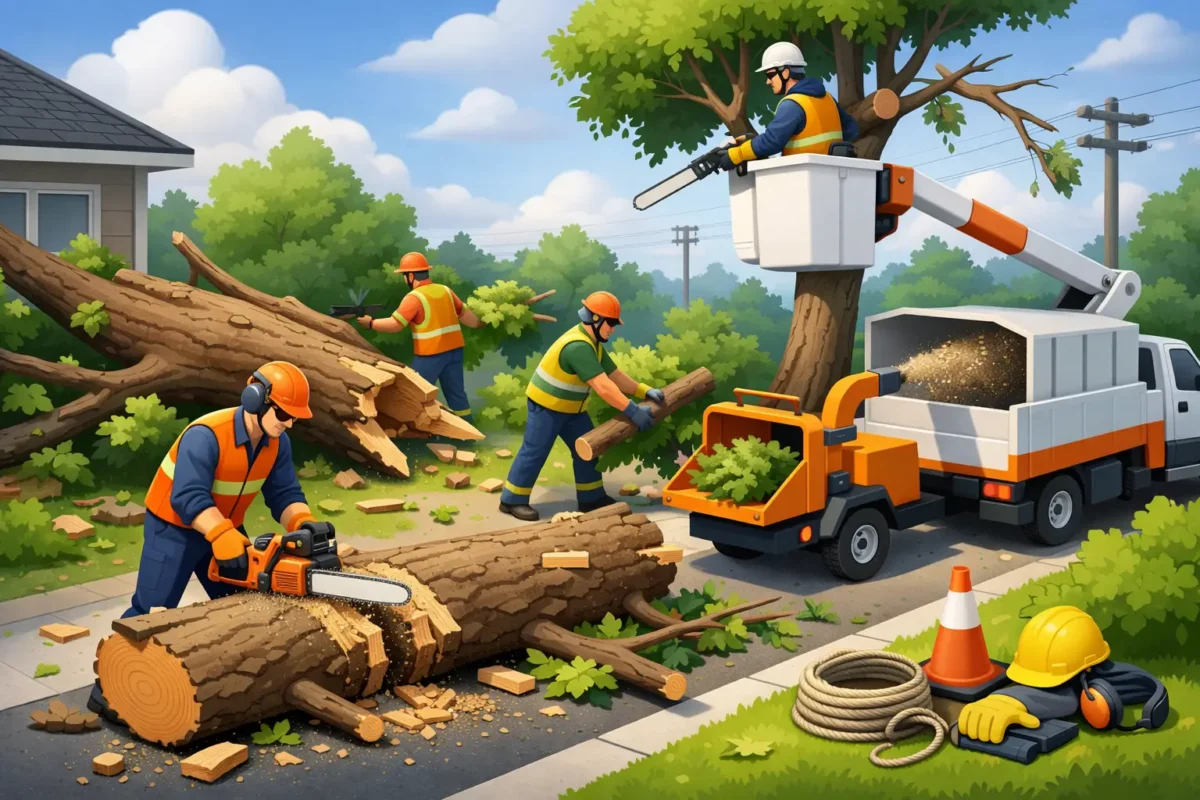
The storm passed, but your yard still looks like the storm is standing in it. A split limb is hanging over the driveway, a tree is leaning toward the roof, and branches are scattered across the lawn. In that moment, storm damaged tree cleanup is not just about making the property look better. It is about protecting your home, your family, and anyone who steps onto the property.
The biggest mistake people make after a storm is assuming the danger is over because the wind stopped. It is often the opposite. Trees can hold hidden damage for hours or days after heavy rain, snow, wind, or lightning. A cracked trunk may still be standing. A large limb may be caught in the canopy and drop without warning. What looks stable from the ground can fail the next time the tree shifts.
What storm damage really does to a tree
Storm damage is not always obvious. Sometimes a tree snaps in half and the problem is clear. More often, the damage is structural and harder to spot from the ground. A branch union may have split. The root plate may have lifted slightly on one side. The trunk may have twisted enough to weaken the tree even if it did not fall.
Waterlogged soil makes the problem worse. When the ground is saturated, roots lose some of their grip. That is why trees often start leaning after a storm instead of during it. You may notice fresh cracks in the soil, exposed roots, or a tree that suddenly looks off-center. Those are not cosmetic issues. They can point to failure at the base.
Not every damaged tree needs to come down, and that matters. Honest tree work means looking at what can be saved and what cannot. A smaller broken limb may only need careful pruning. A tree with a major trunk split, root failure, or heavy lean toward a structure often needs emergency removal. The right call depends on the type of damage, the tree species, the size of the tree, and what it could hit if it falls.
Storm damaged tree cleanup starts with a safety check
Before you move a branch or start a saw, stop and look at the full scene. If there are downed power lines, stay well back and call the utility company first. Never assume a line is dead. Wet ground, metal fencing, and even nearby branches can carry risk.
Next, look up. Hanging limbs are one of the most common post-storm hazards. People focus on what is lying on the ground and miss what is broken overhead. If a branch is suspended in the canopy, that area is not safe to walk or work under.
Then check the tree base and nearby structures. A trunk pressed against a roof, garage, fence, or shed can shift when pressure changes. Cutting the wrong limb in the wrong order can make the situation worse fast. That is why cleanup around homes, parked vehicles, and commercial buildings usually needs professional equipment and a planned approach.
If the damage is minor, like small limbs scattered in the yard away from structures, you may be able to handle basic pickup. If the tree is large, leaning, split, entangled, or touching anything valuable, it is time to call for help. Safety is not where you save money by guessing.
When you should not handle storm damaged tree cleanup yourself
There is a big difference between yard debris and tree failure. Picking up twigs and small branches is one thing. Cutting into a damaged tree under tension is another. Storm-damaged wood stores pressure in ways that are hard to read without experience. One cut can release that tension suddenly and violently.
You should not attempt cleanup on your own if the tree is on or near a house, if limbs are hanging overhead, if the trunk is cracked, if the root system is lifting, or if a ladder would be required. The same goes for trees near driveways, sidewalks, neighboring property, or streets where falling debris could injure someone or cause more damage.
This is especially true after severe weather in parts of New York where wet snow, ice, and wind can combine in the same event. Cleanup is not just removal. It is controlled removal. That takes training, proper rigging, saw handling, and a clear plan for where every piece will move.
What professional cleanup includes
A proper storm response starts with risk assessment. The first job is to identify immediate hazards and stabilize the area. That may mean removing a tree off a roof, taking down a hanging limb over an entryway, or sectioning out a compromised tree before the next round of weather hits.
After the immediate danger is handled, cleanup usually moves into selective pruning, debris removal, and disposal. If the tree can be saved, damaged limbs may be cut back to healthy growth points to reduce future failure. If the tree cannot be saved, full removal may be the safest option.
Stump grinding may or may not be urgent. If the tree just came down and the main risk is gone, stump work can often wait. If the stump blocks access, creates a trip hazard, or is part of a larger site cleanup, it may make sense to handle it right away. The right timing depends on your property, your budget, and how soon you need the space cleared.
A good tree service will also tell you what does not need immediate work. That matters after storms because fear leads people to approve more work than necessary. Sometimes one damaged tree is an emergency and the others just need monitoring or routine pruning later. You want clear recommendations, not pressure.
Signs a storm-damaged tree may need removal
Some warning signs call for quick action. A tree that is suddenly leaning toward your home, a major split in the trunk, torn roots, or a canopy that lost a large section on one side can all point to severe instability. Trees with previous decay are even more likely to fail after a storm because the wood was already weakened before the weather hit.
You should also watch for repeated limb drop after the initial event. If branches keep falling in calm conditions, the tree may have more hidden damage than it first appeared. Mushrooms near the base, hollow areas, and old pruning wounds can also affect whether the tree is still safe to keep.
That said, not every broken branch means the whole tree is lost. Mature trees often recover well when damage is limited and pruning is done correctly. The goal is not to remove trees whenever there is a problem. The goal is to remove risk.
How to protect your property before the next storm
The best storm cleanup job is the one you never need. Preventive trimming makes a real difference, especially with dead limbs, overextended branches, and trees growing too close to the roof or service lines. Weak branch unions and crowded canopies are more likely to fail in high wind or under heavy snow.
Regular inspections also matter more than most property owners realize. Trees often show warning signs before storms expose the full problem. Deadwood, decay pockets, poor branch structure, and root issues can be spotted early and addressed on your schedule instead of in an emergency.
For homeowners and small commercial properties, the practical approach is simple. Keep trees maintained, remove obvious hazards, and do not wait on a leaning or cracked tree just because it is still standing. Standing does not mean stable.
Fast action matters after a storm
If a damaged tree is threatening your home, driveway, business entrance, or utility access, time matters. The longer a compromised tree stays in place, the more chances it has to shift, split, or fall. That is why 24/7 emergency service matters after severe weather. You need a crew that can respond quickly, assess the risk honestly, and get the site under control without adding more damage.
AAA Tree Service NY handles storm response with that safety-first approach. If the tree can be saved, you should be told. If it needs to come down now, you should know why. Licensed and insured help, free estimates, and experienced emergency work are not extras in this situation. They are part of protecting your property the right way.
After a storm, do not judge the danger by what is lying on the ground. Judge it by what could still fall, shift, or fail next – and get experienced help before the next problem starts.