Albany County Emergency Tree Removal

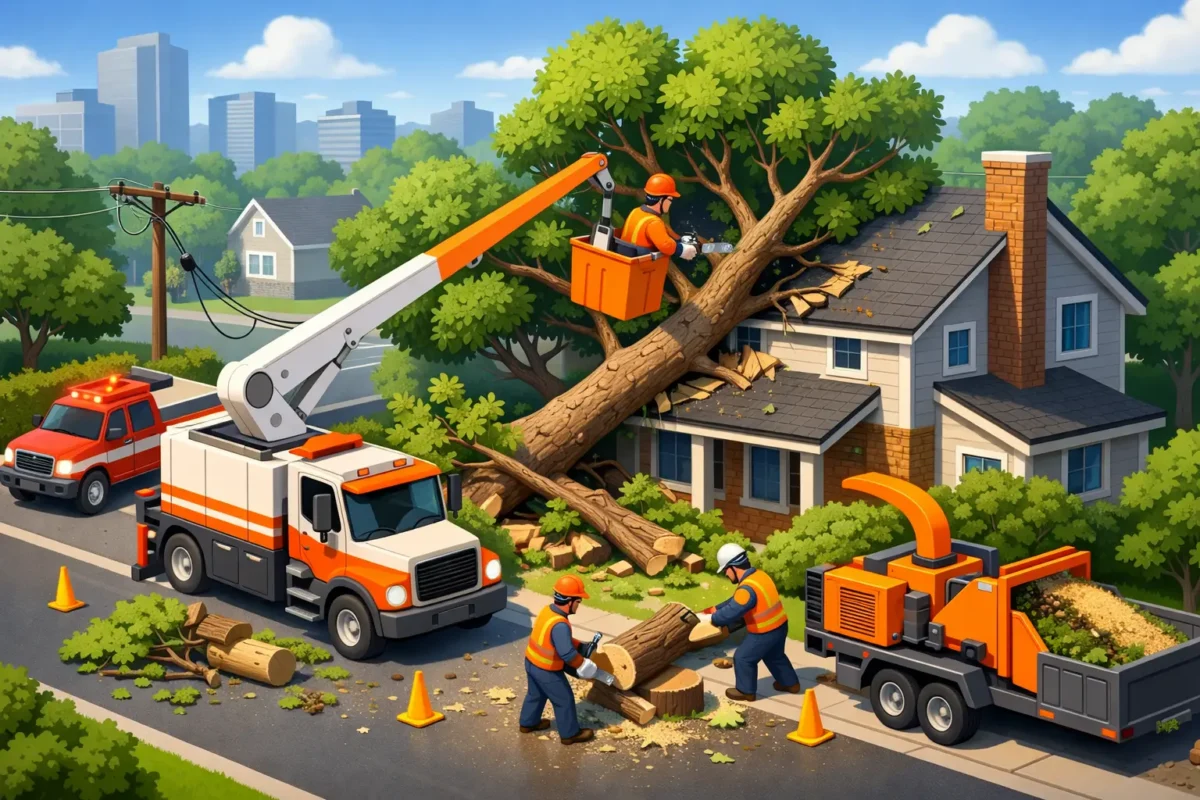
When a tree comes down at 2 a.m., you are not thinking about landscaping. You are thinking about your roof, your driveway, your power line, and whether your family is safe. That is exactly when Albany County emergency tree removal matters most – when waiting until morning can mean more damage, more risk, and a more expensive cleanup.
Storms in Albany County can turn a tree problem into a property emergency fast. Heavy snow, ice, high winds, and saturated ground all put pressure on roots, trunks, and large limbs. A tree that looked fine last season can split, lean, or fall with very little warning. If it is blocking access, resting on a structure, or hanging over an area people use, it needs immediate attention from a licensed and insured crew.
When Albany County emergency tree removal is truly urgent
Not every damaged tree is an emergency. Some problems can wait a day or two for a scheduled inspection. Others cannot. The difference comes down to immediate risk.
If a tree has fallen on your home, garage, fence, vehicle, or commercial building, that is an emergency. If a large limb is cracked and still suspended in the canopy, that is also an emergency because it can drop without warning. The same goes for a tree that is suddenly leaning after a storm, especially if the root plate is lifting out of the ground.
Power lines change the situation completely. If a tree or limb is touching or near electrical lines, stay back and treat the area as live. Do not try to move branches yourself. Keep children and pets away, and call the utility provider along with a tree service that handles emergency work.
There are also less obvious cases that still need a fast response. A split trunk, a tree blocking your driveway so you cannot get out, or storm damage over a sidewalk or parking area may not look dramatic from a distance, but they create real safety and liability issues. For homeowners and small commercial property owners, delays can make a bad situation worse.
What to do before the crew arrives
Your first job is not cleanup. It is safety. Check that everyone is clear of the area and account for family members, tenants, or employees. If the tree hit the building, leave the structure if there is any sign of shifting, sparking, gas smell, or active water intrusion. If the damage appears stable, use caution and avoid rooms directly beneath impacted sections.
Take a few clear photos if you can do it safely. That helps with insurance and gives the tree company a better idea of what equipment may be needed. After that, stay out of the work zone. A damaged tree is unpredictable, and what looks still can move fast.
Do not climb on the tree, do not cut tensioned limbs, and do not get on the roof to investigate around branches. Homeowners get hurt trying to save time this way. Emergency tree removal is dangerous because the weight is rarely resting where you think it is. One wrong cut can shift thousands of pounds.
If the tree did not hit power lines and there is a small branch you can move safely from a walkway, use common sense. But once large limbs, structures, wires, or unstable trunks are involved, this is professional work.
Why emergency removal is different from standard tree work
Routine tree removal starts with planning. Emergency removal starts with hazard control. That is a big difference.
In a standard job, the crew has time to evaluate drop zones, equipment placement, and clean cutting access. In an emergency, the tree may be twisted into a roofline, hung up in another tree, or partially uprooted and under tension. The goal is not just to take it down. The goal is to remove it without causing a second collapse or additional structural damage.
That is why experience matters. A crew handling storm damage needs to assess weight distribution, identify hidden pressure points, and know when crane work or sectional dismantling is the safer option. Fast response is important, but reckless speed is not. You want a company that moves quickly and still makes careful decisions.
For that reason, honest companies will also tell you when full removal is not the first step. In some situations, the immediate need is to make the site safe, remove the part on the structure, and return for final cleanup once utilities, insurance, or weather conditions are sorted out. That is not delay for the sake of delay. It is the right sequence for safety.
Common causes of emergency tree failures in Albany County
Local weather patterns play a big role in why trees fail here. Ice loads can add heavy weight to limbs that already have weak unions or hidden decay. Wet soil after repeated rain can loosen root systems, especially with shallow-rooted trees or older specimens near driveways and foundations. Wind often finishes the job on trees that were already stressed.
Just as often, the emergency started months earlier. Dead limbs, hollow sections, trunk cracks, fungus at the base, and a noticeable lean are all warning signs. Some trees survive one storm and fail in the next. Others drop large limbs in calm weather because the wood is already compromised.
That is the trade-off many property owners face. You do not want to remove a healthy tree unnecessarily, but you also do not want to wait until prevention turns into emergency response. A good inspection helps separate trees that need monitoring from trees that need action now.
What a professional emergency tree service should look like
When you call for emergency work, you should expect a clear answer about response time, site conditions, and what the first visit will include. Sometimes the priority is complete removal. Other times it is stabilizing the area, clearing access, or removing dangerous limbs first.
You should also expect proof that the company is licensed and insured. That protects you if equipment is needed near structures, driveways, or neighboring property. Emergency work often happens in tight spaces and poor conditions. Insurance is not a detail to skip when stakes are high.
Good crews also communicate plainly. They tell you what is dangerous, what can wait, and what the likely next steps are. They do not use a storm to pressure you into unrelated work. If a tree can be saved with pruning after the emergency hazard is addressed, they should say so. If it is too compromised to keep safely, they should explain why in simple terms.
AAA Tree Service NY has built its reputation around that kind of straightforward response – fast help, safety-first work, and honest recommendations based on what your property actually needs.
The insurance question homeowners always ask
After the immediate danger, most people want to know who pays. The answer depends on where the tree landed, what caused it to fall, and what your policy covers. In many cases, homeowners insurance may help with damage to covered structures and debris removal, but every policy is different.
What helps most is documentation. Photos, time-stamped notes, and a written estimate can all support your claim. If the tree was obviously dead or neglected before the incident, the insurance conversation can get more complicated. That is another reason not to put off visible tree hazards once they are identified.
For commercial property owners, the issue is often bigger than repairs. A damaged tree can block entry points, create slip and fall hazards, or expose you to claims if an area stays unsafe. Fast removal is not just about cleanup. It is part of protecting your property and reducing liability.
How to reduce the chances of another emergency
The best emergency tree removal call is the one you never have to make. That starts with routine inspections, especially after major storms and before winter. Large dead limbs, canopy imbalance, decay at the base, and sudden leaning should all be checked before the next weather event tests them.
Pruning can remove weak, overextended limbs before they fail. In other cases, a tree may need cabling, monitoring, or full removal. It depends on species, age, location, and condition. A healthy shade tree close to your home may be worth preserving with proper care. A severely compromised tree over your roof usually is not.
If you have not looked closely at the trees around your house in a while, now is the time. Walk the property, look up, and pay attention to what has changed since last season. Trees rarely fail without leaving clues.
When you are dealing with storm damage or a tree that suddenly looks unstable, trust your instincts. If it feels unsafe, keep your distance and get it checked right away. Acting early can protect your home, your family, and your budget before the next storm makes the decision for you.