Orange County Tree Hazard Inspection: What to Expect

A tree can look healthy from your kitchen window and still have a serious structural problem above your driveway, roof, or walkway. An Orange County tree hazard inspection gives you a clear look at the risks that are easy to miss from the ground, so you can act before wind, rain, snow, or saturated soil turns a weak tree into property damage.
This is not about removing every mature tree on your property. Healthy trees add shade, privacy, and value. The goal is to identify the trees, limbs, and root issues that need attention, then recommend the safest and most practical next step.
What a tree hazard inspection looks for
A professional inspection starts with the tree’s surroundings, not just its canopy. A branch over an open lawn is different from the same branch hanging over a child’s play area, service line, parking space, or building entrance. The likelihood of failure matters, but so do the consequences if it fails.
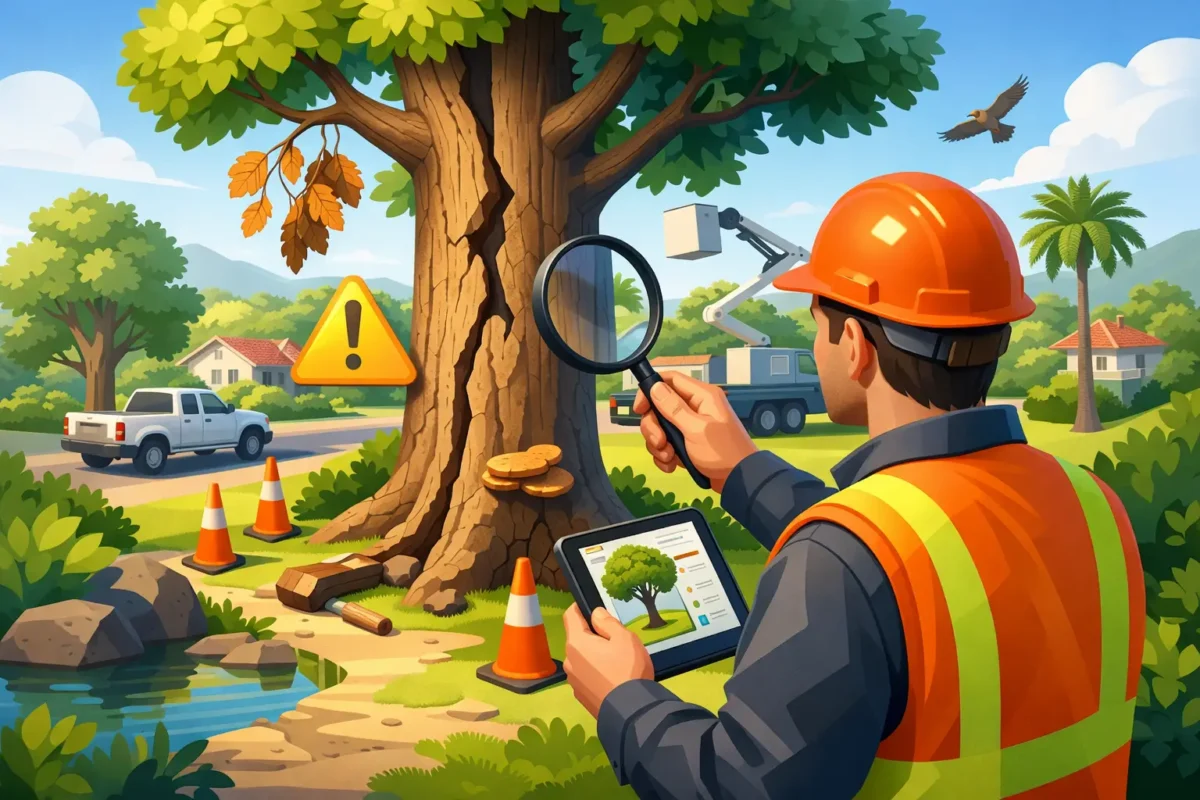
The inspector looks at the trunk, major limb unions, canopy, root flare, and soil around the tree. They also consider recent changes to the site. Construction work, trenching, new driveways, changes in drainage, and heavy equipment near the roots can weaken a tree long before visible decline appears.
A sound inspection should give you an honest answer. Some trees need immediate removal. Some need pruning to reduce weight on an overextended limb. Others simply need monitoring after a storm season. If there is no significant hazard, you should be told that too.
Trunk and limb problems
Cracks, cavities, peeling bark, and areas of decay can reduce a tree’s ability to hold itself together. A large dead limb may be obvious, but smaller cracks at the point where limbs meet the trunk can be just as concerning. These weak attachment points are common failure areas during high winds or heavy, wet snow.
Multiple stems growing from one tight junction deserve a closer look. When bark is compressed between stems, the connection may be weaker than it appears. This does not automatically mean the tree must come down, but it may change the pruning plan or indicate a need for closer monitoring.
Dead branches in the upper canopy are another warning sign. They can fall without a major storm, especially after ice, wind, or prolonged dry conditions. If deadwood is above a roof, walkway, driveway, or commercial entrance, it should not be ignored.
Leaning trees and root concerns
Not every leaning tree is dangerous. Many trees grow at a natural angle and remain stable for decades. The concern is a new lean, a lean that has worsened, or a tree that shifted after a storm or period of saturated soil.
Freshly exposed roots, lifted soil on one side of the trunk, cracks in the ground, or a visible gap between the root area and soil can point to root plate movement. These conditions can signal a time-sensitive hazard, particularly if the tree is within striking distance of a structure or occupied area.
Root damage is often hidden. Fungal growth at the base, soft or decayed wood near the root flare, poor leaf growth, and thinning in the upper canopy can all suggest a declining root system. A tree may still leaf out while its structural support is becoming compromised.
When you should schedule an Orange County tree hazard inspection
The best time to inspect a questionable tree is before the next damaging weather event. Orange County properties deal with high winds, thunderstorms, snow loads, ice, and periods of heavy rain that leave soil soft and unstable. A tree that held up last year may not have the same margin of safety after repeated weather stress.
Schedule an inspection if you notice a new crack, split limb, sudden lean, hanging branch, roots lifting from the soil, or a tree that now touches or rubs against your home. You should also call after a major storm, even if the tree is still standing. Storm damage can weaken limbs and trunks in ways that are not always visible from below.
For commercial properties, inspections are especially useful around entrances, sidewalks, parking areas, dumpsters, loading zones, and tenant common areas. A falling limb can injure someone or damage a vehicle in seconds. Regular assessment helps you address obvious hazards before they become an emergency and supports a safer property maintenance plan.
What you can check from the ground
You do not need to climb a ladder or get close to a damaged tree to recognize warning signs. In fact, doing either can make the situation worse. Walk the property from a safe distance and look for changes you have not seen before.
Pay attention to dead or broken limbs, branches hanging over a roof, fresh cracks in the trunk, large mushrooms or decay near the base, and a canopy that is suddenly sparse on one side. Look at the ground too. Raised soil, severed roots, and standing water around the base can tell you more than the leaves do.
Keep people, pets, and vehicles away from a tree that has shifted, cracked, or lost major limbs. If branches are close to electrical lines, do not attempt to cut, pull, or move them yourself. Contact the utility provider if a line is involved, then arrange professional tree service once the area is safe to access.
Inspection results: prune, remove, or monitor?
The right recommendation depends on the tree’s condition, species, location, and value to the property. Pruning can be a good solution when the issue is isolated deadwood, an overextended limb, or branches creating roof contact. Proper pruning reduces weight and removes failing material without taking down a tree that can remain healthy.
Removal may be the safer option when there is substantial decay, major trunk splitting, root failure, a severe lean toward a target, or extensive storm damage. A tree close to a house does not always need removal, but the risk tolerance is lower when failure could strike a bedroom, garage, driveway, or business entrance.
Monitoring makes sense when a condition is minor or uncertain. That may involve checking a crack, lean, canopy decline, or drainage issue over time. Monitoring is not the same as ignoring the problem. It means documenting what is present and reassessing it after storms or seasonal changes.
A reliable contractor should explain why a recommendation is being made. Ask what they found, what could happen if the work waits, and whether there is a lower-impact option. You deserve clear information, not pressure to approve work your property does not need.
Why professional inspection is safer than a quick visual guess
Homeowners often notice the most visible problem, such as a broken branch. A trained crew also looks for the reason it broke. Was the limb dead? Is there decay inside the trunk? Is the branch union weak? Has root damage changed the tree’s stability? Addressing only the broken piece can leave the larger risk in place.
Professional tree work also requires the right equipment, cutting plan, and control of the drop zone. Cutting a limb that is under tension or hanging over a structure can cause unpredictable movement. The cheapest-looking solution can become expensive quickly if a limb lands on a roof, fence, vehicle, or power line.
AAA Tree Service NY provides safety-first assessments and practical recommendations for homeowners and property owners who need help deciding what should be pruned, removed, or watched. Licensed and insured service matters when the work involves large trees, confined yards, or storm-damaged limbs.
If the tree looks ready to fail
Treat a split trunk, rapidly leaning tree, uprooted root system, or large hanging limb as an urgent situation. Move people and vehicles out of the possible fall zone. Do not stand beneath the canopy to take photos, tie branches off, or try to relieve weight with a saw.
If utility lines are involved, stay well away and contact the utility provider. For other immediate tree hazards, request emergency tree service. A 24/7 response can help secure the area and remove dangerous material before it causes further damage.
A tree hazard inspection is one of the simplest ways to protect what matters most on your property. If something about a tree does not look right, trust that instinct and have it checked before the next storm tests it.