
How to Prepare Your Yard for Stump Grinding

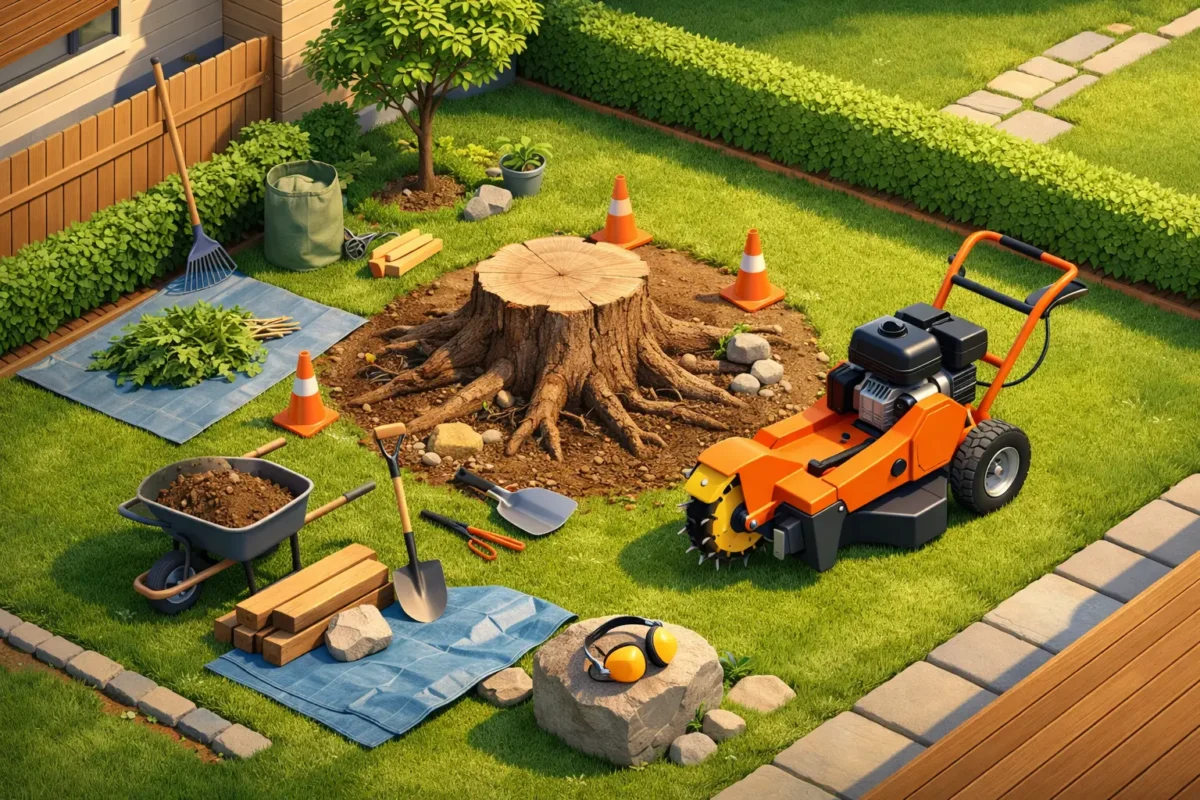
A stump grinder can remove a stubborn stump quickly, but the work area needs to be ready before the machine arrives. Knowing how to prepare yard for stump grinding protects your lawn, nearby structures, and the crew doing the work. It also helps prevent delays caused by blocked access, hidden utilities, or items left too close to the stump.
Stump grinding is not usually a major excavation project, but it is active equipment work. The grinder turns a stump into wood chips by cutting below ground level, and it needs room to move safely. A few practical steps before your appointment can make a real difference.
Start With Safe, Clear Access
The grinding crew needs a direct path from the street, driveway, or access point to the stump. Before the appointment, look at the route the equipment will take. Remove movable obstacles such as patio furniture, garden décor, toys, hoses, planters, and lawn equipment.
Most stump grinders can fit through a standard gate, but narrow side yards, steep slopes, soft ground, and tight corners can change what equipment is appropriate. Measure gate openings if access looks tight. Let your tree service know ahead of time if the stump is behind a fence, down a long hill, or located in a backyard with limited entry.
Move vehicles out of the driveway and away from the work zone. This gives the crew space to unload equipment and keeps your car clear of flying wood chips. If parking is limited near your home or commercial property, ask whether the crew will need a spot close to the curb.
Mark What Is Hidden Below Ground
The biggest concern around stump grinding is what may be buried near the stump. Utility lines, irrigation pipes, invisible pet fencing, landscape lighting wires, septic components, and drainage lines can all be damaged if their location is unknown.
Call 811 before the work is scheduled if there is any possibility of public utility lines in the area. Utility marking is especially important near gas, electric, communication, or water service lines. The crew also needs to know about private systems that 811 may not mark, including sprinkler lines, low-voltage lighting, and underground drainage.
Walk the area and point out anything you know about. If you installed a sprinkler system years ago but are not sure where the lines run, say so. Honest information is better than guessing. A professional crew can assess the risk and explain whether hand digging, adjusted grinding depth, or another approach is needed.
Clear the Area Around the Stump
Give the crew a clean working radius around the stump. Rake away loose branches, rocks, bricks, old landscaping material, and heavy debris. Stones are a particular problem because a grinder can strike them and throw them at high speed.
Trim back low shrubs or branches that are directly against the stump if they block equipment access. You do not need to cut down healthy landscaping that is simply nearby. Your tree service can tell you what needs to be moved and what can stay.
If the stump is surrounded by mulch, decorative gravel, or edging, pull those materials back several feet when possible. This helps protect your landscaping and makes it easier for the operator to see the base of the stump. Keep in mind that old stumps often have roots extending well beyond the visible trunk, so nearby beds may be disturbed more than expected.
Protect Nearby Property and Landscaping
Stump grinding produces wood chips and can create a small amount of dust, especially during dry weather. Close nearby windows and move anything fragile away from the work area. Potted plants, outdoor cushions, grills, and lawn ornaments should be relocated before the crew arrives.
Mark the location of sprinkler heads, landscape lighting, garden borders, and shallow drainage covers. A simple flag or bright marker helps make these items visible. Do not rely on memory alone, particularly if leaves, mulch, or grass could hide them.
If the stump sits next to a fence, foundation, retaining wall, shed, or pool equipment, tell the contractor before work begins. Grinding close to structures takes extra care and may require a different machine or a more limited grinding depth. That is not a reason to delay the work. It is a reason to plan it correctly.
Plan for Children, Pets, and Neighbors
Keep children and pets indoors while the stump is being ground. The work is loud, and the equipment may throw chips within the immediate work area. Even a calm dog can become startled by machinery.
If access requires opening a gate, make sure pets are secure before the crew arrives. For shared driveways, close property lines, or small commercial lots, it is also courteous to let nearby neighbors or tenants know that equipment will be operating for a short period. This is particularly helpful when the stump is close to a fence line or the crew needs temporary curbside space.
You do not need to create a large exclusion zone across your whole property. The crew will set up the work area and direct people away from it. Your job is simply to make sure no one walks into the area while the grinder is running.
Decide What You Want Done With the Chips
Grinding leaves wood chips behind. Many homeowners choose to keep them for mulch around trees and shrubs, but fresh stump grindings are best used carefully. They can be useful along pathways or in naturalized areas, yet they should not be piled directly against a home’s foundation or spread too deeply around plant stems.
Talk with the company before the appointment about whether you want the chips left on site, spread in a designated area, or removed. Removal may be useful if you plan to install sod, build a patio, plant grass, or prepare a garden bed where the stump stood.
Also ask about the planned grinding depth. For lawn restoration, grinding several inches below grade is common so the area can be filled with topsoil and reseeded. If you are installing a new tree, a fence post, or a structure nearby, the right depth and root removal plan may be different.
Check the Weather and Ground Conditions
Light rain does not always stop stump grinding, but saturated ground can make access difficult and increase lawn damage from heavy equipment. After a major storm, wet soil, downed limbs, and hidden debris may need attention before the grinder can safely enter.
In Albany County and across much of New York, freeze-thaw conditions can leave lawns soft in early spring. If you are concerned about rutting, ask the crew about equipment size, access routes, and whether waiting for firmer ground makes sense. Sometimes prompt removal is the right call, especially when a stump is a tripping hazard or part of a larger storm cleanup. Other times, a short delay can better protect your lawn.
Make Sure the Stump Is Ready for Grinding
The tree itself should be fully removed before grinding begins. If there are remaining low branches, hanging wood, or a damaged trunk section that could shift during the work, address those hazards first.
Do not try to burn, poison, or drill into the stump before the appointment unless you have discussed it with your tree service. Nails, screws, wire, metal stakes, and other hidden hardware can damage grinding equipment. If the tree once held a swing, sign, fence attachment, or birdhouse, mention it. Old hardware is often buried deep in the wood.
Take one more look at the stump before the crew arrives. If it has been covered with soil, rocks, or construction debris, clear the visible base. This lets the operator inspect the stump and begin work safely.
Be Available for the First Few Minutes
You do not need to stand outside for the entire job, but it helps to be available when the crew arrives. You can point out private utility lines, confirm where chips should go, explain access concerns, and identify anything that must be protected.
A qualified, insured crew will handle the equipment and safety controls. Preparation does not mean you are responsible for the grinding work. It means you have given the team a safer, clearer site so they can do the job efficiently and avoid preventable damage.
If a stump is taking up usable space, damaging mower blades, or creating a trip hazard, do not let it become one more problem before the next storm. Clear the path, mark what is underground, and schedule a professional assessment so your yard can be put back to use.