
Storm Split Oak Tree Example: What to Do

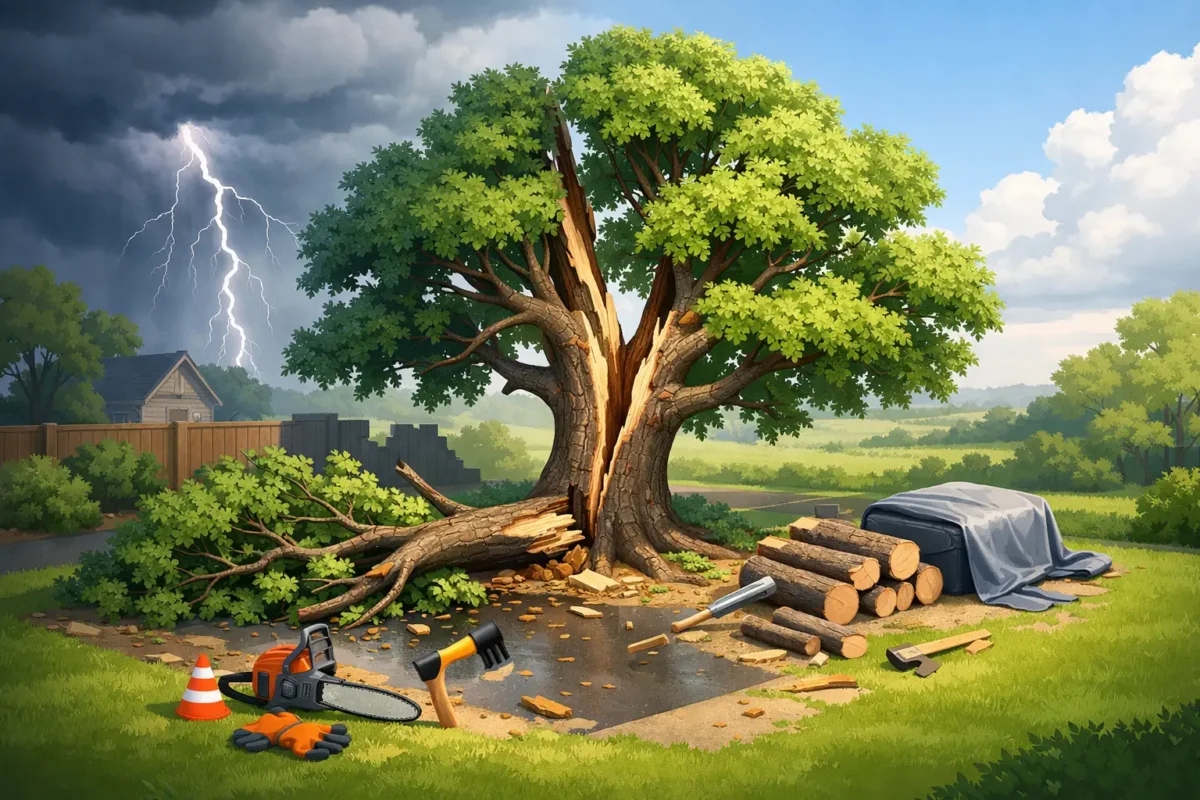
A storm split oak tree example usually looks worse up close than it does from the street. What seems like a heavy limb hanging low can actually be a major structural split running through the main trunk or a large codominant stem. After a storm, that matters fast. A split oak can stay standing for hours, days, or even weeks, then fail without much warning and come down on a roof, driveway, fence, car, or power line.
If you have an oak on your property that cracked during high wind, ice, or saturated ground conditions, the first job is not cleanup. It is distance and safety. You need to know what kind of split you are looking at, what should never be handled by a homeowner, and when the tree can be saved versus when removal is the safer call.
A real storm split oak tree example
Picture a mature red oak in a front yard after a summer thunderstorm. One side of the canopy looks normal. The other side has dropped several feet, and there is a long vertical crack where two large stems meet above the trunk. Bark is peeled back. Fresh wood is exposed. The tree is still standing, but the split has opened enough to see daylight in the seam.
That is a common storm split oak tree example, and it is one of the most dangerous post-storm situations a property owner can face. The reason is simple. Oaks are heavy, and once a main union splits, the remaining wood fibers are under huge tension. Even if the tree has not fully fallen, the damaged section can shift again with wind, added rain load, or the vibration from someone walking beneath it.
In another version, the storm does not split the trunk straight down the middle. Instead, a large scaffold limb tears away from the trunk and leaves a deep wound. Homeowners sometimes see this and assume the tree “lost a branch” and can wait. Sometimes it can. Sometimes that tear changes the whole balance of the tree and creates a secondary failure risk. It depends on the limb size, the amount of trunk wood involved, and whether the remaining canopy is still stable.
Why oak trees split in storms
Oak is strong, but strength is not the same as storm-proof. A healthy oak can still split if the structure is poor or storm conditions are severe enough.
The most common reason is a weak union between two competing stems. If your oak has a V-shaped crotch with bark pinched in between, that connection is often weaker than it looks. As the stems get larger, pressure builds at that seam. Add wind, a wet canopy, or heavy snow and the split can run down the trunk.
Internal decay is another factor. A tree can look full and green from the outside while the inside wood is compromised. Storms do not always create the problem. They expose it.
Overextended limbs also matter. If one side of the canopy is longer, heavier, or more exposed to prevailing wind, that side can act like a lever in a storm. Poor past pruning, topped trees, root damage, compacted soil, and saturated ground can all make failure more likely.
This is why an honest tree inspection matters. Not every broken oak needs emergency removal, but not every standing oak is safe just because it is still upright.
What you should do first
Stay out of the drop zone. That means keeping people, pets, and vehicles well away from the damaged side of the tree and from the area directly beneath the canopy. If a split section is hanging over a driveway or entry path, block access.
Do not try to pull down broken wood with ropes, a truck, or a tractor. Do not climb the tree. Do not get on a ladder. A partially failed oak can release suddenly, and the force is far beyond what a homeowner can control.
If the tree is touching power lines or even close to them, treat it as energized and stay back. That is not a trimming job. That is a utility hazard.
Take clear photos from a safe distance if you can. Wide shots help show lean and canopy damage. Closer shots help show the split, torn bark, and exposed wood. These can help a tree service assess urgency before arrival.
When it is an emergency
A storm-split oak should be treated as urgent if the main trunk is cracked, a large stem has separated, the tree has shifted toward a structure, roots are lifting, or broken sections are suspended overhead. The same is true if debris blocks access to your home or business or if the tree is affecting a road, sidewalk, or utility area.
For homeowners in parts of New York where storms can bring heavy wind, wet snow, and ice in different seasons, waiting for “better weather” is not always the safer choice. A damaged oak that survives the first storm can fail in the next one.
Emergency work is also about access. If the split is over your roof, deck, garage, or parked vehicles, every hour of delay can raise the chance of bigger property damage.
Can a split oak tree be saved?
Sometimes, yes. Often, no. The answer depends on where the split is, how deep it runs, the size of the tree, the percentage of canopy involved, and the condition of the rest of the structure.
If a relatively small limb tore out and the trunk is sound, corrective pruning may be enough. If the split involves a codominant stem but the damage is limited and the tree has strong remaining structure, cabling or bracing may be considered in select cases.
But here is the honest part. Large storm splits in mature oaks often do not have a safe long-term fix, especially when the main union has opened significantly or decay is already present. Hardware is not a magic repair. It reduces movement in some cases. It does not restore lost wood strength.
A good tree company should tell you plainly when preservation makes sense and when removal is the safer decision. You do not need a sales pitch after a storm. You need a clear risk assessment.
Signs the tree is likely beyond repair
Some damage points strongly toward removal. One is a split that extends deep into the trunk. Another is a major stem that has torn away and removed a large section of parent wood. Uplifted roots are another serious sign because they show the entire tree may be destabilized.
Watch for old cavities near the split, mushrooms at the base, multiple cracked unions, or a fresh lean that was not there before. If half the canopy is gone, the remaining structure may be too compromised or too imbalanced to keep.
Weight matters too. A very large oak over a house can be unsafe even if a repair is technically possible. Risk is not only about whether the tree might survive. It is about what happens if it fails.
What professional storm cleanup actually involves
Safe storm work is controlled work. The goal is not to cut fast. It is to reduce weight in the right sequence, stabilize what can shift, protect the property below, and remove or prune without causing a second failure.
With a split oak, crews may section down damaged limbs first, then address the broken union or trunk damage. In some cases, cranes or rigging are needed to keep pieces from dropping onto the house, fence, or neighboring property. That is especially true with mature oaks because the wood is dense and heavy.
After the immediate hazard is handled, cleanup should also include a look at nearby trees. Storms that split one oak often expose weak limbs, hanging branches, or hidden defects in others.
How to reduce the chances of this happening again
You cannot stop every storm loss, but you can reduce the odds. Regular pruning helps remove deadwood, reduce overextended limbs, and improve structure before wind finds the weak point. Young oaks especially benefit from structural pruning so they do not grow into those dangerous competing stems.
You should also have mature trees checked if they lean, have included bark, drop large limbs, or show signs of decay. The best time to deal with a weak union is before the storm, not at midnight after it splits.
For homeowners and small commercial properties, this is where experience matters. A safety-first crew will not tell you every oak needs removal. They will tell you which trees need attention now, which ones can wait, and what preventive work is worth the cost.
If you are dealing with storm damage now, act before the next weather shift adds more stress to the tree. A split oak rarely gets safer by sitting there, and a prompt professional assessment can protect your home, your family, and everyone who has to walk under that canopy next.