When You Need Emergency Tree Service Fast

A tree does not have to fall all the way over to become an emergency. One cracked limb over your driveway, one trunk leaning harder after a storm, or one uprooted tree pushing against your roof is enough to put your family, your property, and anyone nearby at risk. That is when emergency tree service matters most – not later, not after the next storm, and not after the damage gets worse.
If you are staring at storm damage and trying to figure out whether it can wait until morning, the first rule is simple: if a tree or large limb is threatening a home, a vehicle, a power line, an entryway, or a place people walk, treat it as urgent. Speed matters, but so does judgment. Not every damaged tree needs immediate removal, and a good tree company will tell you the difference.
What counts as an emergency tree service call?
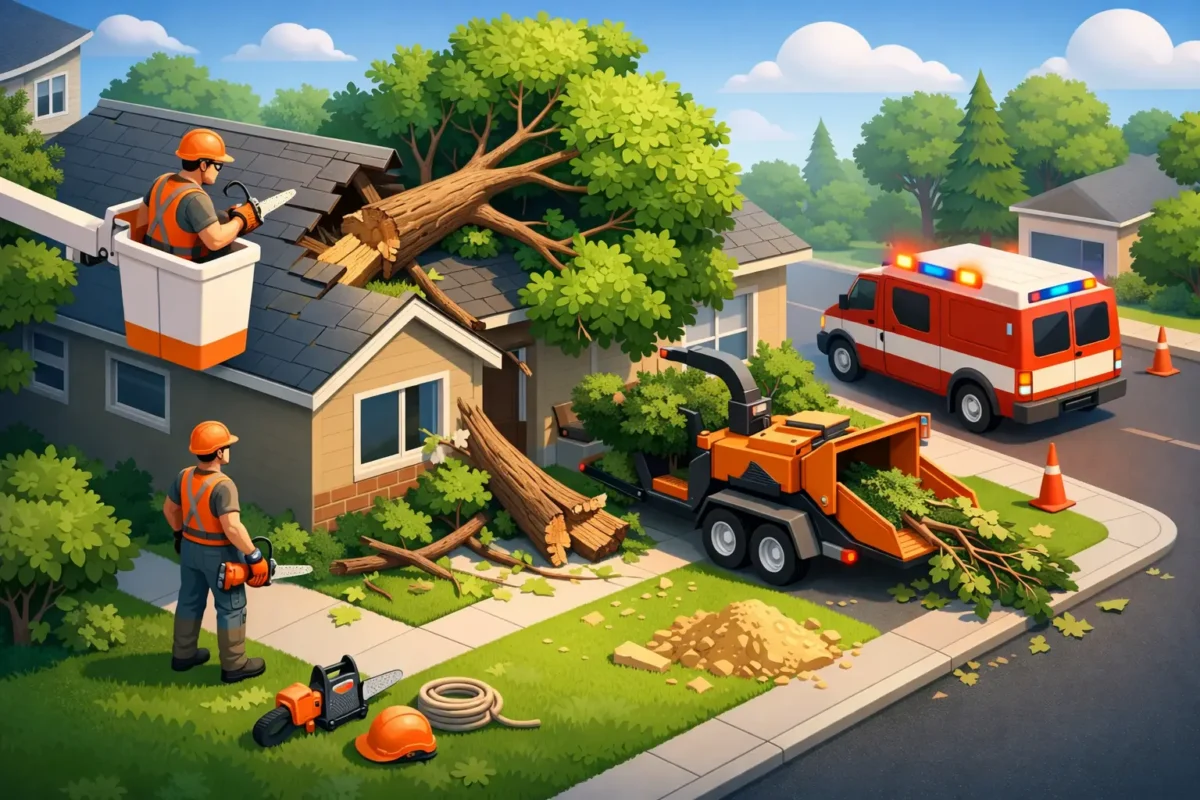
The obvious cases are easy to spot. A tree that has fallen onto a house, split down the middle, or dropped a heavy limb across a driveway needs fast attention. So does a tree that is suddenly leaning after wind or saturated soil. Trees can hold together longer than you expect, then fail without much warning.
Some emergencies are less dramatic but still serious. A tree with exposed roots after heavy rain may still be standing, but it has already lost stability. A limb hanging high above your yard may not have landed yet, but it can come down with the next gust. If a tree blocks access to your home or business, that becomes a safety issue as well as a property issue.
Power lines change everything. If branches are touching wires or a tree has come down near utility lines, stay back and call the utility company first. Tree crews can handle dangerous removals, but live electrical hazards need the right sequence and coordination. The safest move is always the one that keeps people away from the danger zone.
Signs you should call emergency tree service right away
You do not need to be an arborist to recognize trouble. You just need to know what not to ignore. A fresh lean, a split trunk, heaving soil at the base, or major limbs hanging loose after a storm all deserve immediate attention. So do trees that are pressing on a roofline, fence, garage, or parked car.
There are also situations that feel minor at first but turn serious fast. A tree that has dropped bark after a lightning strike may look mostly intact, but internal damage can make it unstable. A dead tree that has stood for years can become an immediate risk after one hard storm because the ground gives way or the trunk finally cracks.
If you own a small commercial property, the stakes can be even higher. A damaged tree near a sidewalk, parking area, or building entrance can create liability if someone gets hurt. Waiting to see what happens may cost much more than acting quickly.
What to do before the crew arrives
Your first job is not cleanup. It is keeping people safe. Move your family, pets, tenants, or employees away from the area. Do not walk under hanging limbs. Do not try to pull branches down with a rope. Do not climb the tree, and do not start cutting with a chainsaw unless you have the training and equipment to handle stored tension and unstable wood.
If the tree is on your house, get out of any room beneath the damaged area if it is safe to do so. If you smell gas, see sparking, or notice downed wires, call emergency services and the utility company right away. Then call a licensed and insured tree service that handles emergency work.
Photos can help with insurance, but only take them from a safe distance. The same goes for moving vehicles or outdoor furniture. If you can do it without entering the hazard zone, fine. If not, leave it alone.
What a good emergency response should look like
A real emergency call is not just about showing up fast. It is about showing up prepared, assessing the risk correctly, and doing the work in the safest order. Sometimes that means removing the tree immediately. Sometimes it means stabilizing the area, clearing access, and returning for full removal once the site is secure.
You should expect clear communication. A reputable company will tell you what is dangerous now, what can wait, and what the job involves. They should also explain if a crane, bucket truck, rigging system, or traffic control is needed. Emergency jobs are rarely one-size-fits-all because every property is different.
This is where experience matters. Storm-damaged trees do not behave like healthy trees during routine trimming. Wood can be twisted under pressure. Limbs can be supported by roofs, fences, or other branches in ways that make a simple cut dangerous. The right crew works methodically, not recklessly.
Emergency tree service vs. urgent but not immediate work
This is where honest advice matters. Not every damaged tree needs to come down tonight. A broken ornamental tree in the back corner of your yard may be urgent, but not necessarily middle-of-the-night urgent if it is far from structures and foot traffic. On the other hand, a large oak with a split trunk over your bedroom is not something to put off.
A safety-first company should never use fear to sell you work you do not need. Sometimes pruning a damaged limb is enough. Sometimes cabling, bracing, or scheduled removal makes more sense than a rushed full teardown. The key is whether the tree presents an active risk to people or property right now.
That balance matters for cost too. Emergency service can cost more than scheduled work because it often happens after hours, in bad weather, or under high-risk conditions. That does not mean every concern needs a full emergency dispatch. It means you need a clear assessment from someone who knows the difference.
How storms in New York change the risk
In counties across New York, wind, ice, wet snow, and saturated ground can turn a healthy-looking tree into a hazard overnight. Mature trees that have handled years of weather can still fail when roots sit too long in soaked soil or when old weak points open under snow load. Homes with large trees near roofs, driveways, and utility lines need especially close attention after storms.
That local weather pattern is why quick inspections matter after major wind events. You may not see the problem from the street. A crack high in the canopy, a root plate lifting in the backyard, or a heavy limb hanging over your shed can stay hidden until it falls. Fast action after the storm often prevents a second call after the next one.
Preventing the next tree emergency
The best emergency call is the one you never have to make. Preventive trimming, pruning, and removal of dead or high-risk trees can reduce the chances of major storm damage. That does not mean cutting every mature tree on your property. It means keeping sound trees maintained and dealing with real hazards before they become urgent.
Pay attention to warning signs through the year. Dead limbs, hollow sections, fungal growth near the base, repeated branch drop, and trees leaning more over time all deserve a professional look. Overgrown limbs above roofs, garages, sidewalks, and parking areas are worth addressing before storm season.
For homeowners, regular tree care protects your house and gives you peace of mind. For commercial properties, it also helps reduce the risk of blocked access, damaged vehicles, and injury claims. If a crew tells you a tree is safe for now but should be monitored, that is useful information too. Good recommendations are not always dramatic.
Choosing the right company when time matters
When you need help fast, it is easy to focus only on who can get there first. Response time matters, but so do licensing, insurance, equipment, and experience with hazardous removals. Emergency tree work is not general yard work. One bad cut can send thousands of pounds of wood in the wrong direction.
Look for a company that explains the risk clearly, gives you an honest recommendation, and puts safety ahead of speed for its own sake. AAA Tree Service NY built its reputation around that kind of response – fast when you need it, careful when it counts, and straightforward about what should happen next.
If a tree on your property looks unstable, do not wait for a perfect time to deal with it. The best time to act is while you still have options, and the safest call is the one that protects your home before the damage spreads. Contact Us