Tree Maintenance for Rental Properties

A tenant calls after a windy night and says a large limb is hanging over the driveway. That is the moment many owners realize tree maintenance for rental properties is not just yard work. It is part of protecting your building, your tenants, your budget, and your liability.
If you own or manage a rental home, duplex, or small commercial property, trees can add value and curb appeal. They can also cause roof damage, block access, crack pavement, interfere with utility lines, and create serious risk during storms. The goal is not to remove every tree. The goal is to know which trees are healthy, which need trimming, and which are becoming a problem before they turn into an emergency.
Why tree maintenance for rental properties matters
Rental properties come with a different level of responsibility than your own backyard. If a neglected tree drops a limb onto a tenant’s car, damages a fence, or injures someone walking to the entrance, the question is going to be simple: could this have been prevented?
That is why routine tree care matters. It helps reduce predictable hazards, keeps walkways and parking areas clear, and lowers the chance that a small issue turns into a costly insurance claim. It also protects the property itself. Branches rubbing against siding or overhanging the roof may seem minor, but over time they can wear down shingles, clog gutters, and create easy access for pests.
There is also the tenant side of the equation. People notice when the outside of a property looks neglected. Dead limbs, low branches, and overgrown trees can make a place feel unsafe. On the other hand, clean and well-maintained trees show that you take the property seriously.
The biggest risks owners tend to miss
Some tree problems are obvious. A split trunk, a tree leaning more than it used to, or a large dead branch over an entry path should never be ignored. Other issues are easier to miss until damage is already done.
One common problem is canopy overgrowth. When limbs stretch too close to the roof, chimney, windows, or power lines, the risk increases with every storm. Another is hidden decay. A tree can look alive from a distance but still have dead sections, hollow areas, or weak branch unions that fail under wind or heavy snow.
Roots are another concern, especially around older rentals. They can lift sidewalks, crack sections of pavement, and create trip hazards for tenants and visitors. In some cases, they may also affect retaining walls, patios, or nearby utility areas.
In parts of New York, storm exposure makes these risks more urgent. Heavy snow, saturated ground, and strong winds can turn a manageable issue into a same-day emergency. If a property has mature trees close to buildings or access lanes, waiting too long usually costs more than addressing the issue early.
What a smart maintenance plan looks like
The best approach is simple and consistent. You do not need to over-manage every tree on the property, but you do need a regular system for checking condition and responding before problems grow.
Start with seasonal inspections. At minimum, trees on rental properties should be reviewed before storm-heavy seasons and again after major weather events. You are looking for dead limbs, cracked branches, hanging sections, trunk damage, sudden lean, root disturbance, and limbs too close to structures.
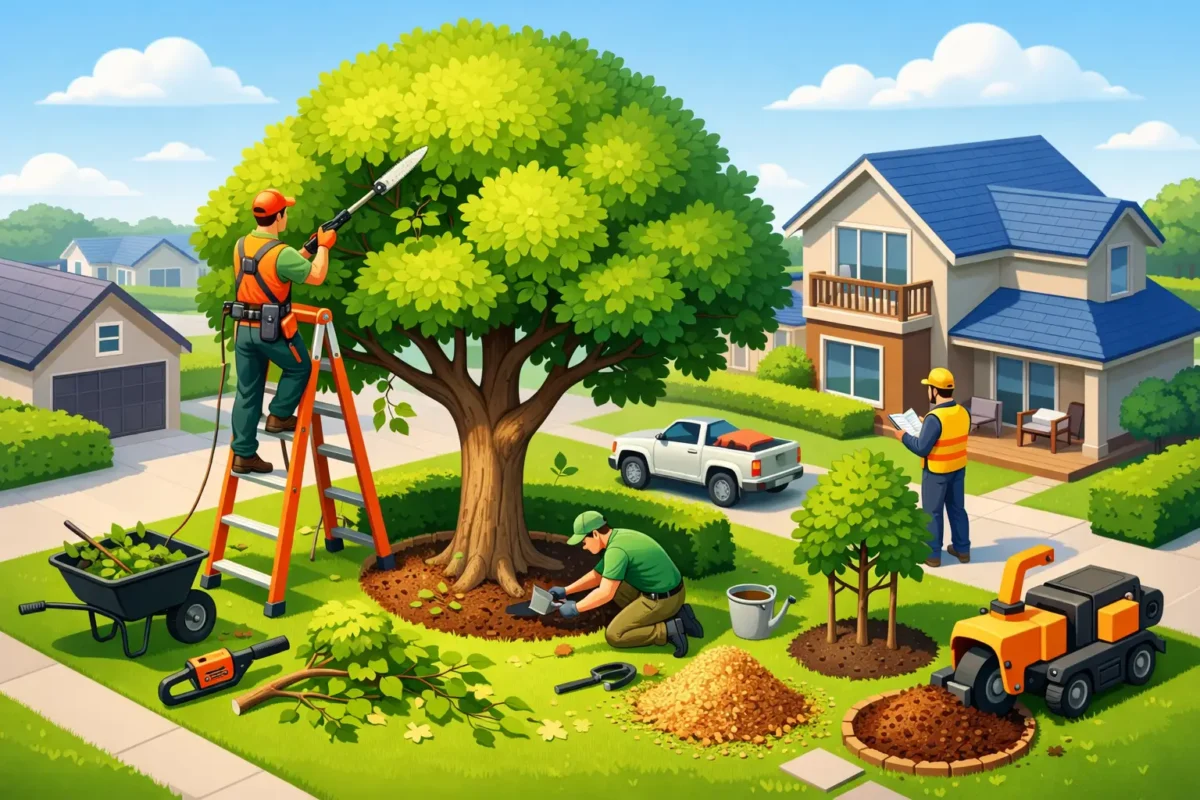
Pruning is usually the most common maintenance need. Proper trimming removes dead or weak branches, improves clearance over roofs and driveways, and reduces the chance of breakage in bad weather. It also helps the tree stay healthier long term when done correctly. Poor cutting can do the opposite, so this is not an area where guesswork helps.
Some properties also need selective tree removal. That does not mean cutting down healthy trees for convenience. It means removing trees that are dead, unstable, badly damaged, or planted in a location where conflict with the structure is unavoidable. Honest advice matters here. Not every tree needs to come down, but some do.
Stump grinding may be worth addressing too, especially in tenant areas. Old stumps create trip hazards, attract insects, and make mowing harder. On rental properties, those small headaches add up.
How often should rental property trees be serviced?
It depends on the size of the property, the number of mature trees, and how close they are to buildings, walkways, and utility lines. A small rental with a few young trees may only need periodic trimming and routine checks. A property with large older trees near roofs, parking spaces, or tenant entrances needs closer attention.
As a general rule, most rental properties benefit from a professional assessment every year, with trimming scheduled as needed based on tree type and growth. After storms, inspections should happen right away if there is any sign of breakage, leaning, or debris impact.
If you manage multiple units, it helps to treat tree care like any other preventive maintenance item. Waiting until a branch falls is not a maintenance plan. It is emergency response.
Signs you should not wait on
Some issues can be scheduled. Others deserve faster action. If you see large dead limbs, fresh cracks in major branches, a tree leaning toward the building, exposed roots after a storm, or limbs touching the roof or power lines, it is time to have the property evaluated.
The same goes for tenant complaints about falling branches, blocked sunlight at entrances, scraping against windows, or sudden debris after wind. Tenants often notice changes before owners do, especially when they live with the tree every day.
Fast action matters because tree damage rarely gets cheaper with time. A branch that could have been trimmed safely can become a roof claim after the next storm. A weakened tree can drop across a driveway and block tenant access. In an emergency, you want a licensed and insured crew that can respond quickly and handle the work safely.
DIY vs professional tree care on rentals
Property owners sometimes try to handle minor trimming themselves or send a general maintenance person to do it. That may seem cost-effective, but tree work changes fast once ladders, chainsaws, heavy limbs, or storm-damaged trees are involved.
For rental properties, the risk is higher because you are responsible for more than your own safety. You are protecting tenants, cars, buildings, neighboring property, and anyone nearby. That is why professional service makes sense for anything beyond light ground cleanup.
A qualified tree company can tell you what needs immediate attention, what can wait, and what does not need to be touched yet. That kind of honest recommendation saves money over time. It also helps you avoid unnecessary work while still addressing real hazards.
Budgeting for tree maintenance without overdoing it
Owners often put off tree work because they expect a big bill. Sometimes the smarter move is smaller, planned service before the problem gets worse. Routine pruning generally costs less than emergency removal after storm damage. And one avoided roof repair can pay for a lot of preventive maintenance.
If you are planning annual property expenses, include tree inspections and routine trimming in the same category as gutter cleaning, roof checks, and pavement repair. Trees are part of the property system. When they are neglected, other parts of the property usually pay for it.
A free estimate helps you separate urgent work from longer-term recommendations. That is especially useful if you have just bought a rental or inherited a property with mature trees and no clear maintenance history.
Choosing the right tree service for a rental property
Not every tree job is routine. Some involve storm damage, limited access, tenant safety concerns, or trees close to structures. You want a company that is licensed, insured, experienced, and able to respond quickly when conditions change.
It also helps to work with a crew that will give you straight answers. You do not need scare tactics. You need a practical risk assessment and a clear explanation of what should be done now, what should be monitored, and what is still safe to leave alone.
For owners in areas with frequent storm exposure, including parts of Albany County and surrounding service areas, local experience matters. Trees fail differently depending on weather, soil, and season. A company that understands those patterns can help you make better decisions before the next storm rolls in.
If you are unsure about a tree on your rental property, it is better to ask now than after a limb comes down. A quick inspection can prevent damage, reduce liability, and give you a clear plan. And if you are dealing with a storm emergency, fast professional help is worth having on call. Protecting your property starts with taking the warning signs seriously while there is still time to act.