Tree Removal Versus Tree Trimming Explained

A heavy limb hanging over your roof and a tree with dead interior branches may both look like tree problems, but they do not call for the same work. Tree removal versus tree trimming comes down to one question: can the tree be made safe and healthy, or has it become a serious risk to your property, people, or nearby utility lines?
Making the right call can prevent storm damage, avoid unnecessary expense, and preserve the healthy trees that add value to your property. For homeowners and building owners, the safest choice is not always the biggest job. It is the job that addresses the real risk.
What Tree Trimming Is Meant to Do
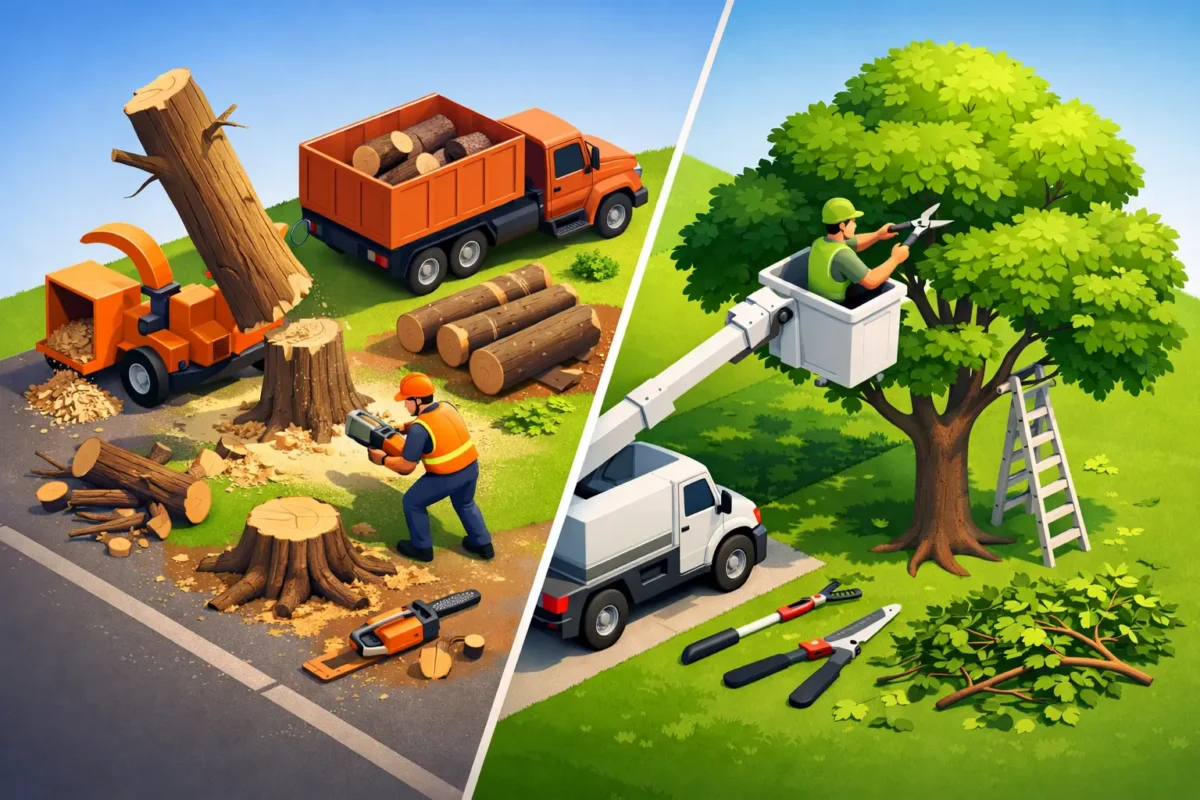
Tree trimming removes selected branches to improve a tree’s safety, shape, clearance, and long-term health. The tree stays in place. A trained crew may remove dead limbs, branches rubbing against each other, low growth blocking a driveway, or limbs extending too close to your roof.
Pruning is often used more specifically to describe health-focused cuts, while trimming can refer to clearance and appearance work. In practical terms, both involve removing the right branches without damaging the tree’s structure.
Regular trimming is usually the better option when a tree is fundamentally healthy but needs attention. It can reduce the weight of overextended limbs, improve airflow through a dense canopy, and keep branches away from windows, roofs, fences, and walkways.
Signs Your Tree May Need Trimming
You may be able to schedule routine trimming if you notice dead branches in an otherwise healthy canopy, limbs touching your roof or siding, low branches obstructing a path, or branches growing toward a service line. Trees that have become too dense can also benefit from careful thinning, especially before high-wind weather.
Trimming is preventive work. It is often less disruptive and less costly than waiting until a large limb breaks during a storm. Still, more cutting is not always better. Removing too much live growth at once can stress a tree, expose bark to sun damage, and encourage weak new shoots. A professional assessment should focus on targeted cuts, not stripping the canopy.
When Tree Removal Is the Safer Choice
Tree removal means taking down the entire tree, typically followed by cutting the trunk into manageable sections and hauling away debris. Stump grinding can be added if you want to reclaim the space for lawn, planting, a patio, or another project.
Removal is appropriate when a tree has declined beyond a safe point or cannot be corrected through pruning. It is also the right choice when the tree’s location creates an ongoing hazard that trimming cannot solve.
A tree should be assessed promptly if it is leaning suddenly, has a split or cracked trunk, has major dead sections throughout the canopy, or has roots lifting from the ground. Large cavities, mushrooms growing around the base, missing bark, and hollow-sounding wood can also signal internal decay. These conditions do not automatically mean a tree must come down, but they do call for an experienced inspection.
A dead tree near a home, parking area, sidewalk, or neighboring property should not be left for the next storm to decide. Dead wood becomes brittle. Even on a calm day, branches can fall without warning.
Removal Is Not Always About Disease
A healthy tree can still need removal. For example, a tree may be growing too close to a foundation, pressing against a structure, or interfering with a planned driveway or commercial expansion. A tree with roots damaging a retaining wall or repeatedly clogging a drainage system may also create a problem that routine trimming cannot fix.
The trade-off is clear: removal solves the immediate risk but removes the shade, privacy, and property value benefits a mature tree can provide. That is why honest recommendations matter. If careful trimming will make the tree safe, removal may be unnecessary. If decay or structural failure makes trimming only a temporary fix, removal may be the more responsible decision.
Tree Removal Versus Tree Trimming After a Storm
Storm damage changes the urgency. After heavy wind, ice, or rain, do not assume a damaged tree simply needs a few branches cut back. Look from a safe distance for hanging limbs, torn branch unions, a newly leaning trunk, cracked major limbs, or exposed roots.
If a limb is resting on a roof, tangled in wires, blocking access, or threatening to fall, keep people away from the area. Never climb the tree, use a ladder near damaged branches, or try to pull a limb off a roof. If power lines are involved, stay clear and contact the utility company first.
Some storm-damaged trees can be saved with corrective pruning. Others have lost too much structural support and require removal. The deciding factor is not how dramatic the damage looks from the ground. It is whether the trunk, roots, and main branch structure remain sound enough to support the tree safely.
AAA Tree Service NY provides 24/7 emergency response for hazardous trees and storm cleanup, with a focus on securing the immediate danger first. Once the site is safe, you can make a clear decision about cleanup, pruning, stump grinding, or full removal.
Cost Differences and What Affects the Price
Tree trimming generally costs less than removal because the tree remains standing and the work involves fewer cuts, less rigging, and less hauling. However, a large tree over a house can require extensive safety measures even for a trimming job.
Removal costs vary based on the tree’s size, condition, location, access, and complexity. A small tree in an open yard is very different from a tall, decaying tree positioned between a house, fence, and overhead lines. Crews may need to lower sections by rope, use specialized equipment, protect landscaping, or coordinate access around a busy commercial property.
Stump grinding, log removal, and debris hauling may be separate parts of the estimate. Ask what is included so there are no surprises. A free estimate should explain whether the recommended work is trimming, removal, or a combination of both, and why.
Why DIY Is Risky for Both Jobs
Homeowners can handle light cleanup, such as collecting small twigs after a storm. But cutting branches overhead or removing a tree is not a standard yard task. Branches can swing, twist, or fall in a direction you do not expect. A tree can also shift once weight is removed, especially if it is leaning or decayed.
The greatest risks involve ladders, chainsaws, utility lines, and damaged wood under tension. Even a small limb can cause serious injury when it falls from height. Hiring a licensed and insured tree service protects you from avoidable danger and helps prevent damage to roofs, vehicles, fences, and neighboring property.
How to Decide What Your Property Needs
Start by looking at the tree’s overall condition, not just the most visible branch. A healthy tree with a few problem limbs often needs trimming. A tree with major decay, root failure, or a compromised trunk may need removal.
Timing matters too. If the concern is clearance over a roof or driveway, schedule trimming before the next major storm. If a tree is already leaning, cracked, or dropping large limbs, treat it as an urgent safety issue. Waiting can turn a manageable job into an emergency call and a much larger repair bill.
You do not have to guess whether a tree can be saved. Have it evaluated before cutting begins, especially when the tree is close to your home or business. The right work protects your property without removing a tree that still has years of safe life ahead of it.