
How to Document Storm Tree Damage Right

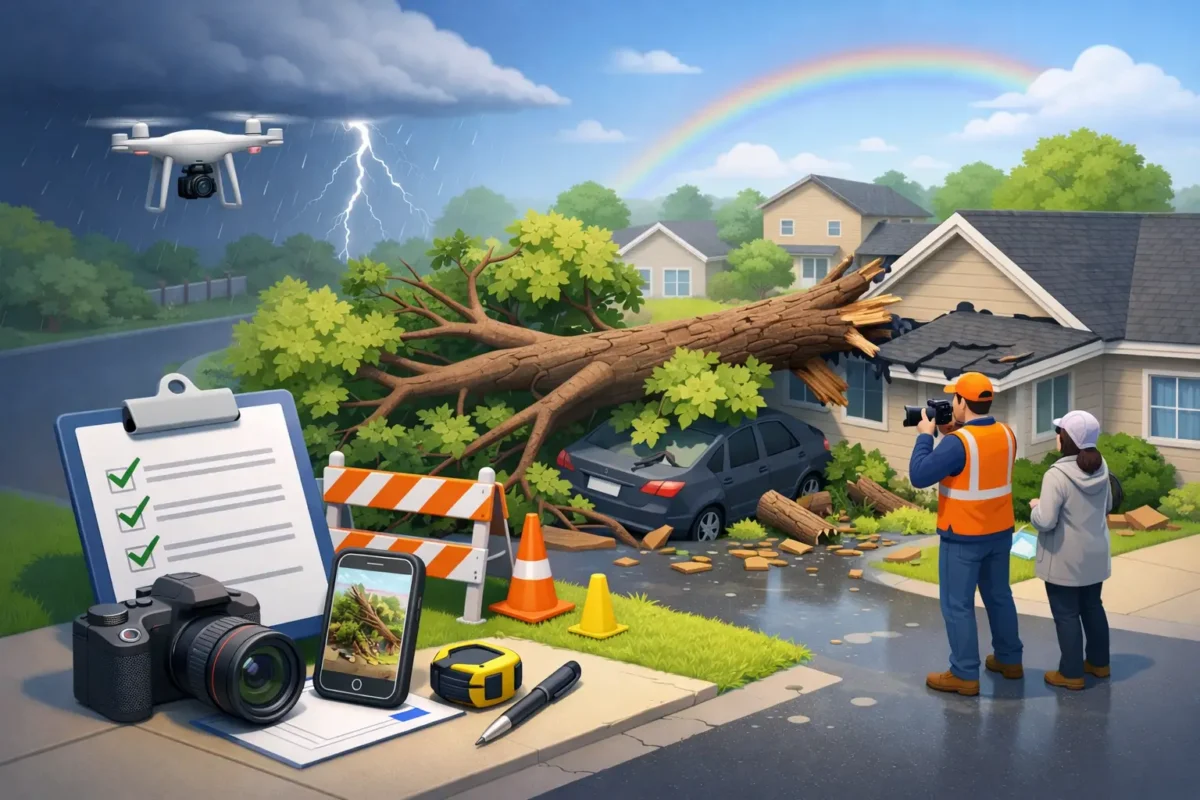
The branch is on your roof, the yard is a mess, and your first instinct is to start dragging debris away. Stop for a minute. If you want a smoother insurance claim and a safer cleanup, you need to know how to document storm tree damage before anything gets moved, cut, or hauled off.
Good documentation does two jobs at once. It helps prove what happened, and it helps you make better decisions about what needs emergency service right now and what can wait a day or two. That matters when a storm hits hard and tree companies, adjusters, and utility crews are all busy.
Why documentation matters after storm damage
Storm damage is not always obvious from the ground. A tree can lose a major limb, split at the trunk, or shift in the root zone without falling all the way over. If you only take one close-up photo and start cleanup, you may miss the bigger picture that explains how the damage happened and why the tree became unsafe.
Insurance companies also look for clear evidence. They want to see the damaged tree, the affected structure or vehicle, and the surrounding area. If the tree was already dead, hollow, or visibly failing before the storm, that can affect how a claim is handled. If the damage clearly came from sudden wind, heavy snow, or saturated soil, your photos and notes can help support that.
There is also a practical reason. When you call for emergency tree work, the more clearly you can show the situation, the faster a qualified crew can understand the risk. A photo of a limb on a shed is helpful. A full set of photos showing the limb, the split union above it, the power line nearby, and the blocked driveway is much better.
How to document storm tree damage safely
Your safety comes first. Do not walk under hanging limbs, climb on a damaged roof, or step near a tree that is leaning into power lines. Do not assume a branch is stable because it is not moving. Storm-damaged trees often shift without warning.
Start from a safe distance. Use your phone to take wide shots first, then move closer only if the area is clearly secure. If wires are involved, stay back and call the utility company and emergency services if needed. If a tree is resting on your home, keep people out of that part of the house until a professional says it is safe.
This is one of those situations where doing less can protect you more. You do not need perfect photography. You need clear evidence without putting yourself in danger.
What photos to take first
If you are figuring out how to document storm tree damage, the best approach is to photograph the scene in layers. Start broad, then narrow in.
Take several wide photos that show the whole property and where the tree sits in relation to your house, garage, fence, driveway, or neighboring structures. These establish context. After that, take mid-range photos that show the damaged section of the tree and the object it hit. Then take close-ups of cracks, splintered wood, exposed roots, broken limbs, roof punctures, crushed gutters, damaged siding, or impacted vehicles.
Try to capture the tree from multiple angles. If the trunk split, show the split from both sides. If the root plate lifted from the ground, photograph the soil upheaval and the lean. If a limb failed from high in the canopy, include the attachment point if it is visible from a safe place.
It also helps to photograph debris before cleanup starts. Once branches are cut into pieces and stacked at the curb, it becomes harder to show the original extent of the damage. If there are scattered limbs across the yard, snapped tops, or multiple trees involved, document all of it before anything changes.
The details most people forget to record
Photos matter, but notes matter too. Right after a storm, small details are easy to forget. Write down the date and rough time of the storm, the weather conditions you observed, and when you first noticed the damage. If strong wind came from one direction or heavy snow loaded one side of a tree, note that.
You should also record what the tree hit and how access is affected. For example, note if the driveway is blocked, if a bedroom roof was struck, if a tenant entrance is obstructed, or if a commercial lot now has a liability hazard. These details help explain urgency.
If you know the tree had prior issues, be honest about that. Maybe it was already leaning, had dead limbs, or showed signs of decay. That does not automatically ruin a claim, but guessing or leaving out facts can create bigger problems later. A straightforward record is always better.
If neighbors saw the tree fail, you can also write down their names and what they observed. Keep it simple. You are not building a courtroom case. You are creating a clear timeline.
Video can help, but only if it is useful
A short video walkthrough can be helpful when the damage is spread out or difficult to understand in still photos. Walk slowly from the street toward the damaged area and speak plainly about what the camera is showing. Mention the date, the storm, and any immediate hazards you can see from a safe distance.
Do not overdo it. A two-minute video is usually more useful than ten shaky clips with no context. Think of video as support for your photos, not a replacement.
Documenting damage for insurance and tree service estimates
Insurance documentation and tree service documentation overlap, but they are not exactly the same. Insurance wants proof of loss. A tree company needs to understand access, hazards, equipment needs, and what can be removed safely.
That means you should photograph gates, narrow driveways, fences, septic areas, overhead wires, and anything else that could affect how a crew reaches the tree. If a crane may be needed because a tree is on a structure, your photos should show clearance and obstacles. If the backyard is soft from rain, that is worth noting too.
When you call for an estimate, having these details ready can save time. A reputable company will still need to inspect the site, but strong documentation helps them prioritize true emergencies. That is especially important after major storms in places like Albany County or Nassau County, where crews may be responding to many calls at once.
What not to do after you document storm tree damage
Do not start major cutting yourself unless it is small debris on the ground and clearly safe to handle. Tensioned limbs, partially attached branches, and trees resting on structures can release violently when cut the wrong way.
Do not throw away damaged wood right away if it is part of a claim. Keep it until your insurance carrier says you can proceed or until a professional has documented the condition. If emergency work is needed to prevent more damage, take extra photos before and after the work begins.
Do not wait too long either. If a broken tree is hanging over your home or business, delaying service can make damage worse and increase liability. Documentation is important, but it should not become a reason to leave an active hazard in place.
When the damage is urgent
Some storm tree damage can wait for a scheduled estimate. Some cannot. If the tree is on your roof, touching power lines, blocking access for emergency vehicles, or hanging over an occupied area, treat it as urgent. The same goes for a tree that has split deeply, uprooted, or shifted enough that another fall is likely.
This is where practical judgment matters. Not every broken branch is a 2 a.m. emergency. But if there is a real chance of more failure before the next wind gust, fast professional help is the right call. A licensed and insured crew can secure the site, remove immediate hazards, and help you document the condition before and after the work.
For homeowners and property managers, that balance matters. You want to protect your claim, but you also need to protect people.
A simple order to follow
If the scene is safe enough to observe, use this order. Make sure everyone stays clear, call the utility company if wires are involved, take wide and close photos, record notes and video, contact your insurance carrier, and then schedule qualified tree service if the tree is unsafe or causing damage.
That order keeps you from skipping key evidence in the rush to clean up. It also helps you avoid a common mistake, which is making the site look better before anyone has documented how bad it was.
Storm cleanup is stressful, especially when your roof, car, fence, or business entrance is involved. Still, a few careful minutes with your phone can save hours of confusion later. If you are ever unsure whether the tree is stable enough to approach, trust that instinct and get professional help first. The best documentation in the world is not worth an injury.