Storm Damage Cleanup Near Me: What to Do Fast

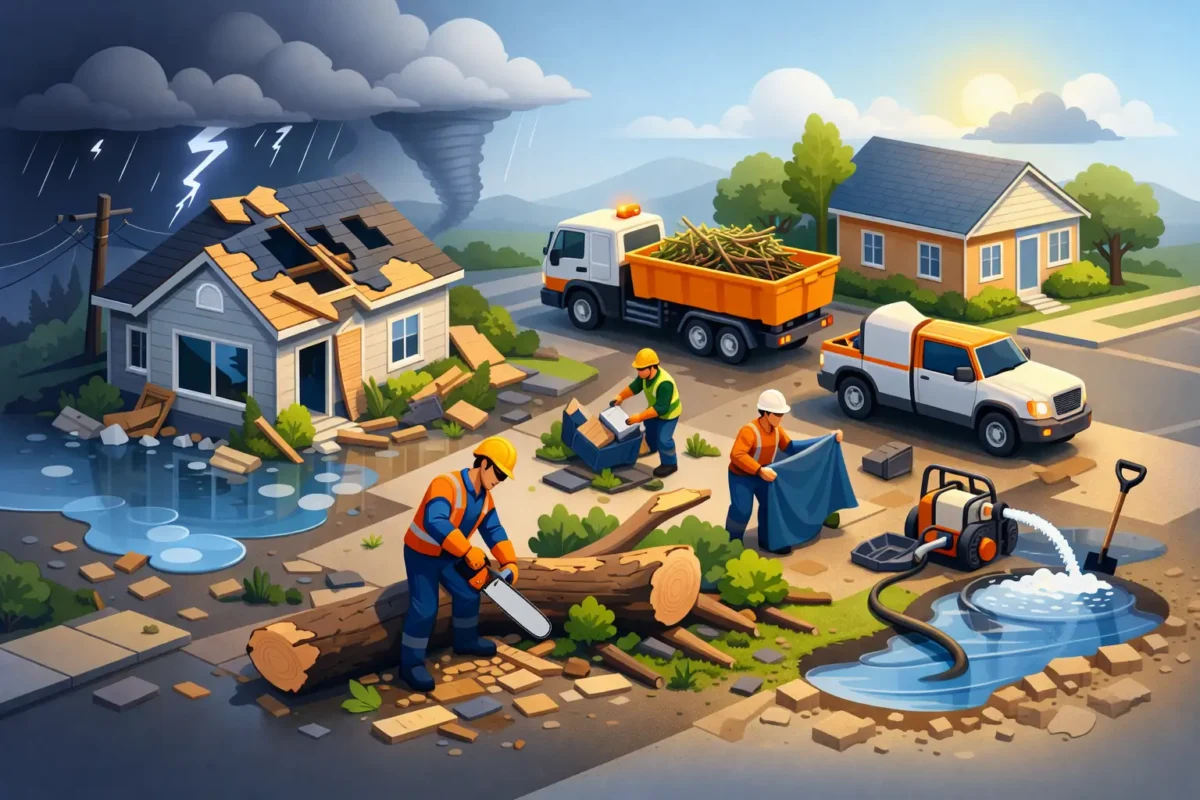
When you search for storm damage cleanup near me, you usually are not casually planning next month’s yard work. You are looking at a fallen limb on the roof, a split trunk over the driveway, or a tree that suddenly looks one strong gust away from coming down. In that moment, speed matters, but so does judgment. The wrong move can put your home, your car, and your family at risk.
Storm cleanup is not just about making the yard look normal again. It is about finding hidden hazards, removing weight safely, and stopping a bad situation from getting worse before the next round of wind or rain moves through. For homeowners in New York and other storm-prone areas with mature trees, knowing what to do first can save time, money, and a lot of stress.
What storm damage cleanup near me should include
A real storm cleanup job goes beyond hauling away branches. After heavy wind, ice, or saturated ground, trees can fail in ways that are not obvious from the curb. A branch may be hanging by a few fibers. A trunk may be cracked on the side facing away from the house. Roots may be lifting even though the tree still looks upright.
That is why cleanup should start with a safety assessment. The first priority is identifying immediate threats – trees on structures, limbs over walkways, split stems, leaning trunks, and anything tangled near utility lines. After that, the work shifts to controlled removal, debris clearing, and deciding whether damaged trees can be saved with pruning or need full removal.
This is where experience matters. Storm-damaged trees behave unpredictably. Tension in the wood, partial breaks, and unstable root systems can turn a simple cut into a dangerous release. A licensed and insured crew is there to protect the property while reducing the risk to everyone on site.
What to do right after a storm
The first step is simple: stay back and look before you touch anything. If a tree or branch is down near power lines, treat the area as dangerous and keep everyone away. If a tree has landed on your house, fence, garage, or vehicle, do not try to cut it yourself. Even smaller limbs can shift fast when pressure changes.
If conditions are still unstable, wait until the storm has fully passed. Wet ground, high wind, and poor visibility make cleanup much more dangerous. Once it is safe to step outside, take photos of the damage for insurance purposes. Then focus on the biggest risks first, not the messiest areas.
A few warning signs mean you should call for help right away. Those include a tree leaning more than it did before the storm, large cracked limbs still hanging overhead, exposed roots, splitting at the trunk, or debris blocking access to your home or driveway. If the tree is close to the house or power-adjacent spaces, do not gamble on a DIY fix.
When cleanup becomes an emergency
Not every storm-damaged tree needs to come down that same day. Some can be pruned and monitored. Others cannot wait.
Emergency cleanup usually means the tree is actively threatening people or property. Maybe a large oak branch is resting on the roof. Maybe a pine has uprooted and is leaning toward the neighbor’s fence. Maybe a damaged limb is hanging over the front steps where your family walks every morning. In these cases, delaying service can mean more structural damage, a blocked exit, or a complete failure during the next storm cell.
There is also the issue of hidden damage. Trees that survive the first storm may still be compromised. A cracked leader or partially uprooted base can hold for a few hours or a few days, then fail later when conditions change. That is why a quick response matters. Fast service is not just about convenience. It is about preventing round two.
Why homeowners should be careful with DIY cleanup
It is tempting to grab a chainsaw and start clearing what you can see. For light debris on open ground, that may be fine. Small twigs, leaves, and loose branches can often be handled safely with basic yard cleanup. But once weight, height, or tension is involved, the risk changes fast.
A branch that looks stuck in the canopy may be under load. A trunk lying across a fence may roll when cut. A partly fallen tree can twist, drop, or kick back in ways that are hard to predict without training. Add ladders, wet grass, and storm fatigue, and the odds get worse.
The trade-off is straightforward. DIY cleanup can save money on minor debris, but it is not worth the risk when structural damage or unstable trees are involved. Most homeowners do not call a professional because they cannot rake a yard. They call because they want the dangerous part handled the right way.
How a professional storm cleanup crew approaches the job
A dependable tree service does not start cutting at random. The job should begin with a site review and a plan for removing hazards in the safest order. That often means stabilizing the area, identifying pressure points in damaged limbs, and using the right equipment to lower sections in a controlled way.
In residential neighborhoods, protecting the home is just as important as removing the tree. Tight spaces, fences, sheds, parked cars, and landscaping all affect how the job is done. The cheapest option is not always the safest one, and the fastest cut is not always the smartest cut.
A good crew will also tell you what does not need to be done. Some trees look rough after a storm but can recover with proper pruning. Others have enough structural damage that removal is the safer, more cost-effective call. Honest recommendations matter, especially when homeowners are already dealing with stress, insurance questions, and cleanup costs.
Signs a damaged tree may need removal
Some storm damage can be corrected. Some cannot. It depends on the species, the size of the tree, where the damage occurred, and how much of the crown or root system was affected.
Removal is often the right call when the trunk is deeply split, the tree is uprooted or lifting at the base, major scaffold limbs are torn off, or the tree now leans toward a structure after the storm. Trees with multiple weak stems can also become ongoing hazards once one side fails. If the damage leaves the tree structurally unsound, pruning alone may only delay the problem.
On the other hand, a healthy tree with a few broken limbs may be worth saving. Strategic trimming can remove damaged sections, reduce weight, and improve the tree’s chances of recovery. That is why an on-site assessment is so important. The answer is not always removal, and it should not be sold that way.
Cost, insurance, and timing
One of the first questions homeowners ask is what storm cleanup will cost. The honest answer is that it depends on access, tree size, the degree of damage, and whether the tree is on a house, tangled in another tree, or simply down in the yard. Emergency response can also affect pricing, especially after a major regional storm when demand is high.
Insurance may help if a tree damages a covered structure, but coverage varies. That is why photos, prompt documentation, and clear communication matter. A professional tree company can often help homeowners understand the scope of work needed, even though the final insurance decision is not theirs to make.
Timing matters too. Waiting a few days on harmless debris is one thing. Waiting on a cracked trunk over your roof is another. If you are unsure, have it looked at. A free estimate is often the fastest way to separate cleanup that can wait from a hazard that needs immediate attention.
Choosing the right local company for storm damage cleanup near me
When you are under pressure, it is easy to call the first name you see. But storm work is not the time to take chances on an uninsured crew or someone with a pickup truck and a chainsaw.
Look for a company with real storm response experience, licensed and insured service, and a track record of working around homes safely. Ask if they handle emergency tree removal, storm-damaged limbs, and complete debris cleanup. You also want clear communication. A reliable company should explain the risk, the plan, and the next step without talking over your head.
That is the value of working with a local team that understands regional weather, mature tree growth, and what storm damage actually looks like in residential neighborhoods. AAA Tree Service NY has built its reputation around fast response, honest recommendations, and safety-first work for homeowners who need help now, not vague advice later.
The best cleanup starts before the next storm
The hardest part of storm cleanup is that many emergencies were preventable. Dead limbs, overextended branches, crowded canopies, and neglected trees often give warning signs before bad weather hits. Routine trimming and pruning can reduce the chance of breakage, improve tree structure, and lower the risk of damage to roofs, driveways, and power-adjacent areas.
That does not mean every tree needs aggressive cutting. Over-pruning can weaken a tree and create new problems. The right approach depends on the species, age, location, and condition of the tree. Good preventive care is selective, practical, and focused on reducing risk without pushing unnecessary work.
If your yard took a hit, do not let the cleanup end with hauling brush to the curb. Use it as a chance to identify what is now unsafe, what can be saved, and what should be addressed before the next storm tests it again.