
Storm Debris Cleanup Guide for Safer Yards

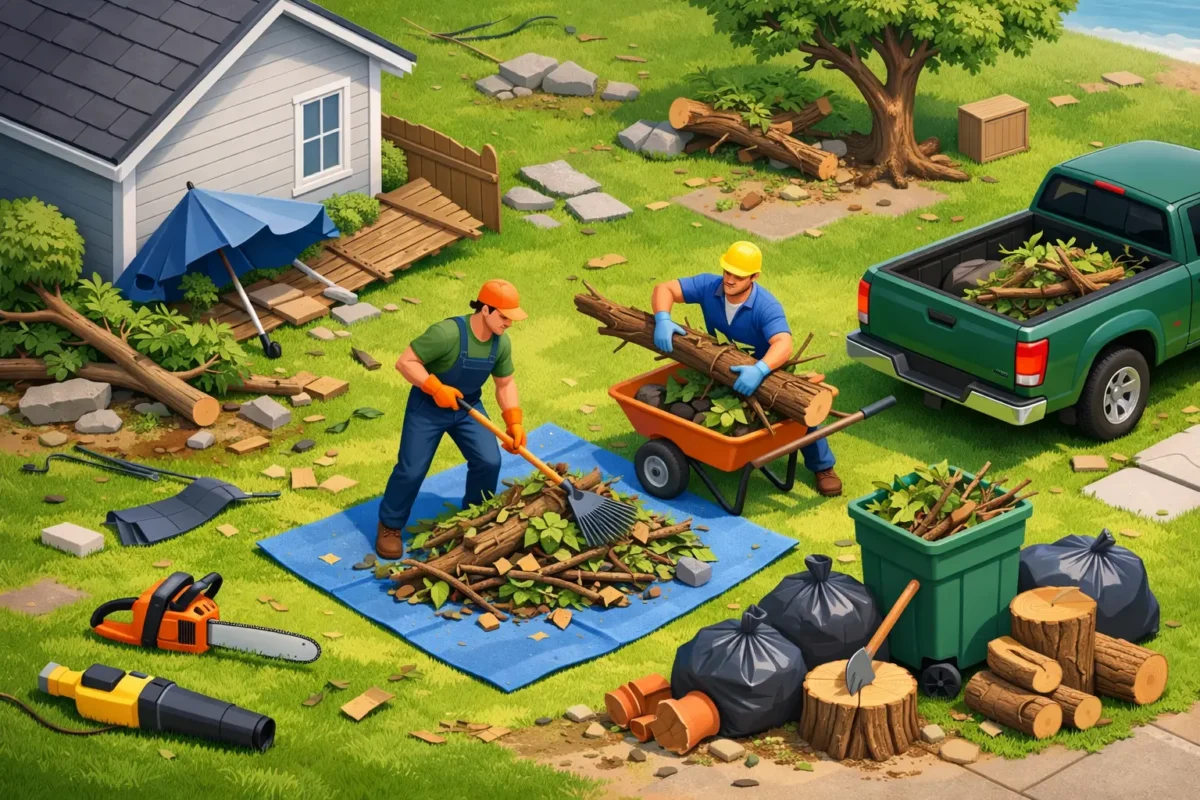
The storm has passed, but your property may still be dangerous. A good storm debris cleanup guide starts with one rule: do not rush into the yard just because the wind stopped. Downed limbs, split trunks, hanging branches, damaged fences, and hidden power lines can turn cleanup into an emergency fast.
If a tree is on your house, blocking your driveway, leaning over a structure, or tangled with utility lines, stop there and call for professional help. The same goes for large cracked limbs still hanging in the canopy. Those are not weekend cleanup jobs. They are high-risk situations that need the right equipment and trained crews.
Storm Debris Cleanup Guide: What to Check First
Start with a slow walk around the property, but keep your distance from anything unstable. Look up before you look down. A branch on the ground is easy to see. A broken limb hanging overhead is what injures people.
Pay close attention to trees near your home, garage, driveway, fence line, and any area where people usually walk. If the storm shifted the root plate, exposed roots, or caused a trunk to lean more than it did before, that tree may not be safe to leave standing. Sometimes the damage is obvious. Sometimes it shows up as fresh cracks in the bark, split branch unions, or a canopy that suddenly looks lopsided.
You should also watch for utility hazards. If any limb is touching a service drop, lying across a wire, or even close enough to make you question it, stay back. Do not try to move the debris yourself. Keep children and pets away from that area until the line is checked.
In parts of New York, especially after heavy wind, ice, or wet snow, cleanup often involves more than loose brush. Large limbs can snap under weight, and older trees may fail days after the storm. That delayed failure is one reason quick visual checks matter.
Handle the Site in the Right Order
Cleanup goes better when you work from highest risk to lowest risk. First, secure the dangerous areas. Then clear access. After that, deal with smaller debris and cosmetic mess.
If your driveway is blocked, it makes sense to open a path for vehicles, but not at the cost of personal safety. A limb pinned under tension can spring when cut or dragged. Branches caught in shrubs, fencing, or other limbs can shift without warning. What looks light enough to move may be carrying weight from another section of the tree.
A practical order usually looks like this in real life: isolate hazards, document damage, clear only what is clearly safe to move, and leave heavy or overhead material for a professional crew. That approach may feel slower, but it prevents the second emergency nobody wants.
What You Can Clean Up Yourself
Not every storm mess requires emergency tree removal. If the debris is small, fully on the ground, away from wires, and not under pressure, many property owners can handle basic cleanup safely.
That usually means twigs, leaves, small branches, and scattered yard debris. You may also be able to move lightweight limbs that broke cleanly and are lying flat in the open. Gloves, boots, eye protection, and a rake go a long way here. If you are bagging debris, avoid overfilling heavy bags with wet material. Storm cleanup is hard on your back even before you add lifting mistakes.
Use extra caution with chain saws. Most post-storm injuries happen when people try to cut wood that is bent, twisted, half-suspended, or heavier than expected. If you do not know how the wood is loaded, do not cut it. That is especially true near fences, roofs, sheds, and parked cars where one wrong move causes more damage.
There is also a difference between cleanup and repair pruning. Picking up fallen branches is one thing. Cutting storm-damaged limbs back to a proper point on the tree is another. Poor cuts can make the tree weaker, invite decay, and create new hazards before the next storm.
When to Call a Professional Tree Crew
A storm debris cleanup guide should be honest about limits. Some situations need a licensed, insured tree service right away.
Call for professional help if you see a tree on a structure, a tree or limb on wires, a split trunk, a large hanging limb, fresh leaning, root lifting, or major breakage in the upper canopy. You should also call if access is tight and the debris is near windows, vehicles, neighbor property, or commercial walkways.
For homeowners and small property owners, liability matters too. A damaged tree near a sidewalk, parking area, or shared property line can become a serious risk if you wait too long. Fast action is not about panic. It is about reducing the chance of more damage or injury.
This is where experience matters. A trained crew can tell the difference between a tree that needs removal now, a tree that can be pruned and saved, and a tree that only needs monitoring. Honest recommendations matter after a storm because not every damaged tree is a total loss, and not every standing tree is safe just because it stayed up.
Storm Debris Cleanup Guide for Trees You Hope to Save
Some trees recover well after storms, but only if the cleanup and pruning are done correctly. If less than half the canopy is damaged and the trunk is structurally sound, restoration may be possible. A healthy tree with a few broken limbs can often bounce back with proper pruning.
What matters is where the damage occurred. Broken tips on smaller branches are very different from failures at the main trunk or major scaffold limbs. A tree with one damaged side may still be stable. A tree with a deep trunk split or torn bark running into the main stem may not be worth saving.
Timing also depends on species, season, and the extent of damage. Sometimes the safest move is emergency removal. Other times, a tree can be stabilized now and pruned more thoroughly later. It depends on risk, not wishful thinking.
Don’t Forget Hidden Damage Around the Property
Storms do not only drop limbs. They can loosen trees without knocking them down. After cleanup, take another look over the next few days.
Watch for soil heaving near the base, mushrooms or decay exposed by root movement, cracks in the trunk that were hidden before, or branches that keep shedding after the storm. If your gutters, siding, roof edge, or fence took a hit, there may still be tree sections pressing or rubbing against those surfaces.
Commercial properties should pay close attention to entryways, parking lots, and pedestrian routes. A partly damaged tree over a walkway is a liability issue even if it did not fully fail during the storm.
How to Make the Next Cleanup Easier
The best storm cleanup starts before the weather turns. Trees with dead limbs, crowded canopies, poor branch structure, and uncorrected storm damage are more likely to fail when wind, rain, or heavy snow hits.
Routine pruning helps reduce weak attachments and removes deadwood before it lands on your roof or yard. It also gives you a clearer view of structural issues that might otherwise go unnoticed. If a tree is already leaning, hollow, declining, or planted too close to structures, waiting for the next storm rarely improves the situation.
For property owners in storm-prone parts of New York, seasonal inspections are a practical step. You do not need to remove every mature tree to protect your property. You do need a realistic assessment of what is healthy, what is declining, and what becomes dangerous under weather stress.
If you are staring at a mess after a storm, focus on safety first, not speed. Clear what is truly safe, leave the risky work alone, and get experienced help when the damage involves height, weight, wires, or structures. That is how you protect your home, your family, and the people who have to walk the property after the storm is over.