
When Is a Tree an Emergency?

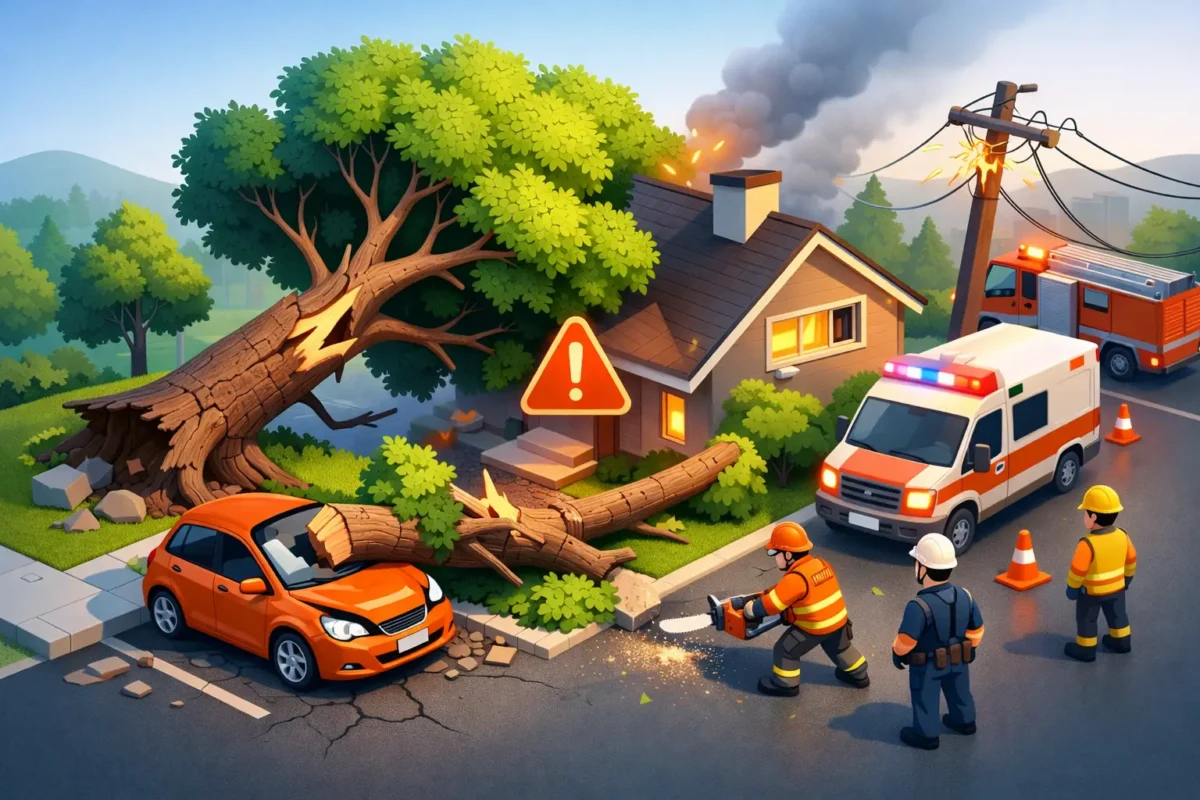
A tree can go from background scenery to a real hazard in one windy night. If you are asking when is a tree an emergency, the short answer is this: it becomes an emergency when it poses an immediate risk to people, your home, your vehicles, power lines, or access to the property.
That does not mean every damaged or ugly-looking tree needs same-day removal. Some problems are urgent. Others can wait a few days for a scheduled estimate. Knowing the difference helps you act fast when it matters and avoid unnecessary panic when it does not.
When is a tree an emergency for your property?
A tree is an emergency when waiting creates a strong chance of injury or major damage. If a tree has already fallen on a house, is hanging over a driveway after a storm, is splitting at the trunk, or is leaning suddenly after heavy rain, that is not routine tree work. That is a safety issue.
The biggest red flag is change. A tree that has leaned the same way for years may need inspection, but a tree that started leaning yesterday is a different story. The same goes for fresh cracks, exposed roots, or a large limb that is partly broken and still suspended above where people walk or park.
If you own a home or small commercial property, think about the immediate target area. Could the tree or limb hit a bedroom, sidewalk, parked car, fence, entrance, or utility service line? If the answer is yes, you should treat it as urgent.
Signs you need emergency tree service now
Some warning signs are serious enough that you should call for help right away.
A tree that has fallen or is actively falling is an emergency. A large limb that has snapped but is still caught in the canopy is also urgent because it can drop without warning. These are often called hanging limbs or widowmakers, and they are dangerous precisely because they look still until they are not.
A split trunk is another major concern. If the main trunk has a visible crack running vertically, especially after a storm, the tree may fail completely with the next gust. The same goes for a tree that is partially uprooted. When roots start lifting out of the ground, stability is already compromised.
Storm damage near power lines should always be treated seriously. Even if the branch is not touching a line, do not go near it. Electricity can travel in ways most people do not expect. Your safest move is to stay clear and call the utility company and a qualified tree service that handles emergency response.
You should also act fast if the tree is blocking access. If emergency vehicles cannot reach the property, or if you cannot safely get in or out of your driveway, the issue becomes more than cosmetic. It affects safety and daily function.
When a damaged tree can wait a little
Not every tree problem is a midnight emergency. A dead branch high in the canopy may be dangerous, but if it is stable, away from structures, and there is no active storm, you may be able to schedule service during normal hours. A tree with gradual decline, sparse leaves, fungus at the base, or old storm scars often needs attention soon, but not always immediately.
This is where honest risk assessment matters. A safety-first tree company should tell you if the job truly needs emergency removal or if trimming, cabling, or scheduled removal is enough. You do not want to delay a real hazard, but you also should not be pushed into emergency work that can safely wait.
Storms change the timeline fast
In New York, weather can turn a manageable tree issue into an emergency overnight. Heavy rain softens soil. Snow and ice load down weak limbs. High wind finds every existing crack and dead section in the canopy.
That is why a tree that seemed fine last week may become urgent after a storm passes through Albany County, Nassau County, Suffolk County, or anywhere else with saturated ground and strong gusts. The storm did not always create the weakness. It often exposed a problem that was already there.
After bad weather, walk your property carefully from a distance. Look for fresh lean, split limbs, broken tops, root lifting, or branches resting on the roof. You are checking for visible hazards, not doing hands-on inspection. If something looks off, trust that instinct and get it evaluated.
What not to do during a tree emergency
The biggest mistake property owners make is trying to fix the danger themselves. If a large limb is hanging, if the tree is touching a structure, or if storm damage is near wires, do not grab a ladder or a chainsaw. Emergency tree work is where injuries happen fast.
Trees under tension can spring, roll, or twist without warning. A branch that looks supported may be one cut away from dropping. Even cleanup on the ground can be risky if the trunk is unstable or the root plate is still shifting.
Keep children, pets, tenants, and employees away from the area. If possible, move vehicles out of range before conditions worsen, but only if you can do it safely. Then call a licensed and insured tree service with emergency experience.
When is a tree an emergency from a liability standpoint?
If you own a commercial property, rental, or even a home with heavy foot traffic, liability matters. A tree becomes an emergency when a reasonable person would see that it presents an immediate hazard and no action is taken.
For example, if a cracked limb is hanging over a sidewalk or entrance, delaying service can put people at risk and expose you to avoidable claims. The same is true for parking lots, shared driveways, and common areas around buildings.
This does not mean you are expected to predict every tree failure. It does mean that once a serious hazard is visible, quick action is the smart move. Document the issue, keep people clear, and arrange professional service as soon as possible.
Why experience matters in emergency tree work
Emergency tree removal is not the same as routine trimming. The goal is not just to cut wood. It is to remove immediate danger without causing more damage to your home, your neighbor’s property, or the surrounding landscape.
That takes judgment. Sometimes the right move is full removal. Sometimes it is selective limb removal to make the area safe until the rest of the work can be done. Sometimes a tree looks dramatic but is less urgent than a partially uprooted tree that has not fallen yet.
A company with real emergency experience will explain the risk in plain language, secure the area, and recommend only the work that needs to happen now. That kind of honesty matters when you are already dealing with storm stress, insurance questions, and property damage.
A simple way to decide
If you are unsure, ask yourself three questions. Could it fall soon? Could it hit something important? Could someone get hurt before regular service is scheduled?
If the answer is yes to any of those, treat it as an emergency. If the answer is no, but the tree still shows damage or decline, schedule an inspection before the next storm makes the decision for you.
At AAA Tree Service NY, that is how we look at it: real urgency when safety is on the line, honest guidance when it is not. If a tree on your property looks unstable, damaged, or dangerously close to your home, getting it checked now is often the safest and least expensive move.
A tree emergency is not really about the tree. It is about what can happen next if you wait too long.