When You Need 24 Hour Tree Removal Service

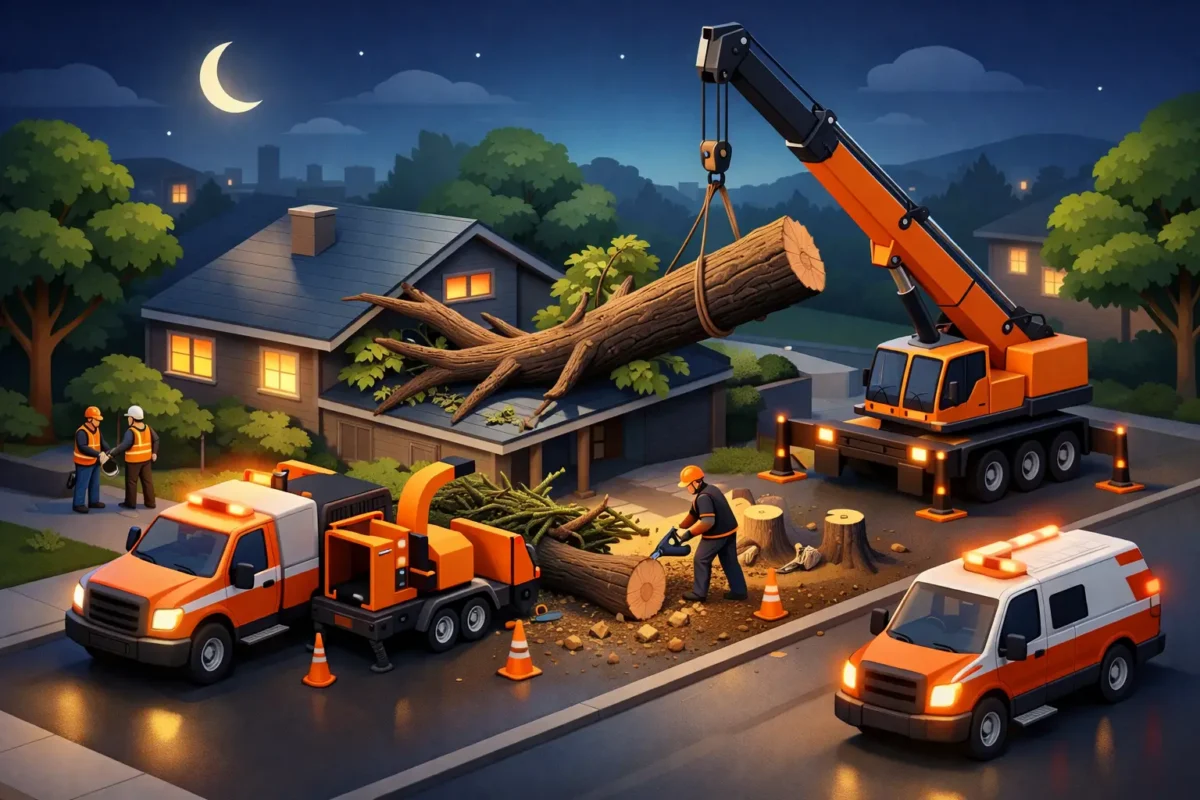
A tree does not wait for business hours to fall. If a trunk splits at 2 a.m., a limb crashes onto your roof, or a leaning tree starts shifting after heavy rain, 24 hour tree removal service is not a luxury. It is the difference between quick control and bigger damage by morning.
When you are dealing with a tree emergency, the first question is usually simple: Do I need help right now, or can this wait until daylight? The honest answer is that it depends on the risk. Some situations need an immediate response. Others are urgent, but not dangerous enough to justify overnight removal. Knowing the difference can protect your property and keep you from paying for work that does not need to happen in the middle of the night.
What counts as a real tree emergency
A real emergency is any tree situation that creates an immediate threat to people, structures, vehicles, utilities, or access to your property. If a tree has already fallen on your house, across your driveway, onto a garage, or into a commercial parking area, that is emergency work. The same is true if the tree is cracked, uprooting, or leaning more after a storm.
Power lines are a separate category. If branches are touching lines or a tree has fallen into utility wires, stay back and call the utility company first. Tree crews should not work near energized lines unless that risk is handled properly. A safety-first company will tell you that right away instead of rushing in just to book the job.
There are also gray-area situations. A large dead limb hanging over your front walk may not have fallen yet, but if it is split and unstable, it could still justify a rapid response. A tree leaning over your yard with no target underneath might be serious, but not always an overnight removal. This is where experience matters. You need someone who can assess risk honestly, not someone who treats every issue like a disaster.
When 24 hour tree removal service makes sense
The best time to call for 24 hour tree removal service is when waiting creates a higher chance of injury or more property damage. Storms are the most common reason. In parts of New York, high winds, wet snow, and saturated ground can turn a borderline tree into a dangerous one in hours.
If the tree is blocking emergency access, trapping a vehicle you need, crushing part of your structure, or threatening to fall farther, you should not put it off. The same goes for trees that have partially failed and are still under tension. Those are especially dangerous for homeowners to approach because what looks still can shift without warning.
Commercial owners have another concern: liability. If a damaged tree is hanging over an entry, loading area, sidewalk, or tenant parking lot, delay can create a bigger legal and safety problem. Fast response is not just about cleanup. It is about reducing exposure before someone gets hurt.
What to do before the crew arrives
Your first job is not cleanup. It is keeping people clear. Move your family away from the area, keep pets inside, and do not walk under broken limbs to inspect the damage. If the tree is on a structure, do not assume the structure is stable enough to enter.
If it is safe to do so, take a few photos from a distance for insurance purposes. Then make the call. A good emergency tree company will ask practical questions: What fell, what it hit, whether wires are involved, whether anyone is hurt, and whether the tree is still moving or split.
Do not start cutting the tree yourself. This is where injuries happen. Storm-damaged trees often hold pressure in the trunk and limbs. One wrong cut can release that force fast. Chainsaws and ladders are a bad mix even in normal conditions, and emergencies are rarely normal.
What a professional 24 hour tree removal service should look like
Speed matters, but not more than safety. A proper emergency response starts with site control and hazard assessment. The crew should look at where the load is resting, whether the root plate is lifting, whether the trunk is twisted, and what nearby structures could be affected during removal.
In many cases, the first step is making the site safe, not removing every piece immediately. If a large tree is on a roof, for example, careful sectional removal may be needed to avoid making the damage worse. If a tree is blocking access, crews may clear enough first to reopen the area and then finish the rest in a controlled way.
You should also expect clear communication. A trustworthy company tells you what needs immediate attention, what can wait until daylight if conditions are unsafe, and what the likely next steps are for debris hauling, stump grinding, or follow-up trimming. Honest recommendations matter in emergency work because stress makes it easy for property owners to agree to anything.
Licensed and insured service is not a detail here. It is basic protection. If heavy equipment is being used around your home, business, fence line, or driveway, you want a company that is properly covered and experienced in damage prevention.
The cost question homeowners always ask
Yes, emergency tree work usually costs more than scheduled daytime service. That is normal. Night response, storm conditions, difficult access, and higher risk all affect pricing. But higher cost does not mean every late-night tree problem needs immediate removal.
A reputable company will help you separate true emergency work from work that can be scheduled a few hours later under safer and cheaper conditions. For example, if a tree is down in an open yard and not threatening anything, the smart move may be to secure the area and handle removal in daylight. If it is crushing your porch or hanging over your child’s bedroom, waiting is a different decision.
Free estimates are helpful, but in an emergency, the bigger value is straight answers. You want to know what the crew can do now, what can wait, and how to avoid paying for unnecessary work.
Why prevention matters as much as emergency response
Most emergency calls start long before the storm. Trees usually give warnings. Dead upper limbs, hollow sections, cracks in major stems, fungus at the base, root disturbance, and sudden leaning are all signs that a tree may be losing structural strength.
That does not mean every imperfect tree should come down. Some trees need pruning, cabling, weight reduction, or monitoring instead of removal. But when obvious problems are ignored, storms tend to make the decision for you.
This is especially true in areas of Albany County, Nassau County, Suffolk County, and other parts of New York where wind, snow load, and heavy rain can all hit in different seasons. A tree that looks fine in dry weather can fail when the soil loosens or the canopy catches a strong gust.
Routine trimming and risk checks are often cheaper than emergency cleanup, roof repair, and insurance claims. More important, prevention lowers the chance that your family or tenants are anywhere near the tree when it fails.
Choosing the right company when time is short
In an emergency, most people are not comparing five companies. They are trying to get someone on the phone who can show up. That makes it even more important to listen for a few basics.
You want a company that asks smart safety questions, does not promise reckless work around power lines, and can explain the difference between immediate hazard mitigation and full removal. You also want local experience. Storm patterns, tree species, and ground conditions vary, and that affects how emergency jobs are handled.
AAA Tree Service NY builds its work around exactly that kind of response – fast help, honest assessments, and safe removal when your property is at risk. Whether you own a home or manage a small commercial site, the goal is the same: protect people first, then stabilize the damage, then clean up the right way.
A quick answer if you are still unsure
If the tree is on your house, on your car, over your entrance, tangled in wires, blocking access, or actively shifting, call now. If it is down in a safe open area with no immediate target, you may still need prompt service, but not always overnight.
The key is not to guess. A fast professional assessment can tell you whether you need emergency removal tonight or a scheduled job tomorrow. That one call can prevent bigger damage, lower your risk, and help you make a calm decision in a stressful moment.
If a tree on your property does not look right, trust that instinct and get it checked before the next storm decides for you.