Why Is My Tree Leaning? When to Take Action

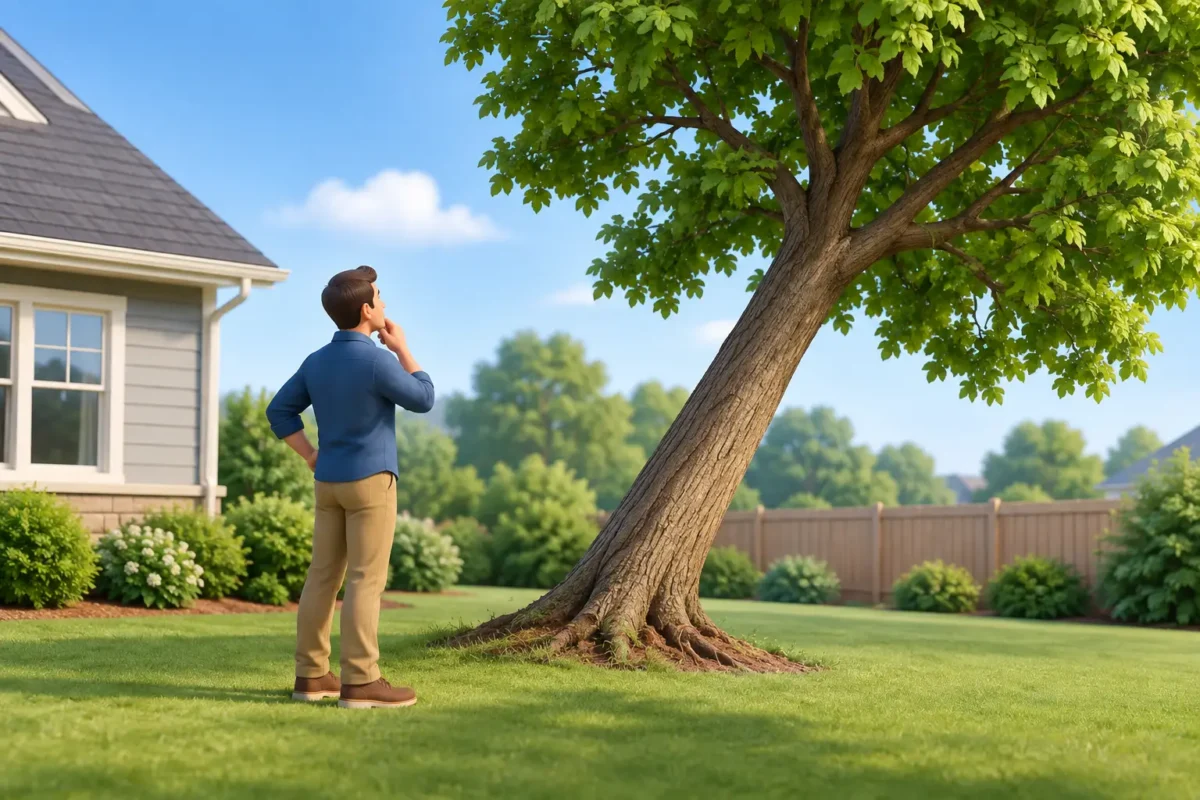
A tree that has always grown at a slight angle may be perfectly stable. A tree that shifted after last night’s wind, rain, or snow is a different situation. If you are asking, “why is my tree leaning,” look first at the ground, trunk, and branches. The change you see can tell you whether you need routine care or emergency help before the next storm.
A leaning tree is not automatically a tree that needs removal. But a new or worsening lean can mean the root system is failing, the trunk is damaged, or the tree is carrying more weight than it can safely support. Around a home, driveway, sidewalk, parking area, or commercial building, waiting to see what happens can put people and property at risk.
Why Is My Tree Leaning All of a Sudden?
The most concerning lean is a recent one. Trees usually adapt to a gradual lean as they grow, strengthening wood where it is needed and developing roots to help balance the load. A sudden shift often means something below or above ground has changed.
Heavy rain is one of the most common causes. Saturated soil loses its grip around the roots, especially in clay-heavy or poorly drained areas. Strong wind then pushes against the canopy, and the root plate can begin lifting on one side. You may see soil heaving, cracks in the lawn, or exposed roots near the base of the tree. Those are serious warning signs.
Storm damage can also create a lean without pulling roots out of the ground. A major limb may break, splitting the trunk or leaving the remaining crown uneven and heavy on one side. Ice and wet snow can have the same effect, particularly on evergreens and trees with dense branch structure. In Albany County and other New York service areas, repeated freeze-thaw cycles can also loosen soil and stress roots over time.
Root problems are another major cause. Roots may be weakened by decay, old construction damage, soil compaction, flooding, or trenching for utilities. Because root damage happens underground, a tree can look healthy until wind or rain exposes the problem. A tree may leaf out normally and still have a compromised root system.
A Natural Lean vs. a Dangerous Lean
Not every angled trunk is an emergency. Some trees naturally grow toward sunlight, away from larger trees, or at an angle because of the slope of the property. If the lean has been there for years, the trunk is solid, the soil is undisturbed, and the canopy looks healthy, monitoring it may be enough.
The question is not simply whether your tree leans. It is whether the tree is stable.
A lean deserves prompt professional assessment when it is new, more noticeable than before, or aimed toward a target such as your roof, vehicles, fence, pool, sidewalk, or a neighbor’s property. The same is true when the trunk has a visible crack, a hollow area, peeling bark, or a split where large limbs join.
Young trees are a special case. They can lean after planting because their roots have not yet settled, or because staking was removed too soon. A small, healthy young tree can sometimes be carefully straightened and supported. An older, established tree should not be pulled upright with ropes, straps, or a vehicle. That can tear remaining roots, injure the trunk, and turn a manageable issue into a removal job.
Warning Signs You Should Not Ignore
Step back far enough to see the full tree, then inspect the area around its base without standing beneath hanging limbs. Call for an urgent tree assessment if you notice four or more of the following conditions:
- Fresh soil cracks, raised ground, exposed roots, or a mound of dirt lifting on one side of the trunk.
- A sudden lean after wind, heavy rain, snow, or a fallen branch.
- Cracks, splits, cavities, or mushrooms and decay around the trunk base.
- Dead or broken limbs concentrated on one side, or a canopy that now looks lopsided.
- A tree leaning over a house, garage, driveway, public walkway, play area, or parking lot.
- Branches touching power lines or a tree that could fall into electrical equipment.
Do not assume a tree is safe because it has not fallen yet. Trees can remain partially supported by soil or neighboring branches, then fail during the next period of wind or rain. If utility lines are involved, stay clear and contact the utility company. Never attempt to cut, pull, climb, or brace a tree near power lines.
What You Can Do While You Wait for Help
Your priority is to keep people away from the fall zone. Move vehicles, outdoor furniture, equipment, and anything else you can safely relocate. Keep children and pets out of the area. If the tree is near a road, walkway, or business entrance, block access if you can do so without putting yourself in danger.
Avoid the common do-it-yourself fixes. Do not cut large limbs to “lighten” the tree unless you have the training and equipment to do it safely. Removing the wrong limb can make the tree more unbalanced, and a damaged tree can shift without warning while being cut. Do not nail boards to the trunk, wrap chains around it, or try to winch it back into position.
You can take clear photos from a safe distance and note when you first noticed the lean. This helps a tree professional determine whether the issue appears storm-related, gradual, or connected to visible damage. If a tree has already fallen or is resting on a structure, treat it as an emergency. Keep clear of the area and arrange professional storm damage cleanup.
Can a Leaning Tree Be Saved?
Sometimes, yes. The right solution depends on the tree’s size, species, condition, location, and the reason it is leaning. A young tree with intact roots may respond well to proper staking, corrective pruning, and better soil care. A mature tree with a stable, long-term lean may only need selective pruning to reduce wind resistance and remove dead weight.
But there are limits. A tree with major root plate movement, extensive trunk decay, a deep split, or a lean over a high-value target may not be a good candidate for preservation. In those cases, removal is often the safer and more affordable choice compared with repairing roof damage, replacing a vehicle, or dealing with an injury claim.
Honest recommendations matter here. Pruning can reduce risk in some situations, but it cannot repair rotten roots or reconnect a cracked trunk. Cabling and bracing may help certain trees with structural weaknesses, but they are not a cure for every lean. A qualified tree service should explain the condition they see, the risks involved, and whether maintenance, monitoring, or removal makes the most sense for your property.
Preventing Future Leaning Problems
You cannot control severe weather, but you can reduce the chance that a tree becomes unstable. Routine trimming removes dead, broken, and overly heavy branches before wind and snow load turn them into a problem. Proper pruning also helps maintain a balanced canopy instead of leaving too much weight on one side.
Protecting the root zone is just as important. Avoid parking heavy equipment beneath trees, piling soil or mulch against the trunk, and cutting roots during landscaping projects. If you are planning an addition, patio, driveway, drainage work, or utility installation, consider the trees before excavation begins. Root loss may not show up immediately, but it can shorten a tree’s safe life.
For properties with large mature trees near structures, periodic inspections are practical prevention. Look after major storms, during spring leaf-out, and whenever you notice changes in the canopy or ground around the trunk. Small changes are easier to address before they become an urgent call.
A leaning tree deserves attention, not panic. If the lean is new, the ground is moving, or the tree can reach your home or business, keep the area clear and get a safety-first assessment quickly. AAA Tree Service NY provides professional evaluations, trimming, emergency tree removal, and storm cleanup to help protect your property before the next storm makes the decision for you.