Emergency Removal Versus Scheduled Removal

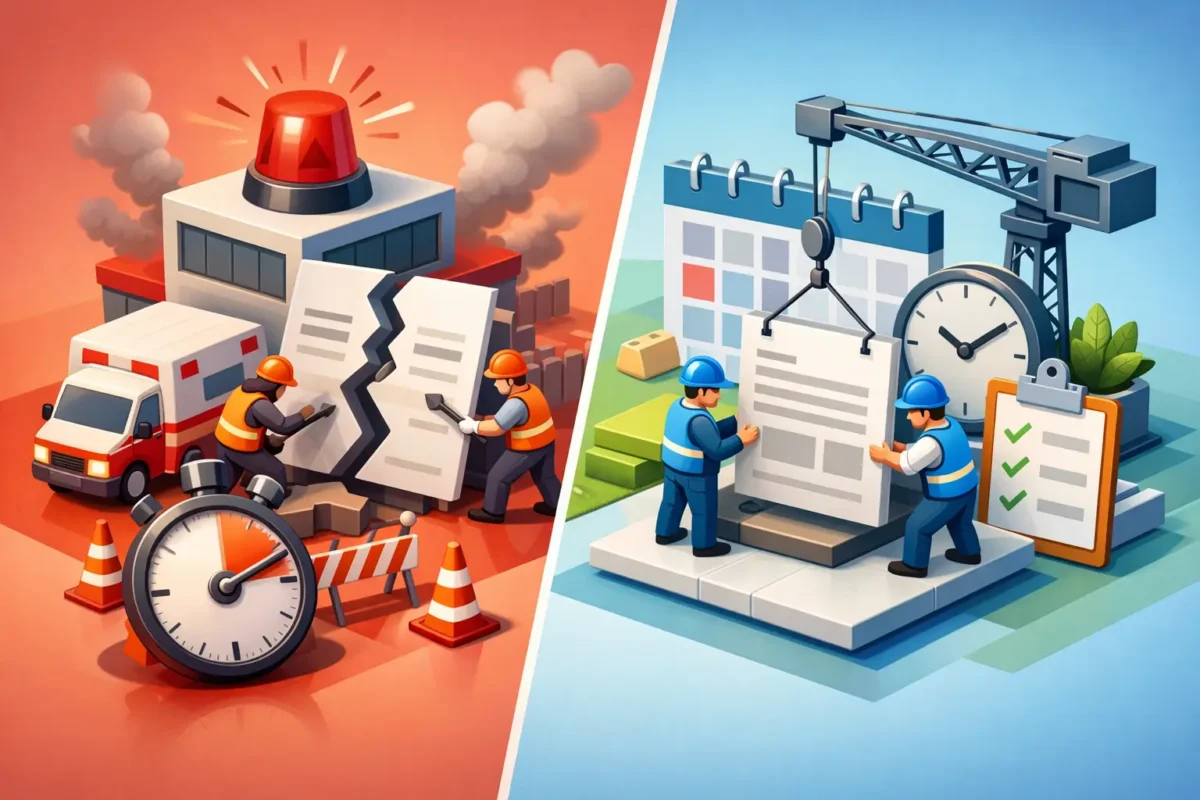
A tree can look manageable at breakfast and become a serious property hazard by nightfall. The difference between emergency removal versus scheduled removal comes down to one question: is the tree creating an immediate danger to people, buildings, vehicles, power lines, or access to your property right now?
Not every dead branch requires a middle-of-the-night crew. But when a trunk has split, a tree is leaning after a storm, or large limbs are hanging over your roof, waiting can turn a repairable situation into costly damage. Knowing which service you need helps you act quickly without paying for urgency when the job can safely be planned.
When Tree Removal Is an Emergency
Emergency tree removal is for conditions that cannot safely wait. A tree does not need to fall completely to qualify as an emergency. In many cases, the greatest risk is a partially failed tree that is still standing but has lost the structure that kept it stable.
Call for immediate help if a tree or major limb has fallen on your home, garage, fence, vehicle, or driveway. The same applies when a tree is blocking your only way in or out, preventing tenants or customers from entering a building, or obstructing a road or walkway.
A tree also needs urgent attention when it has shifted suddenly after high winds, heavy snow, saturated soil, or ice. Fresh cracks in the trunk, exposed roots, a split where two main stems join, or branches suspended in another tree are all warning signs. These conditions can worsen without much notice.
Other situations call for fast professional assessment:
- A large limb is hanging above a roof, entrance, sidewalk, or parked vehicle.
- A tree has made contact with utility wires or is leaning into them.
- The trunk is broken, hollowed out, or visibly splitting under its own weight.
- Storm damage has left branches tangled, twisted, or partially detached.
- A tree is threatening an occupied home, school, business entrance, or public-facing area.
If power lines are involved, stay clear. Do not touch the tree, branches, fencing, puddles, or anything else that may be carrying electricity. Contact the utility company first when appropriate, then arrange for a qualified tree service to handle the tree once the area is safe.
What to Do While You Wait for Help
Keep people, pets, and vehicles out of the danger area. A damaged tree can shift as wind changes or as wood fibers continue to fail. Do not try to pull down a hanging branch with a rope, climb a ladder to inspect it, or cut limbs from the ground with a saw. Those attempts often place you directly beneath the part most likely to fall.
Take photos from a safe distance for insurance documentation if conditions allow. If a fallen tree has damaged your home, cover exposed areas only if you can do so without going near unstable limbs, damaged wires, or a compromised roof. Your priority is preventing injuries, not clearing the yard yourself.
When Scheduled Removal Is the Better Choice
Scheduled removal is the right option when a tree is declining or poorly located but remains stable enough to plan the work safely. This is where you have more control over timing, access, equipment, and cost.
For example, a dead tree at the back of a large yard may not be an immediate emergency if it is not near a home, fence, driveway, play area, or neighboring property. It still should not be ignored. Dead wood becomes more brittle over time, and the next Albany County windstorm or heavy snowfall can change the situation quickly. But if the tree is stable, a scheduled inspection and removal gives you time to make a practical decision.
You may also schedule removal for a healthy tree that has outgrown its location. Roots lifting a walkway, branches crowding a roof, a trunk planted too close to a foundation, or a tree interfering with a renovation or new parking area are planning issues. They can be handled safely before they create damage or liability.
Scheduled work is often more efficient because the crew can choose the safest conditions and bring the right equipment without working around storm hazards. Access can be arranged ahead of time, vehicles can be moved, neighbors can be notified, and permits or utility coordination can be addressed if needed. That preparation usually makes the work less disruptive to your home or business.
Emergency Removal Versus Scheduled Removal: Cost and Timing
Emergency work can cost more because the risks are higher and the response is immediate. Crews may need to work after hours, in poor weather, around damaged structures, or with limited access. A storm-damaged tree may require careful dismantling rather than a straightforward removal, especially when it is resting on a roof or tangled in other trees.
That does not mean every urgent call results in an expensive full removal. Sometimes the immediate need is to remove a hanging limb, clear a driveway, or make a broken tree safe until final cleanup can be scheduled. An honest assessment should focus on what needs to happen now and what can wait.
Scheduled removal generally provides more options. You can request a free estimate, compare the scope of work, decide whether stump grinding is needed, and plan around landscaping, tenants, or business operations. If several trees need attention, grouping the work may be more economical than calling separately as each problem worsens.
The least expensive option is not always the safest one. A tree that is clearly failing over a roof should not be left standing simply to avoid an emergency charge. On the other hand, a stable tree with manageable decline may not require immediate removal. The right choice depends on the tree’s condition, its target area, and the weather expected in the coming days.
Why Preventive Tree Care Matters
Many emergency calls begin with warning signs that appeared weeks or months earlier. Dead limbs, dense overgrown canopies, visible decay, mushroom growth near the base, repeated branch drop, and a gradual lean all deserve attention before storm season arrives.
Pruning cannot fix every dangerous tree, but it can reduce risk when the main issue is overextended or dead branches. Proper trimming removes compromised limbs, improves clearance from roofs and service lines, and reduces wind resistance in an overcrowded canopy. It is not the same as cutting a tree back severely. Over-cutting can stress a tree and create more weak growth later.
For commercial properties, routine inspections are especially valuable around parking areas, sidewalks, loading zones, entrances, and tenant spaces. A failing limb over a walkway is not only a maintenance concern. It can become an injury and liability problem with very little warning.
A professional tree assessment should give you straight answers. You should know whether the tree needs immediate action, removal within a reasonable timeframe, pruning, monitoring, or no work at all. AAA Tree Service NY approaches tree decisions with safety first, backed by more than 26 years of experience, licensed and insured crews, and 24/7 emergency availability.
Make the Call Before the Next Storm
If you see a tree changing quickly, treat it seriously. A new lean, fresh crack, lifting roots, or a large hanging branch is not something to watch from the window until the weather improves. Get a professional opinion while the tree can still be assessed safely.
If the threat is not immediate, scheduling removal or pruning gives you the best chance to protect your property on your terms. If it is immediate, keep your distance and get help fast. Acting at the right time protects more than your roof or driveway – it protects the people who depend on you to keep the property safe.