
7 Signs Tree Roots Threaten Your Foundation

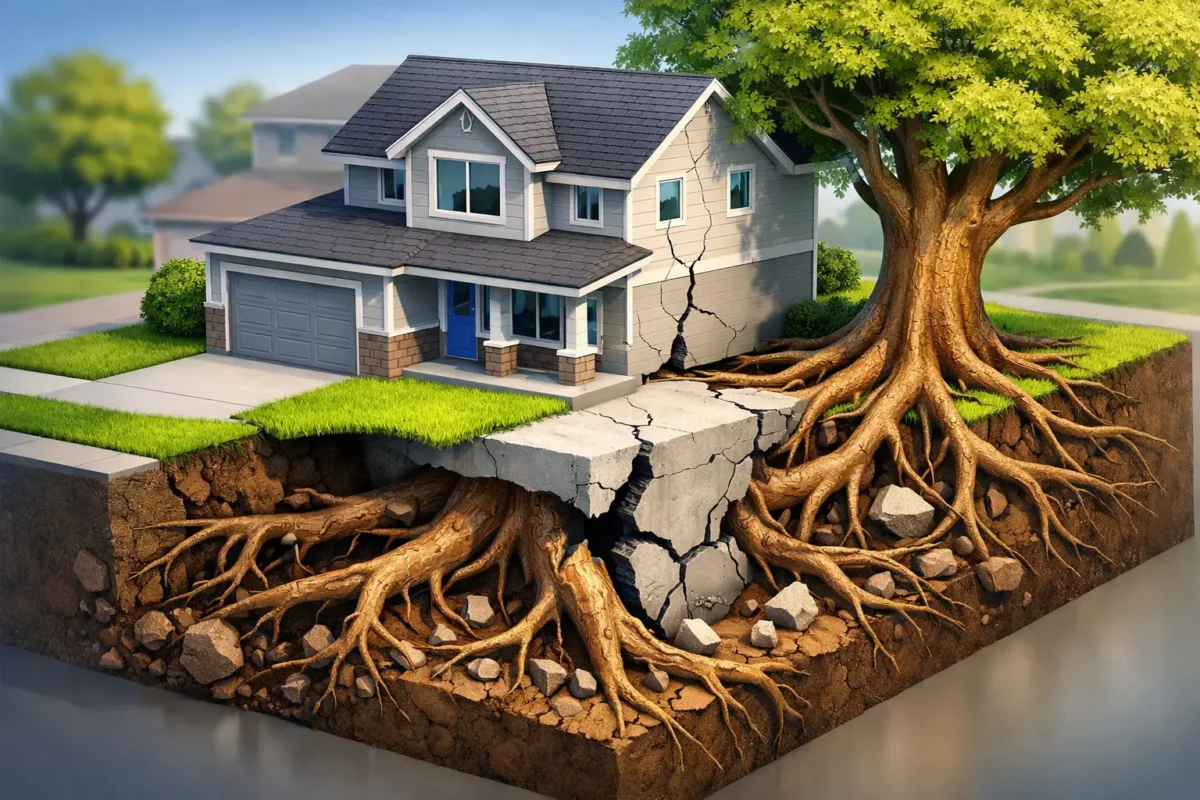
A crack near your basement wall after a wet spring can make any homeowner look straight at the nearest tree. Sometimes that tree is part of the problem. Other times, the real issue is shifting soil, poor drainage, or an existing foundation weakness that roots have found and made worse.
The signs that tree roots threaten your foundation are worth taking seriously, especially when cracks, uneven floors, drainage changes, and a large mature tree appear together. You do not need to assume every tree must come down. You do need a clear assessment before a small concern becomes expensive structural work.
Why Tree Roots Can Affect Foundations
Tree roots do not usually punch through a sound concrete foundation like a drill. Most roots spread through the upper layers of soil, where oxygen and moisture are easiest to find. They follow loose soil, natural gaps, leaking pipes, and existing cracks.
The bigger concern is soil movement. In clay-heavy or poorly drained ground, a large tree can draw moisture from soil near the home. As the soil dries and shrinks, parts of the foundation may settle unevenly. Roots can also lift sidewalks, patios, and driveways, redirect water toward the house, or enter small openings around utility lines and drains.
It depends on the tree species, its size, how close it is to the building, the age of the foundation, and the soil around your property. A small ornamental tree several yards away is not the same risk as a mature maple, willow, or poplar growing close to a basement wall.
7 Signs Tree Roots Threaten a Foundation
1. New or Widening Foundation Cracks
Hairline cracks in concrete are common, particularly in older homes. What deserves attention is a crack that gets wider, runs diagonally, appears in a stair-step pattern along brick or block, or returns after it has been repaired.
Check both inside and outside. Look along the foundation wall, basement floor, garage slab, chimney base, and exterior masonry. If a crack is expanding near a large tree, do not assume roots are the only cause, but do not ignore the pattern either.
2. Doors and Windows Start Sticking
A door that suddenly scrapes the frame or a window that will not open as easily can be an early clue that part of the structure is shifting. Seasonal humidity can also cause sticking, so one stubborn door is not proof of foundation damage.
The concern rises when several doors and windows begin sticking at the same time, especially along the side of the house nearest a large tree. Gaps around frames, cracked drywall above openings, or separated trim add to the warning signs.
3. Uneven Floors or Sloping Areas Inside
You may notice furniture that no longer sits level, a floor that feels slightly sloped, or a new gap between flooring and baseboards. These changes can result from normal settling, water damage, or foundation movement. The key is whether the change is new or getting worse.
Pay attention to rooms above or beside the affected foundation area. If the floor movement is paired with foundation cracks and a nearby tree, have the situation evaluated promptly.
4. A Raised Sidewalk, Patio, or Driveway Near the Tree
Surface damage is often easier to spot than foundation damage. Roots pushing up a walkway, patio, curb, or driveway show that the root system is spreading close to hardscape and may be changing how water moves across the property.
A lifted sidewalk is also a trip hazard. For a business property, that can create a liability issue before it becomes a structural one. Never cut exposed roots on your own to flatten the surface. Cutting major roots can destabilize the tree and increase the risk of failure during the next storm.
5. Water Pools Near the Foundation
Healthy drainage keeps roof runoff and surface water moving away from your building. Roots can alter the grade over time, lift concrete, block drains, or create channels that send water toward the foundation instead.
Watch what happens after a hard rain. Puddles that sit near the wall, soil that stays saturated, damp basement areas, and overflowing downspouts all deserve correction. Water and foundation movement often go together, whether or not the tree is the original cause.
6. Roots Are Visible Along the Foundation Wall
Visible roots do not automatically mean your foundation is in danger. Many mature trees have shallow surface roots, and they can extend well beyond the canopy. But large roots pressing against a wall, growing under a patio that meets the home, or appearing beside existing cracks warrant a professional look.
Do not cover exposed roots with a deep layer of soil or pile mulch against the trunk. Both can harm the tree. The safer answer may involve adjusting drainage, removing a hazardous limb, installing a root barrier in limited situations, or removing the tree if the risk is high.
7. You See Root Problems in Sewer or Drain Lines
Slow drains, recurring backups, gurgling fixtures, or wet spots in the yard can point to root intrusion in older sewer lines. Roots are attracted to moisture and can enter through loose joints or small cracks in pipes.
This is not always a foundation issue, but it can affect the soil around your home and lead to costly excavation if left alone. A plumbing inspection can confirm pipe damage. A tree professional can then help assess whether the nearby tree can be safely retained or whether removal is the better long-term choice.
When the Risk Needs Fast Action
Call for prompt help if you see a tree leaning toward the home, lifted soil at the base of the trunk, major roots breaking through a walkway, or sudden cracking after heavy rain or wind. A leaning tree with disturbed soil may indicate root failure, which is different from slow foundation concerns. That is a safety issue.
After storms in Albany County and other parts of New York, wet ground and strong wind can expose weaknesses that were not obvious before. Keep people away from a visibly unstable tree, fallen limbs, or downed wires. If power lines are involved, contact the utility first and do not approach the area.
For an immediate threat, use a 24/7 emergency tree service. For slow cracks or ongoing drainage trouble, schedule an evaluation rather than waiting for the next storm. The goal is to understand the cause before taking action that creates a new hazard.
What Not to Do Around Problem Roots
Do not cut large roots, trench close to the trunk, or use chemicals to kill roots without professional guidance. A tree may rely on those roots for support. Removing them can cause decline over time or make the tree more likely to fall toward your home.
Avoid the opposite mistake too: removing a healthy tree before anyone has identified the actual source of movement. Foundation cracks can come from drainage, settling, poor grading, plumbing leaks, or construction issues. Tree removal may be necessary, but it should be based on the condition of the tree, its location, and evidence from the site.
If structural damage is already visible, a foundation contractor or structural professional may also need to inspect the building. Tree care and foundation repair solve different parts of the problem. Getting both opinions can prevent wasted work.
Protect Your Property Before Damage Spreads
Start by documenting what you see. Take dated photos of cracks, raised pavement, standing water, and the tree’s location. Check whether the cracks change after rain, dry weather, or seasonal freezing and thawing. Keep gutters clean and make sure downspouts discharge away from the foundation.
Then arrange a practical tree assessment. AAA Tree Service NY can evaluate hazardous trees, root-related surface damage, and whether trimming, removal, or monitoring makes sense for your property. With licensed, insured service and more than 26 years of experience, the focus is on honest recommendations, not unnecessary removals.
A tree can add shade, value, and character to your property for decades. Acting early when the warning signs appear gives you the best chance to protect both the tree and the foundation beneath your home.