How to Handle a Fallen Tree Safely

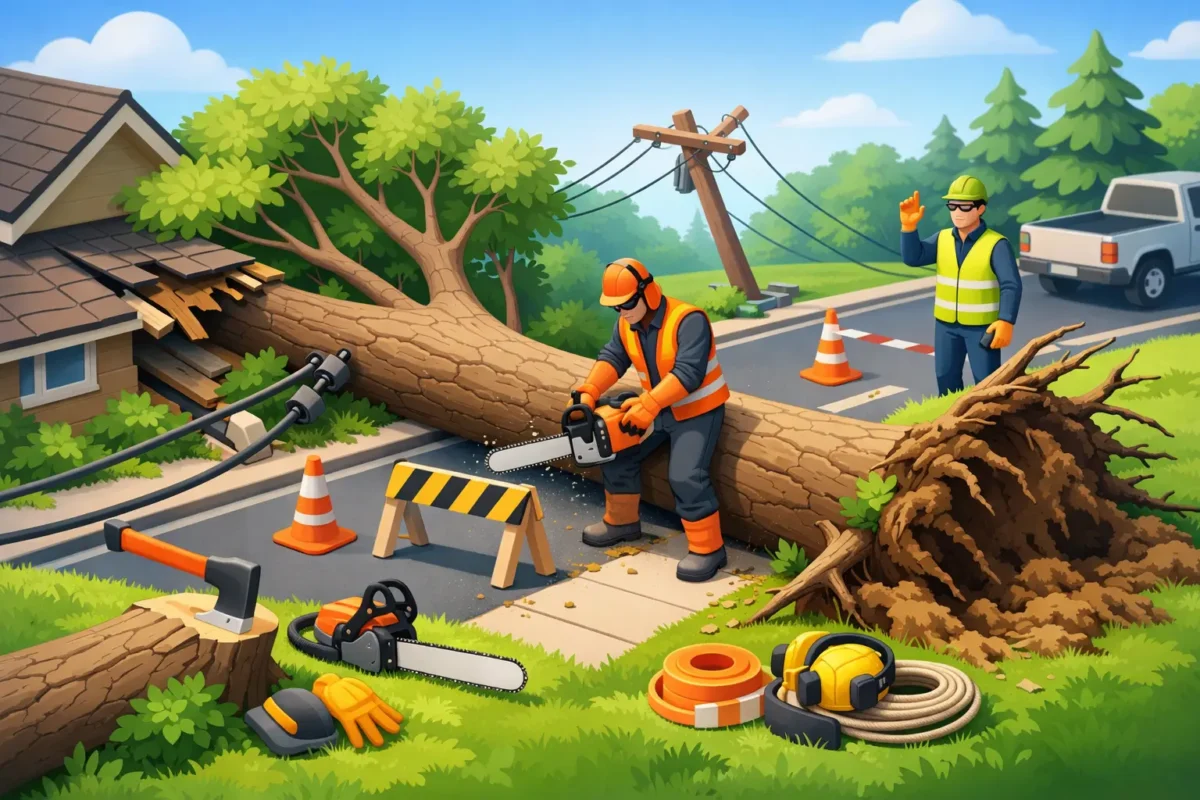
A tree can come down fast and change everything in a few seconds. One minute your yard looks normal. The next, a trunk is across the driveway, branches are on the roof, or wires are nearby. If you are searching for how to handle fallen tree safely, the first thing to know is this: your job is not to rush in. Your job is to keep people clear, prevent the situation from getting worse, and get the right help.
A fallen tree is not just a cleanup problem. It can involve hidden tension in the wood, unstable limbs, roof damage, gas lines, power lines, blocked access, and serious liability if someone gets hurt on your property. That is why the safest response is usually slower and more controlled than people expect.
How to handle a fallen tree safely in the first minutes
Start by stopping anyone from getting close. Keep children, pets, neighbors, and tenants away from the area. Even if the tree looks settled, large branches can still shift without warning. A cracked limb that seems stuck may drop when the wind changes or when someone steps on a nearby branch.
Next, take a quick look from a safe distance. You are not inspecting for cleanup yet. You are checking for immediate danger. If the tree is touching power lines, pulling on utility poles, leaning on your home, blocking a road, or pressing against a fence or structure, treat it as an emergency. If you smell gas, hear hissing, or see sparks, leave the area and call emergency services and the utility company right away.
If the tree fell during a storm, do not assume the danger has passed just because the rain slowed down. In parts of New York, especially after heavy wind, wet snow, or saturated ground, more branches and neighboring trees may still be unstable. One fallen tree often means the whole area needs a careful look.
What not to do after a tree falls
Most injuries happen when property owners try to solve the problem too quickly. That usually means grabbing a chainsaw, climbing onto the trunk, or trying to free a branch from a roof. These are the moments when a manageable situation becomes a medical emergency.
Do not cut a fallen tree if you do not know where the tension and compression points are. A trunk under pressure can spring, roll, or split when cut in the wrong spot. Even smaller limbs can whip back hard enough to cause serious injury.
Do not get on the roof to inspect or remove branches. A branch may be holding damaged roofing together without you realizing it. Once moved, it can open a larger hole, shift weight into the attic, or send debris sliding.
Do not touch any branch near a utility line, even if the line appears inactive. Assume every wire is live until the utility company confirms otherwise. Also, do not try to move the tree with a truck, rope, or winch unless you are trained and have the proper equipment. Pulling from the wrong angle can tip part of the tree into your house, your fence, or a person standing nearby.
When a fallen tree is a true emergency
Some cases can wait a few hours for daylight and proper equipment. Some cannot. If the tree is on your house, across a garage, over a vehicle with someone inside, or entangled with electrical service, call for emergency help immediately. The same applies if it blocks your only exit or creates a hazard for traffic or pedestrians.
There is also a gray area that homeowners often underestimate. A tree that missed the house but is hung up in another tree is still dangerous. So is a split trunk that is partly down and partly standing. These situations can look less dramatic than a tree fully on the ground, but they are often more unpredictable to remove.
For homeowners and property managers, the practical rule is simple: if the tree is affecting a structure, utilities, access, or public safety, treat it as urgent. Fast response matters, but controlled response matters more.
How to assess the damage without putting yourself at risk
You can do a basic assessment from the ground and from a safe distance. Take clear photos of the tree, the direction it fell, any visible damage to the house or building, and the surrounding area. This helps with insurance and gives a tree service a better idea of what equipment may be needed.
Look for obvious signs of structural impact. These include crushed gutters, roof sagging, broken siding, cracked masonry, shifted fences, and torn service lines. If water can enter the home, protect the interior only if you can do it safely from inside. Put a bucket under active leaks, move valuables away from wet areas, and stay out of rooms where the ceiling is bowing or cracked.
If the tree is on the ground away from structures, check whether the root plate lifted out of the soil. An uprooted tree can leave a large hole and unstable ground. That matters if the area is close to walkways, driveways, septic components, or other trees that may have lost support.
If the tree is blocking your driveway or yard
This is where judgment matters. Not every fallen tree requires a middle-of-the-night emergency removal. If the tree is fully on the ground, clear of wires, clear of structures, and lying in an open area, the urgency may be lower. But lower urgency does not mean low risk.
Large hardwoods, storm-split trunks, and trees that fell on slopes are still poor candidates for do-it-yourself cutting. The weight is uneven, the trunk may be twisted, and sections can bind the saw or move suddenly. If you only need access restored, a professional crew can often clear a path first and complete the full removal safely after.
That kind of honest recommendation matters. Sometimes the right answer is immediate emergency work. Sometimes it is temporary hazard reduction followed by scheduled cleanup. It depends on where the tree fell, what it hit, and how stable it is.
Why power lines change everything
If there is one rule to remember, it is this: a fallen tree near wires is never a homeowner job. Stay back and call the utility company first. Then call a licensed, insured tree service experienced in storm damage response.
Downed or stressed lines can energize the tree, the ground around it, nearby fences, and even standing water. You do not need direct contact to get hurt. This is one of the biggest reasons trained crews coordinate removal work instead of just cutting and dragging debris away.
In storm-prone areas of Albany County, Nassau County, Suffolk County, and other parts of New York, utility-related tree calls are common after high winds and heavy snow. The safest outcome usually comes from keeping people clear until the scene is secured.
Choosing the right professional help
Not every contractor is equipped for fallen tree work. Ask whether the company is licensed and insured, whether they handle emergency removals, and whether they have experience with storm-damaged trees on homes and commercial properties. A company that trims shrubs may not be the right fit for a 70-foot oak on a roof.
You also want clear communication. A good tree service should tell you what needs immediate attention, what can wait, and what the job involves. They should not push extra work that is unrelated to the hazard. In an emergency, you need practical risk assessment, not sales pressure.
This is where experience counts. After 26+ years in the field, crews like AAA Tree Service NY know that no two fallen trees behave the same way. Species, weather, soil conditions, decay, and impact points all affect how the tree should be removed.
What to expect during cleanup
Professional removal usually starts with securing the hazard area and evaluating pressure points in the trunk and limbs. If the tree is on a structure, removal is often done in sections to reduce further damage. If a crane or specialized rigging is needed, the crew should explain why.
Cleanup may include hauling debris, cutting wood into manageable sections, raking smaller material, and grinding the stump if appropriate. But stump grinding is not always the first priority after a storm. If the main need is to make the property safe and accessible, the stump can often wait until the larger risks are handled.
For commercial properties, there may also be a need to reopen parking, sidewalks, or service access quickly. In those cases, a phased approach can make sense: secure the area first, restore access next, and finish full site cleanup afterward.
Preventing the next fallen tree
A lot of emergency calls start with warning signs that were easy to miss or easy to put off. Dead limbs, visible decay, a new lean, root damage, or a canopy that is suddenly thinning can all point to a tree that should be inspected. The same goes for branches hanging over the roof or driveway.
Prevention is usually cheaper than emergency removal, but it is not about removing every tree that looks imperfect. Healthy trees can often be made safer with pruning, weight reduction, cabling, or monitoring. The goal is not to create fear. It is to catch real risks before the next storm does it for you.
If a tree has already fallen on your property, take it as a reason to look at the others nearby. Trees often fail in groups because they share the same weather stress, root zone issues, or age-related decline.
When a tree comes down, the safest move is rarely the fastest one with a chainsaw. It is the calm one. Keep people back, treat wires and structures as serious hazards, document the damage, and call qualified help. Protecting your home starts with protecting the people around it first.