How to Know If a Tree Is Hazardous: 9 Signs

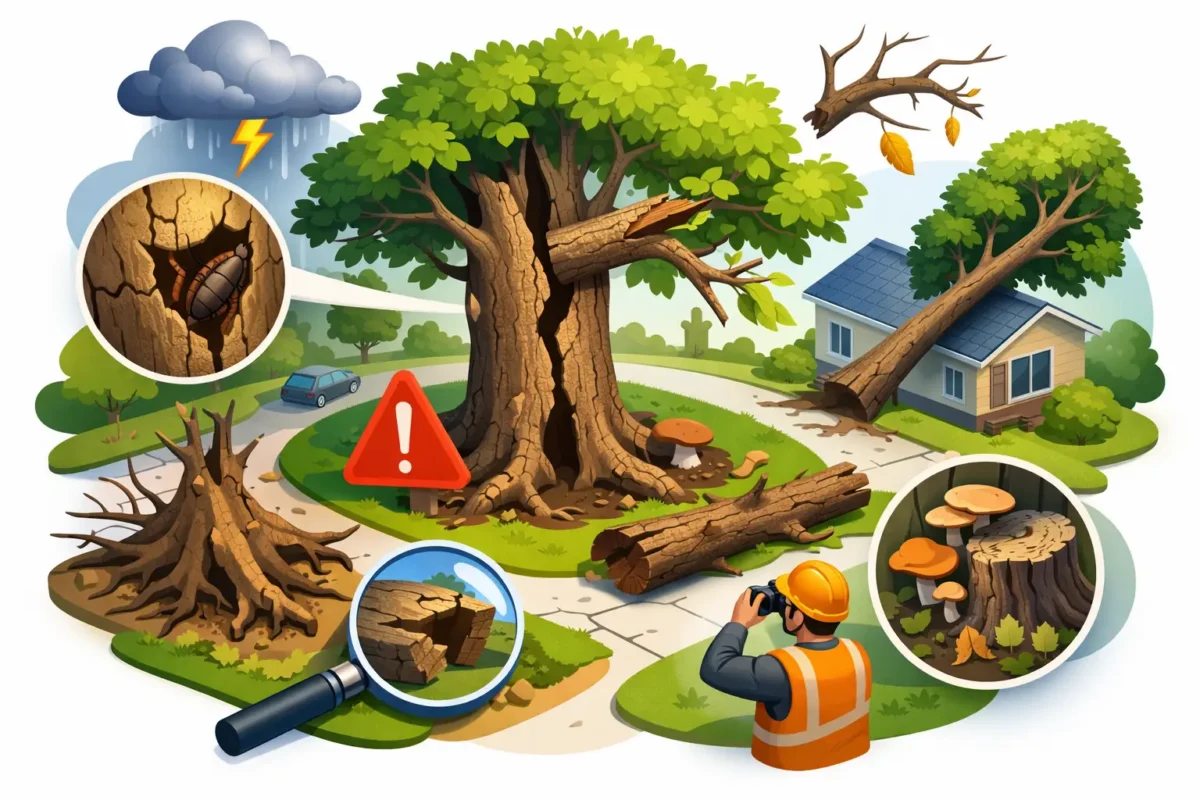
A tree can look healthy from the street and still pose a serious risk over your driveway, roof, sidewalk, or parking area. Knowing how to know if a tree is hazardous is not about finding every small flaw in the bark. It is about noticing changes that could mean part of the tree, or the whole tree, may fail when the next windstorm, heavy rain, or snow load arrives.
You do not need to diagnose a tree yourself. You do need to know when to step back and call a qualified tree professional. Acting early can prevent broken windows, damaged roofs, blocked access, power hazards, and injuries.
What Makes a Tree Hazardous?
A hazardous tree has both a defect and a target. A dead branch high in an isolated wooded area may not require urgent work. That same branch hanging over your child’s play area, a neighbor’s fence, or a customer entrance deserves attention.
Risk depends on the tree’s condition, where it is growing, and what could be hit if it falls. A mature tree may be perfectly safe even if it has a few dead twigs. On the other hand, a smaller tree with a cracked trunk beside a building can be an immediate concern. The goal is not to remove trees unnecessarily. It is to identify the ones that need pruning, support, monitoring, or removal before they cause damage.
9 Signs a Tree May Be Hazardous
1. A New or Worsening Lean
Not every leaning tree is dangerous. Some trees naturally grow at an angle and have adapted over many years. The concern is a lean that is new, suddenly more pronounced, or directed toward a home, driveway, road, or utility line.
Look at the ground on the opposite side of the lean. Raised soil, exposed roots, or a gap between the soil and trunk can mean the root plate is moving. If a tree shifted after heavy rain, flooding, excavation, or high winds, treat it as urgent and keep people away from the area.
2. Cracks, Splits, or Cavities in the Trunk
A long vertical crack, an open split where large limbs join, or a deep hollow can weaken a tree’s structure. Some cavities are manageable, depending on the tree species, size, and amount of sound wood remaining. Others indicate that the trunk can no longer safely support the canopy.
Do not try to fill a cavity, cut into it, or knock on the trunk to test it. A professional inspection can determine whether pruning can reduce the load or whether removal is the safer option.
3. Dead, Hanging, or Broken Limbs
Dead limbs lose their flexibility and can fall without warning, especially during wind, ice, or wet snow. Large dead branches over roofs, walkways, decks, vehicles, and entrances should be addressed promptly.
Broken limbs that are still caught in the canopy are especially dangerous. They can drop when the tree moves, even on a calm day. Never climb the tree or pull on a hanging limb from below. The branch may be heavier than it looks, and the remaining wood may already be unstable.
4. Mushrooms or Fungal Growth at the Base
Mushrooms, shelf fungi, or soft decayed wood near the base can be a warning sign of root or trunk rot. Fungi do not always mean a tree must come down, but they should never be ignored when the tree is near a structure or frequently used area.
The key issue is whether decay has reduced the tree’s ability to stand. A tree can still have green leaves and appear alive while internal decay weakens its roots or trunk. This is one of the reasons visual appearance alone is not enough.
5. Root Damage or Soil Changes Around the Tree
Roots anchor the tree and supply water and nutrients. Construction, trenching, driveway work, grade changes, and repeated soil compaction can damage roots without obvious signs above ground for months or years.
Watch for exposed or severed roots, soil heaving, sudden thinning of the canopy, or a tree that begins to lean after work was done nearby. Avoid piling soil, mulch, firewood, or heavy materials against the trunk. If you need to mulch, keep it shallow and pulled back from the bark.
6. Peeling Bark and Dead Patches
Bark can naturally shed on certain tree species, so peeling bark alone does not always mean danger. What matters is the pattern. Large areas of missing bark, sunken sections, loose bark around a crack, or dead patches on one side of the trunk can point to disease, injury, or decay.
Compare the tree to others of the same type nearby. If it leafs out late, loses leaves early, or has bare sections while similar trees look full, schedule an assessment. A declining tree may still be saved with pruning or other care, but waiting can narrow your options.
7. Multiple Trunks With a Tight V-Shaped Union
Trees with two or more main stems can be structurally weak where those stems meet. A narrow V-shaped connection may have bark trapped between the trunks instead of strong, interlocking wood. As the stems grow larger, that union can split under wind, snow, or the weight of a full canopy.
This does not always require removal. In some cases, careful structural pruning reduces the load and improves the tree’s chances. If there is an existing crack, bulge, or separation at the union, however, the risk is higher and should be evaluated quickly.
8. Branches Growing Too Close to Your Home or Lines
A healthy branch can still be hazardous if it rubs against siding, hangs over a roof, blocks visibility, or extends toward service lines. Overhanging limbs give squirrels and other pests a direct path to your roof and can break onto shingles during a storm.
Trees near utility lines need special caution. Never attempt to trim branches around energized lines yourself. If a limb is touching a line, a wire is down, or a tree has fallen into utilities, stay clear and contact the utility company or emergency services as appropriate before arranging tree work.
9. Storm Damage That Has Not Been Fully Cleared
After a storm, the obvious fallen branch is not always the only problem. Remaining limbs may be cracked, twisted, partially detached, or held up by nearby branches. A tree can also suffer root movement that becomes visible only after the ground dries out.
In Albany County and across much of New York, heavy snow, ice, saturated soil, and fast-moving wind events can expose weaknesses that were not noticeable before. A post-storm inspection is a practical way to catch problems before the next weather event turns them into an emergency.
When You Should Treat It as an Emergency
Call for emergency help if a tree or major limb has fallen on a structure, is blocking a driveway or road, is touching utility lines, or is actively shifting or splitting. Keep children, pets, tenants, and visitors away from the area. Do not park beneath the tree, walk under suspended branches, or try to cut wood that is under tension.
If the tree is not actively failing but has a large dead limb, visible decay, or a concerning lean, arrange an inspection soon. Early work is usually safer and more controlled than emergency removal after a failure. It can also protect your landscaping, roof, and neighboring property from a larger loss.
A Safe Way to Inspect Your Property
Walk your property from a distance a few times each year and after major storms. Look up at the canopy, then look down at the roots and soil around the base. Check trees near buildings, sidewalks, parking spaces, fences, pools, and play areas first because those are the places where failure has consequences.
Take photos when you notice a change. A picture from the same angle can help show whether a crack, lean, or dead area is getting worse. Do not use a ladder, climb a tree, or cut large branches with homeowner tools. Tree work becomes dangerous quickly when wood is elevated, decayed, or carrying hidden pressure.
Get an Honest Assessment Before the Next Storm
Some trees need immediate removal. Others only need targeted pruning, deadwood removal, or regular monitoring. A safety-first tree service should explain the difference clearly rather than treating every imperfect tree as a removal job.
AAA Tree Service NY provides professional tree risk assessments, pruning, storm cleanup, and emergency tree removal for homeowners and commercial property owners. If a tree is leaning, cracking, shedding large limbs, or showing signs of decay near something you need to protect, getting it checked now can give you a safer property and more options before bad weather arrives.