How to Evaluate Tree Stability Before a Storm

A tree can look healthy from the kitchen window and still be one strong wind gust away from failing. Learning how to evaluate tree stability helps you catch visible warning signs before a limb lands on your roof, a trunk blocks your driveway, or a fallen tree creates a serious hazard near your home or business.
You do not need to be an arborist to notice trouble. You do need to know what to look for, when to keep your distance, and when the risk is too high for a homeowner inspection. If a tree has shifted after a storm, is touching utility lines, or looks ready to fall, stay clear and call for emergency help right away.
How to Evaluate Tree Stability From the Ground
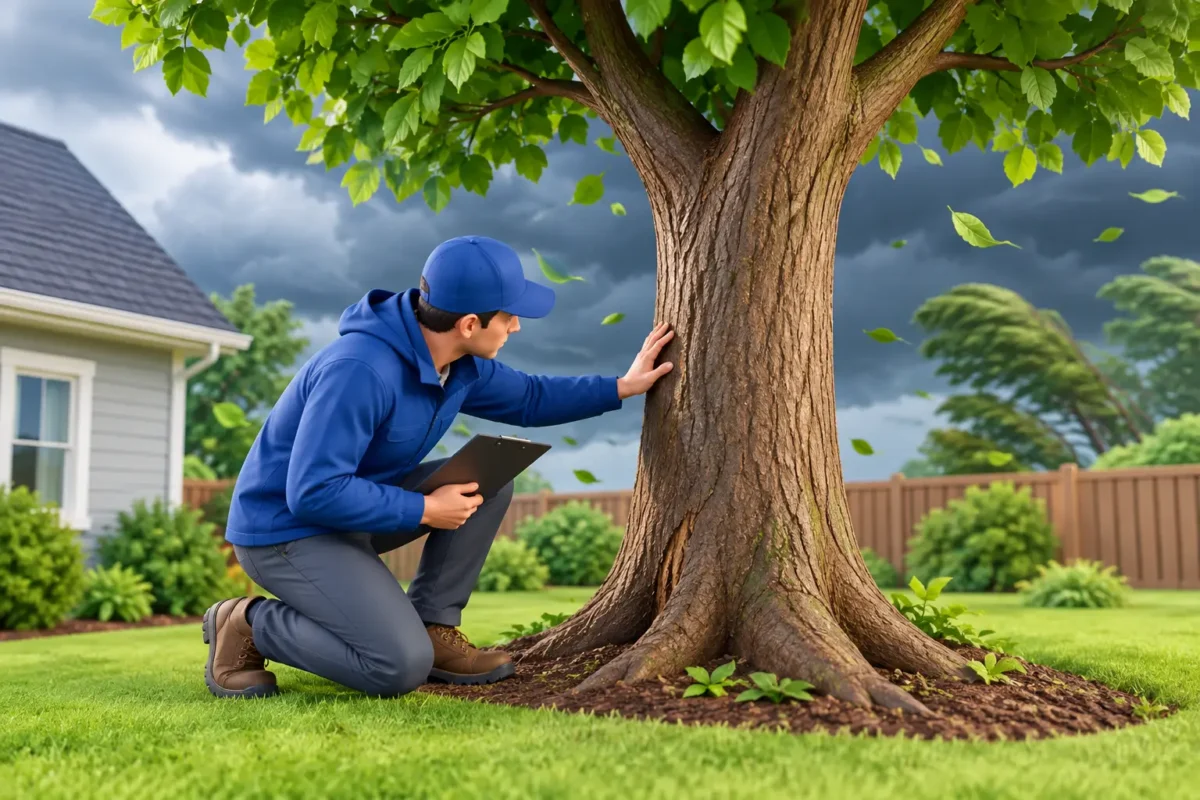
Start with a slow walk around the tree from a safe distance. Look at the full tree first, then move your attention from the canopy down to the trunk and root area. Do not climb the tree, pull on branches, dig around roots, or try to test a suspicious tree by pushing it. A weakened tree can fail with very little warning.
A stable tree usually has a trunk that stands naturally for its species, a root flare that is visible near the base, and a crown that does not have major sections of dead or hanging wood. That does not mean every leaning tree is dangerous. Some trees grow at an angle for decades without a problem. What matters is whether the lean is new, increasing, or paired with other signs of root or trunk damage.
Pay special attention after heavy rain, snow, ice, high winds, construction nearby, or soil disturbance. In Albany County and other New York service areas, saturated ground and winter weather can change a tree’s stability quickly, especially for large mature trees near homes, parking areas, and sidewalks.
Check for a New or Worsening Lean
Stand back far enough to see the trunk against a vertical reference, such as the corner of a building. Ask yourself whether the tree has always leaned this way. A gradual, long-standing lean is not automatically an emergency. A lean that appeared after a storm, excavation, or impact is different.
Look for soil lifting or cracking on the side opposite the lean. This can mean the root plate is beginning to pull out of the ground. A tree may also develop a visible gap between the soil and the trunk base on the side it is leaning toward. If you see movement in the soil, do not wait for the next storm to get professional advice.
Inspect the Roots and Soil Around the Base
Roots do more than feed a tree. They anchor it. Damage below ground is one of the biggest reasons apparently healthy trees fall.
Walk around the base without stepping into soft or lifted soil. Warning signs include exposed, broken, or decaying roots; fresh cracks in the ground; mushrooms growing at the base; and a mound of raised soil on one side of the tree. Mushrooms do not always mean a tree is unsafe, but they can point to decay in roots or wood below the surface.
Recent landscaping can also affect stability. Cutting roots for a patio, driveway, utility trench, or new fence may weaken a tree even if the damage is not visible from above. Grade changes matter too. Adding soil over the root flare or removing soil around major roots can stress a tree over time.
Look Closely at the Trunk
The trunk should be your next stop. Look for deep vertical cracks, open cavities, peeling bark, large wounds, or areas that appear soft, hollow, or sunken. A crack can be especially concerning when it runs through a major branch connection or extends down the trunk.
Not every hollow tree needs immediate removal. Some trees can remain standing with a cavity for years, depending on the location and amount of sound wood still supporting the trunk. But a large cavity, multiple cracks, or visible decay near the base deserves a professional inspection, particularly if the tree could reach your house, vehicles, play area, or neighboring property.
Also watch for stems that split into a V-shaped connection with bark squeezed between them. This is called included bark. It creates a weak attachment because the two stems are pressing against each other instead of being strongly joined. Heavy snow, ice, or wind can cause one side to split away.
Scan the Canopy for Dead or Unbalanced Limbs
Dead branches do not always mean the entire tree is unstable, but they increase the chance of falling debris. Look for limbs without leaves when the rest of the tree is in season, branches with loose bark, and large limbs hanging over a roof, driveway, or entrance.
An uneven canopy can create a separate stability issue. If one side of a tree is much heavier, wind puts more force on that side. This often happens after storm damage, poor trimming, or the loss of major limbs. Proper pruning may reduce the weight and improve the tree’s structure, but topping or cutting random large branches can make the problem worse.
Warning Signs That Need Prompt Action
Some conditions should move to the top of your to-do list. Call a licensed and insured tree service promptly if you notice any of the following:
- A new lean, lifted roots, cracked soil, or movement at the base of the tree.
- A split trunk, large fresh crack, or major limb partially detached from the tree.
- Visible decay or a cavity near the base, especially on a tree within striking distance of a structure.
- A tree or branch resting on power lines, service wires, a roof, or another tree.
- Major storm damage that leaves broken limbs hanging overhead or changes the tree’s shape.
If utility lines are involved, keep everyone away and contact the utility company or emergency services as needed. Never attempt to remove a branch from a wire yourself. Even lines that appear to be phone or cable lines can be tangled with electrical service.
Consider the Tree’s Target, Not Just Its Condition
A tree with defects in an open wooded area may not need the same response as a smaller defect in a tree over your bedroom, sidewalk, or commercial parking lot. Tree risk is about both likelihood and consequences.
Think about what the tree could hit if it failed. That area is often called the target zone. Include your roof, fence, vehicles, walkways, outdoor seating, play equipment, neighboring structures, and places where people regularly gather. A healthy-looking tree with a heavy dead limb over a front entrance may deserve faster attention than a more visibly damaged tree far from people and property.
For commercial properties, regular checks are also part of reducing liability. Inspect trees near entrances, loading areas, customer parking, and public sidewalks after major weather events. Documenting concerns and arranging timely work is a practical way to protect visitors and avoid preventable damage.
What Homeowners Can Do Safely
You can take photos from several angles, note when you first saw the issue, and keep people out of the possible fall zone. After a storm, remove only small debris that is fully on the ground and clearly separated from the tree. Do not work under hanging limbs, use a ladder near a damaged tree, or run a chainsaw on a tree that is leaning, split, or under tension.
Avoid the temptation to brace a failing tree with rope, cables, or a vehicle. Improvised support can pull the tree in an unpredictable direction and put you directly in harm’s way. Professional cabling and bracing may help certain mature trees with structural weaknesses, but it is not a cure for root failure or advanced decay.
When a Professional Assessment Is Worth It
If you are uncertain, an on-site assessment is the right call. A qualified tree professional can evaluate the trunk, branch unions, roots, soil conditions, canopy weight, and nearby targets together. That full picture matters because one warning sign alone may be manageable, while several smaller defects can create a serious failure risk.
An honest assessment should not automatically end with removal. Depending on the tree and its location, the recommendation may be pruning deadwood, reducing end weight on selected limbs, installing support hardware, monitoring the tree, or removing it before it causes damage. The right answer depends on the tree’s condition and what is at risk around it.
AAA Tree Service NY provides safety-first evaluations, routine tree care, and 24/7 emergency response for property owners who need fast help after storm damage. If a tree has changed suddenly or you are worried about what the next storm could do, it is better to have it checked while the situation is still controllable.
A tree does not need to be completely dead to become dangerous. Trust the changes you can see, keep your distance from unstable trees, and act before wind, rain, or snow turns a concern into an emergency.